Tanzania is one of the most sought-after destinations for safari and adventure lovers.
To fully enjoy the stunning national parks, Mount Kilimanjaro, and the dreamy beaches of the Zanzibar archipelago, it’s essential to consider how the climate changes across different seasons.
In this travel guide, we outline Tanzania’s climate month by month, both in the national parks and in the Zanzibar archipelago.
What Are Tanzania’s Climate Zones?
Tanzania’s climate is as diverse as its landscapes.
From the cool highlands to the sweltering coastal plains, the country’s geography creates a variety of weather patterns.
Coastal Areas & Islands (including Zanzibar): Tropical, humid, and hot year-round but with a distinct wet and dry season.
Plateau & Inland Areas (like Serengeti): Semi-arid with significant temperature swings between day and night.
Highlands (including Kilimanjaro and Ngorongoro): Cool and temperate, with colder temperatures at higher altitudes.
Each zone adds a layer of nuance to the Tanzania climate, making it vital to consider your destination when planning.
The Dry Season in Tanzania
The dry season runs from June to October, coinciding with some of the best times to visit Tanzania.
During this period, rainfall is scarce, the skies remain clear, and temperatures are generally comfortable.
Conditions to expect during the dry season
Safari-ready landscapes: Grass is shorter, making wildlife easier to spot.
Cool nights, warm days: Average daytime temperatures range from 77–86°F (25–30°C), cooling down significantly at night, especially in higher-altitude areas.
Perfect for Kilimanjaro climbing: Minimal rainfall means safer trekking conditions.
Best Activities During Dry Season
Witnessing the Wildebeest Migration in the Serengeti.
Climbing Kilimanjaro, with clearer skies and more stable weather.
Relaxing in Zanzibar with limited rain and pleasant temperatures.
The Wet Season in Tanzania
Tanzania’s wet season is divided into two parts.
Short Rains (November to December): Rainfall is brief and sporadic, often making mornings sunny with occasional afternoon showers. It’s a quieter time for tourism but still perfect for visiting many areas.
Long Rains (March to May): This is Tanzania’s true rainy season, with heavy rains that can last several hours. Roads in national parks may become muddy, making access to remote safari destinations more challenging.
Conditions to expect during the wet season
Vibrant greenery and lush landscapes.
Wildlife disperses due to ample water sources, making spotting animals slightly trickier.
Reduced prices on tours and accommodations, as it’s considered the off-peak season.
Best Activities During Wet Season
Birdwatching is phenomenal as migratory birds arrive during the rains.
A quiet safari experience without large tourist crowds.
Average Monthly Rainfall & Temperatures in Tanzania
Here’s a month-by-month breakdown of Tanzania’s climate.
January & February
Average Temp: 70–88°F (21–31°C)
Less rain compared to March; wildlife viewing still good
March to May (Long Rains)
Average Temp: 66–84°F (19–29°C)
Heavy rain but stunning landscapes for photography
June to October (Dry Season)
Average Temp: 63–81°F (17–27°C)
Peak safari season; excellent visibility for wildlife
November & December (Short Rains)
Average Temp: 68–86°F (20–30°C)
Scattered showers, vibrant vegetation, and fewer visitors
Best Time to Visit Tanzania
The best time to visit Tanzania depends on the activities you want to enjoy.
Safari & Wildlife Viewing: June to October offers the best conditions for game drives, as animals gather around limited waterholes.
Kilometers of Beaches: Zanzibar is idyllic during January to February or June to October, when rainfall is minimal, and skies are clear.
The Best Time to See the Great Wildebeest Migration
One of the largest wildlife phenomena in the world, the Great Wildebeest Migration, is a year-round spectacle in the Serengeti. Here’s how the migration aligns with Tanzania’s climate:
January to March – Calving season in the southern Serengeti. Thousands of baby wildebeests are born, attracting predators.
May to July – Wildebeests move northward and begin the dramatic river crossing.
July to September – Best time to witness the thrilling Mara River crossing as herds move into the Masai Mara in Kenya.
October to December – Wildebeest herds migrate back to the Serengeti.
If the migration is the highlight of your trip, plan strategically based on the time of year and the location of the herds.
Best Time to Climb Kilimanjaro
For adventure seekers and trekking enthusiasts, one of the most exciting challenges in Tanzania is climbing Mount Kilimanjaro.
The best time for trekking is during the dry season (from January to March and from June to October).
During these months, the weather is more stable with minimal risk of rain, making the climb safer and more enjoyable.
At higher altitudes, however, be prepared for very cold temperatures, especially at night.
Important: avoid April and May, when the rainy season can make the trails slippery and dangerous.
Best Time to Visit Zanzibar
After exploring the parks, Zanzibar is the perfect destination to relax.
The climate in Zanzibar is hot and humid year-round, but the dry season (June to October) is ideal for enjoying the breathtaking beaches and crystal-clear waters.
The months between November and December are marked by short rains, but the sun doesn’t stay away for too long.
However, be aware of the long rainy season (March to May), as the rains can be more intense and continuous.
Many resorts offer promotions during this period, making it an interesting option for those looking for a more budget-friendly experience.
Tanzania is one of Africa’s classic safari destinations, most famous for the great wildebeest migration where a herd of about two million wildebeest and zebra make their epic annual journey with numerous predators on their heels. The best safari to Tanzania takes you to vibrant parks for unparalleled game viewing and dazzling tropical beaches of Zanzibar, Pemba and Mafia. On top of this, for hikers, Tanzania is home to Africa’s tallest mountain, Mt. Kilimanjaro, with highest peak at 5,895 meters (19,340 feet).
The best safari in Tanzania is seen when the destinations, accommodations, transportation and so on are carefully chosen and well arranged by professional agent and safari expert. If you want to enjoy your safari to Tanzania, we recommend you choose Mid-range accommodations or Luxury ones. Mode of transport on your safari in Tanzania is also the key factor to consider because in some places you experience rough and bump roads and during rainy season it’s difficult to pass and hence you need comfortable Safari Car. We recommend you choose a 4×4 Land Rover or Toyota Land Cruisers. Let also your safari expert to choose an experienced safari guide for you who knows the country in and out so that you can enjoy full history of wildlife and the country in general.
Accommodation
When planning a safari to Tanzania, where to stay often comes near the top of the list. Tanzania itself is among the destinations with the best accommodation facilities. These accommodation facilities categorized into hotels, lodges, camps, resorts, Inn, etc. In Tanzania, there are varieties of options, from luxury, medium-range to low-range accommodation, located either inside or outside the parks and reserves.
The number of days for safari and budget are the most prerequisite foci to consider when planning which accommodation property to use. However, for a better start, we normally recommend an overnight on mid-range facilities in order to decide whether to go higher or lower than the medium range price. We also recommend an overnight inside the park in order to have enough time for a game drive and other activities, if not accommodation facilities outside the parks are the best for travelers with limited budgets. In some of the destinations such as the Ngorongoro Conservation Area, we recommend an overnight on the lodges at the crater rim so that to have the best view of the crater. Some of the preferred lodges are Ngorongoro Serena Safari Lodge, Ngorongoro Sopa Lodge, and luxurious lodges such as &Beyond Ngorongoro Crater Lodge.
In Tarangire National Park, we recommend an overnight either inside the park with the lodge such as Tarangire Safari Lodge or outside the park in a Wildlife Management Area with accommodation facilities like Maramboi and Burunge Tented Lodges.
In Serengeti, most of the accommodation facilities are located inside the park. Selection on where to stay depends on the month of travel in relation to the movement of the Great Migration; however, the central part of the Serengeti has many accommodation facilities, as it is an ideal destination for game drive throughout the year.
Nevertheless, we have a small town of Karatu where many accommodation facilities found here ranging from five to three stars. We recommend two to three nights here to some of the lodges like Ngorongoro Marera Mountain View Lodge, Farm of Dreams, Kudu Lodge, Country Lodge,ìì and other luxurious lodges like Gibb’s Farm, Plantation Lodge and Oldeani Mountain View Lodge when clients are doing activities in either Tarangire, Manyara, Mto wa Mbu, Lake Eyasi and Ngorongoro Conservation Area.
Great Migration Safari
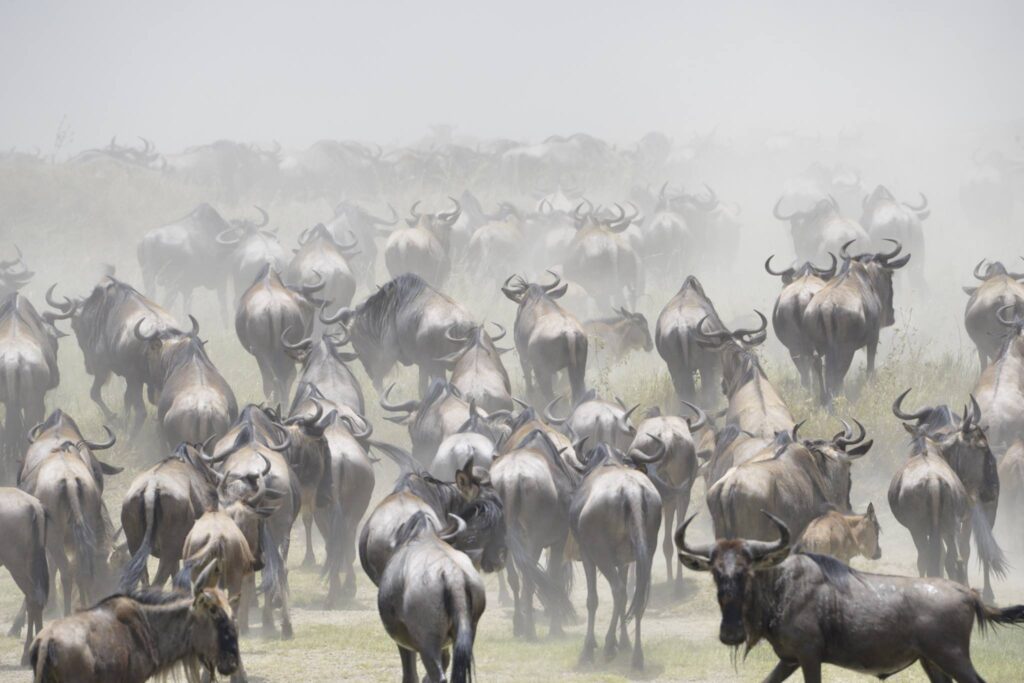
This is the largest herd movement of animals in the world with the great columns of wildebeest seen from space. It is the collection of around 1.2 million wildebeest, 300,000 zebras accompanied by topi and other gazelle which move in a constant cycle through the Serengeti-Mara ecosystem. Their main aim of migrating is to search for nutritious grass and water. Other than the migrating animals, predators like lions, leopards, cheetah, hyena, wild dogs, and crocodiles can also be seen searching for food which is the migrating animals. In summary, calving takes place in the southern part of Serengeti near Ngorongoro Conservation Area then the journey through Serengeti starts in a clockwise direction towards the Masai Mara in Kenya, then they return to Tanzania near the end of the year to start their annual movement again.
The Great wildebeest Migration are not the most predictable because this Migration is entirely dependent upon rain, fresh grasses and other factors. Therefore, we recommend you to check with our safari expert.
Great Migration in January, February and March
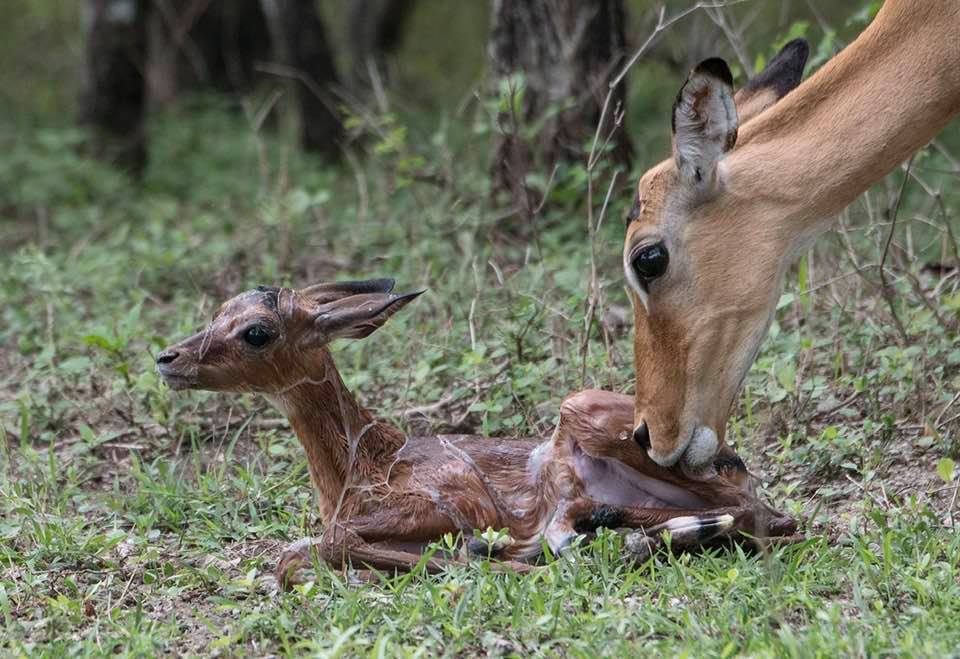
During this period, animals are found in the Southern part of the Serengeti and Ngorongoro Conservation Area. During this period, this place is rich in nutritious grass which is a good condition for the wildebeest to breed and raise their newborn calves. During this period nearly 400,000 calves are born within a period of two to three weeks.
During this period, the wildebeest herds start their migration to the North-West for the fresher grass around Central Serengeti where they are joined by the zebra and small groups of antelopes. Also in this period towards the end of May, mating seasons begins as male wildebeest battle for it. Animals then start to move toward the West side of Serengeti called Western Corridor crossing the Grumeti River.
Great Migration in June and July
This is the dry season and animals must be searching for water therefore they concentrate in the Western Serengeti and on the Southern banks of the Grumeti River. In this area, they face the great challenge of crossing the river from the crocodile who is also searching for food. Toward the end of June the migration head North along the Western edge of the park where they face even more risk of crossing Mara River in the North of Serengeti. The river crossing is one of the most exciting wildlife events in the world.
Great Migration in August, September and October
This is the period when the migrating animals face the big challenge of crossing the Mara River with the river in full flow and predators waiting for them. Animals are seen spread throughout the Masai Mara Northern region while many remain in the Northern Serengeti. By September to October, the migration moves towards Eastward though they will face another challenge of crossing Mara River once more when they prepare to cross for their return journey toward Southward.
We recommend the following safari program in this period:
In this period, wildebeests moved down from Kenya to Eastern Serengeti in Tanzania. By December, they are found spread throughout the Eastern and Southern area of Serengeti. As the grasses are lush in the South of Serengeti during the end of December and New Year, this draws the herds of wildebeest and other animals towards that area where the cycle continues as the calving season starts again.
The Great Wildebeest Migration divided into summer and winter migration. For more information concerning the safari program with winter or summer migration kindly contact our safari expert – contact us.
The Great Migration in Tanzania
Tanzania Luxury Safari
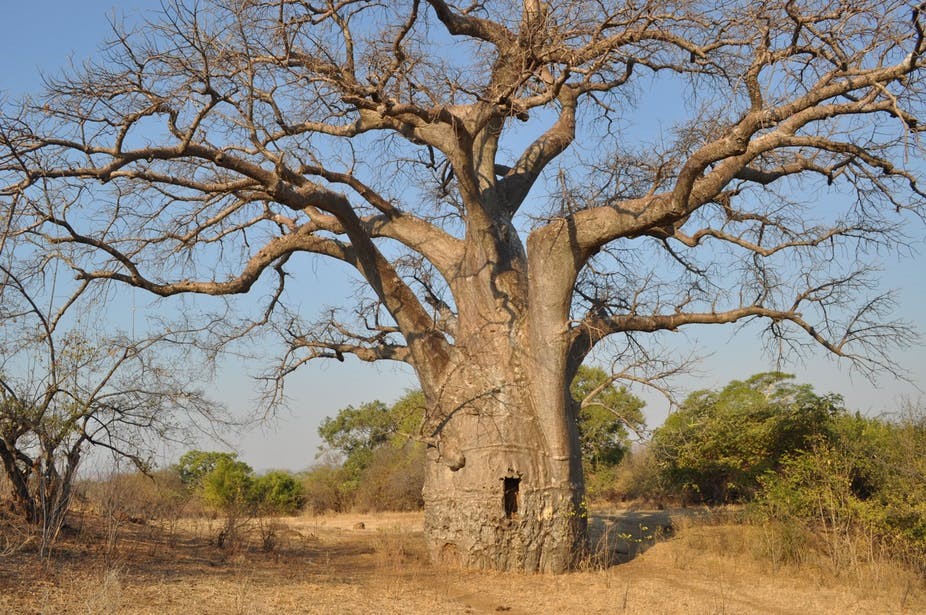
A luxury Tanzania safari is really something wonderful, unique and amazing. From the roof of Africa, Mount Kilimanjaro to the national parks and conservation areas such as Ngorongoro Crater with the highest density of wild animals, the Serengeti with endless plains and Great Migration and Tarangire a home of elephants and baobabs trees, and Zanzibar Island for beach relaxation.
During your Tanzania luxury safari, you will meet wildlife herds, forests, and charming local people. Join our amazing and knowledgeable safari and trekking guides team on your safari. Savannah Explorers offers professional and vaccinated guides making you safe with the current situation of Covid-19.
Your Tanzania luxury safari is combined with luxury safari accommodations such as AndBeyond, Elewana, Wellworth, Serena properties, and others in order to have a real taste of luxury safari. You can choose to spend some nights at Fours Season Serengeti Lodge and Melia Serengeti Lodge while in Serengeti and you get to see some animals drinking water very close just from your sleeping room, because both these lodges have designated water holes for animals to drink water.
This experience will truly define your Tanzania luxury safari. You can enjoy Tanzania’s luxury safari everywhere while in Tanzania, even if you choose to visit Southern circuit parks such as Nyerere park as you still sleep in luxury accommodation like Serena Mivumo Luxury Hotel.
You can finish your Tanzania luxury safari by combining with Zanzibar for beach relaxation and stay in luxury resorts such as Gold Zanzibar, Melia Zanzibar, Zuri Zanzibar, Riu Palace, and others.
Discover a vibrant luxury safari experiences on Tanzania’s parks such as Serengeti, Ngorongoro, Lake Manyara, Tarangire and other parks, here is one of our offers
Zanzibar archipelago located in the eastern part of Tanzania in the Indian Ocean at 15 miles coasts of the mainland, it is a wonderful spot to relax when visiting Tanzania for safari. It consists of many smaller islands and two larger ones called Unguja and Pemba Island. The capital city is located on the island of Unguja that consists of Stone Town, the historical midpoint recognized by UNESCO as a world heritage site. The two unique islands offer different safari experiences that are exceptional from all other destinations worldwide. The best experiences to discover in Zanzibar are such as:
Wildlife – Here we refer to Jozani National Park, the rainforest of Ngezi and the mangrove habitat all of them offers a wide variety for sightseeing both flora and fauna.
Zanzibar Culture & Tradition – If you are looking to learn about Swahili culture then Zanzibar will be your best choice. The famous heritage site is Stone town with a collection of both Swahili cultures and ancient buildings such as Kizimkaz Mosques and Maruhubi Palace will make your trip unforgettable.
Sea Safari – The safari on the sea offers you a wide experience to learn about marine species. The famous sea safari is like Mnemba Marine Nature Reserve.
Local Cuisine – The local food in Zanzibar are somehow delicious and they have a meaning in relation to the Swahili Culture. They are a variety of fresh foods in Zanzibar such as fruits, spices and seafood.
The best way to end your unforgettable adventure in the savannah of Tanzania is to have few days for beach relaxation in Zanzibar. For more information concerning the program with safari and beach relaxation in Zanzibar, kindly check with our safari expert – contact us.
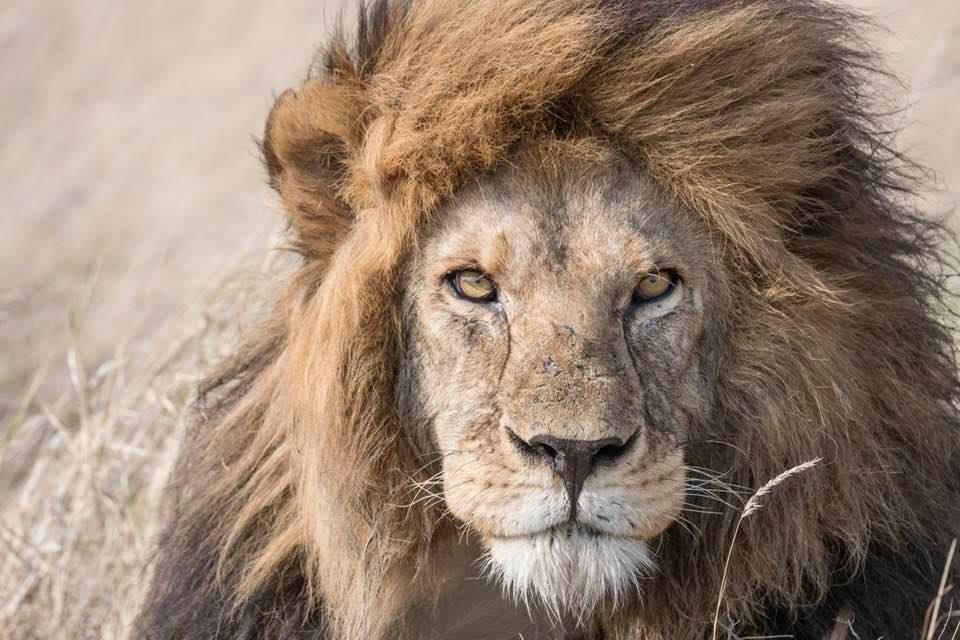
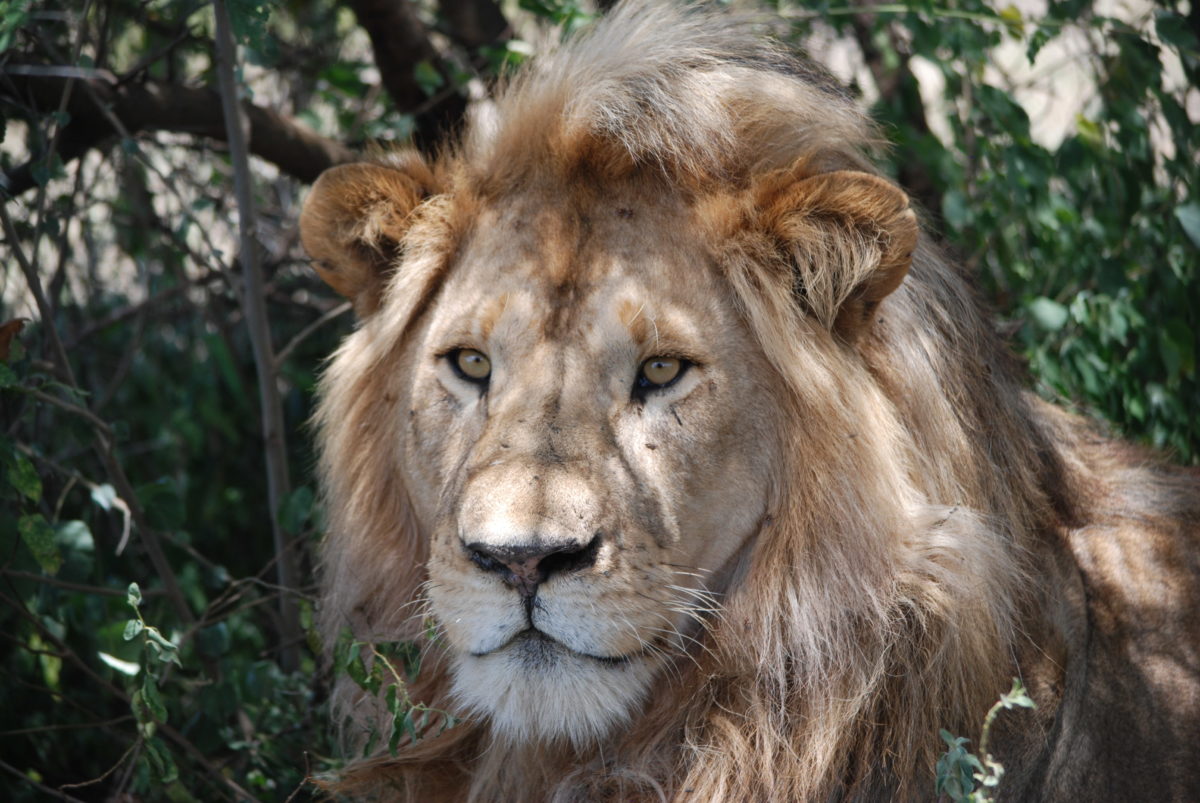
A black mane lion in Serengeti – Tanzania
Ngorongoro Crater Safari: meet The Big Five
Ngorongoro crater is the famous and largest intact volcanic caldera that was formed about 3 million years ago. It is designated as a UNESCO World Heritage Site and the only protected area where human beings interact with wildlife.
Ngorongoro Crater is the best site in East Africa where you can see all the Big Five. The big five are the animals that are hard to be hunted in the wild. This includes Elephants, Rhino, Buffalo, Lion and Leopard. Due to the presence of the big five, Ngorongoro crater is an ideal destination to visit when planning a safari in Tanzania or East Africa.
Visitors can plan a tour in this beautiful crater all time of the year because the wildlife mainly remains in the crater all year round.
Embark on safari to Ngorongoro with Savannah Explorers and keep your eyes peeled to spot African Lion, African Leopard, African Elephant, Cape Buffalo, Rhinoceros and other interesting animals. Check the safari program for Ngorongoro crater:
Serengeti, Tarangire and Ngorongoro: the Tanzania Park Tour
Safari in the northern circuit refers to the best and frequently visited parks in Tanzania, which are Tarangire, Ngorongoro and Serengeti. The eight days safari is best during the months of June to September as it allows clients to enjoy the most exciting sighting such as the Great Migration crossing Mara and Grumeti Rivers when heading to Masai Mara Game Reserve. The safari can be tailored in relation to the client’s request, budget and month of traveling. Contented accommodation and the use of customized 4 x 4 safari vehicle with professional guides finalizes the elements of this safari.
Tarangire, Serengeti and Ngorongoro are among the reserves with large number of visitors. With five nights safari program, it is possible to enjoy these three parks. For more information concerning the program for five nights safari check our program and contact our safari expert:
The Northern Circuit is busy on peak season months mostly from July to early October, so if you visit by that time then be ready to meet many tourists. Otherwise, if you want to avoid crowds, we recommend you visit in November, March, April, and May. Still December, January and February you find many tourists too. The good advantage of visiting Northern Circuit is that, many tour operators are based in Northern Circuit cities such as Arusha and Moshi, hence you can be assisted any time in case of any emergency.
Are you looking to have an unforgettable safari experience in Tanzania? Then choose to visit the Northern Circuit National Parks in Tanzania. In the Northern Circuit is where you see the best and famous parks in Tanzania such as Serengeti, Ngorongoro, Lake Manyara, Tarangire and Arusha Park. In these parks, you have a high chance to spot the Big Five animals: Lion, Leopard, Buffalo, Elephant and Black Rhino. On top of this, if you visit the Serengeti national park, then you have a high chance to witness the Great Migration and this event will remain in your memory for your lifetime. This migration is not happening in the same location of the park rather animals migrate from one place to another, so we advise you to check with your safari expert to recommend a good place to see it depending the season.
Enjoy the Great Migration in the Serengeti plains, majestic lions, towering giraffes, lethargic hippos and a variety of other interesting prairie wildlife in the Northern Circuit of Tanzania, this is the best safari for your trip:
Lake Manyara National Park is one the most famous parks found in the Northern Circuit. The park is well known for its groundwater forest, the Great Rift Escarpment, variety of birdlife with more than 400 species including migratory birds and tree-climbing lions. The game drive is the most common activity conducted within the park. In addition, other activities are canopy walks, walking safari, bird watching and boat riding around Lake Manyara. Outside the park, the village of Mto wa Mbu offers culture tours to the visitors, biking tours, curio shops and accommodation facilities.
No matter how many number of days you have for safari, we offer different programs that fits with your days and budget. An example of short safari with limited number of days is the following program:
Ruaha National Park is the second largest park in Tanzania from the first largest park called Nyerere National Park formerly known as Selous Game Reserve. Ruaha National Park covers around 13,000 sq km in area. The name of the park is derived from the Great Ruaha River, which is the heart of the park. The river flows from the South-East area of the park and it is an ideal area for game viewing. The park is known for its largest elephant population and also common animals seen are elephants, leopards, lions, buffalo, cheetah, giraffes, zebras, hippopotamus, spotted hyena, wild dogs, kudu, sable antelope and others. There are also multiple reptiles and amphibians in this park such as monitor lizards, agama lizards, snakes and crocodiles.
Moreover, Ruaha National park is the best park to spot bird species. 570 bird species are believed to be here, some of which are migrating birds arriving from within and outside Africa. Not only animals and bird’s species available there but also there are more than 1,650 species of plants that are inhabiting this park. Inside Ruaha National Park there is only one lodge called Ruaha River Lodge, it’s a nice lodge as you can see game throughout the day from the veranda. Still inside the park there are different tented camps and tented lodges, like Mdonya River Camp.
The park can be reached by car or plane and it’s easy to reach this park from Dar Es Salaam although still is far by driving and hence we recommend you combine with Mikumi National Park to reduce the long distance driving.
Selous Game Reserve
This is the largest protected game reserve in Africa covering an area of 54,600 square kilometers. It was designated a UNESCO World Heritage Site in 1982 due to the diversity of its wildlife and undisturbed nature. It is located in the Southern part of Tanzania which is about 219 kilometers from Dar es Salaam which may take about 4 hours’ drive. Also, visitors can use aircraft or train to visit Selous from Dar es Salaam.
This game reserve is comprised of a vast wilderness with forests, grassy plains, mountains, and open woodlands. It also has a large number of wild animals like elephants, lions, leopards, wild dogs, hyenas and jackals, black rhinoceros, hippopotamus, buffalo, antelopes, crocodiles, giraffe, zebra and a lot of birds. No permission for the permanent human habitation inside the reserve. Most of the reserve is set aside for game hunting but it is through some privately leased hunting and it is a popular tourist destination.
Inside this game reserve, crosses the Rufiji River which is the largest river in the country.
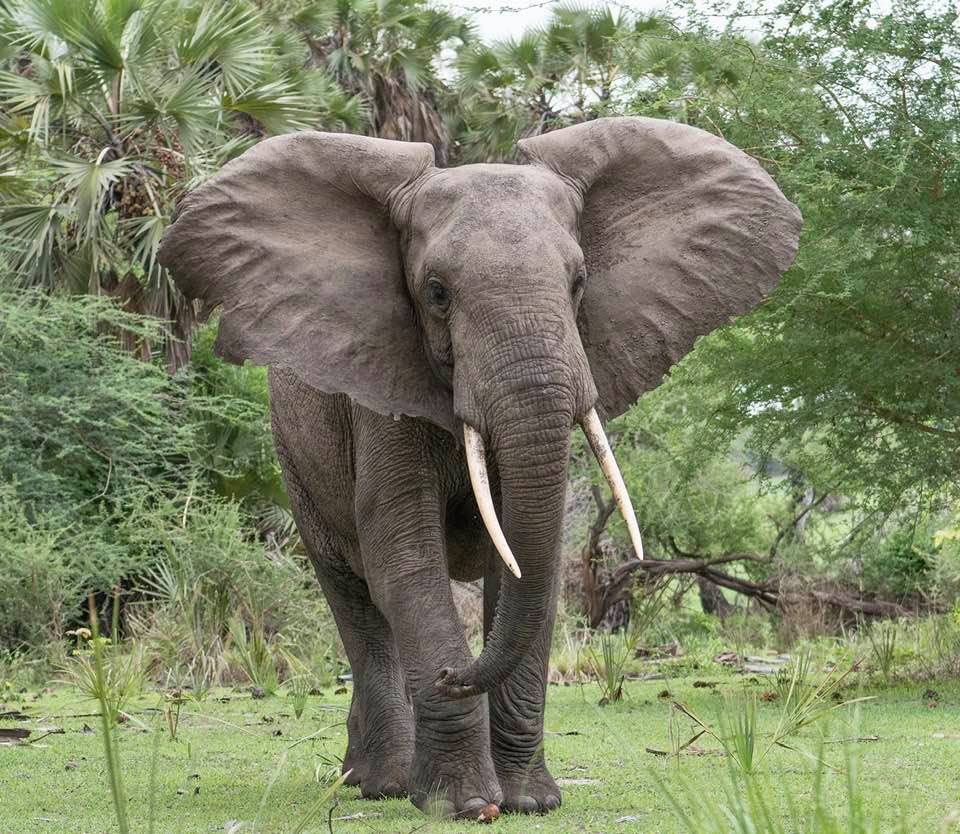
The African Elephant in Tanzania
Fly-In Safari to Selous Game Reserve and Ruaha National Park
Selous Game Reserve and Ruaha National Park are the parks found in the Southern Circuit of Tanzania. The Selous Game Reserve to the South of Mikumi is great for game drives, river experiences on the Rufiji River and also for walking safaris. Ruaha National Park just West of Iringa is the gem of the Southern circuit for game drives and other activities.
These parks can be easily visited from Dar Es Salaam City. You can fly from Dar Es Salaam to Selous Game Reserve for at least 2-3 nights. Then fly again to Ruaha National Park, also here we recommend 2-3 nights. After enjoying Ruaha National park you finally fly back to Dar Es Salaam where you connect flight back home or to next destinations like Zanzibar, Pemba and Mafia for beach relaxation. If you prefer to enjoy more game drive safaris, it’s possible also to fly from Selous or Ruaha to other Tanzania tourist circuits especially Northern Circuit comprising of Serengeti, Ngorongoro, Tarangore, Lake Manyara and others. Our safari expert for southern Circuit parks will advise you season, days and reliable flights to make your safari experience to Selous and Ruaha unforgettable. For more details we welcome you to contact us.
Contact our office to book your safari in Tanzania: in**@***************rs.com – WhatsApp +255 765 972 458
Tanzania is widely known because of its great nature with many beautiful national parks and reserves. You can also call Tanzania as the Land of Kilimanjaro, Zanzibar and the Serengeti. You can easily get to Tanzania without any problem, thanks to its three international airports served by numerous airlines, including European ones. To these are added an important number of smaller airports and runways for domestic and private flights. The choice of the airport or airports for arrival and departure essentially depends on the circuit and the type of holiday you have chosen. Below I describe those three international airports
Julius Nyerere International Airport (DAR)
It is the biggest airport in Tanzania and among the largest in East Africa. The airport is named after the first president of Tanzania, Julius Nyerere. The airport handles about 2.5 million passengers per year. It is serving Dar es Salaam city and is the most suitable airport for those who want to visit the Southern Parks such as Selous Game Reserve, Ruaha, Udzungwa Mountains and Mikumi National Park.
Kilimanjaro International Airport (JRO)
It is an airport in the northern part of Tanzania. The airport is located close to the leisure destination Mount Kilimanjaro National Park and is mostly used by tourists since Northern circuit tourism destinations are well known by being the best site satisfying tourists. It is served by several European companies and with the most important international traffic in the country. Kilimanjaro International Airport (JRO) is the ideal airport for those who want to visit the Northern Parks such as Arusha NP, Tarangire, Lake Manyara, Ngorongoro and Serengeti National Park
Zanzibar Abeid Amani Karume Airport (ZNZ)
This airport is the main airport of Zanzibar Archipelago. The airport is named after Abeid Amani Karume, the island’s first president. It is located just a few kilometers South of Stone Town and with ever-increasing traffic, opens the archipelago daily to world tourism. If you want to explore Zanzibar Island, then Zanzibar Abeid Amani Karume Airport seems to be the perfect choice.
Runways for “Fly-In” safaris
The plane represents an interesting means of transport essential for tourists within Tanzania, thanks to the numerous stopover points distributed throughout the territory. The most important parks, such as Tarangire, Manyara or Serengeti, but also the less explored parks such as Selous, Mikumi, Ruaha, Katavi or Mahale, all have their own landing strip. If you opt for a Fly-In safari, you will fly from one park to another, while the guides will pick you up at the foot of the plane and take care of your holiday, the transfer from the lodge to the parks and the organization of the safari (photosafari, travel excursions by boat or on foot trekking).
Internal Flights
Domestic flights also allow you to easily combine safaris with a stay on the Indian Ocean. For example, Arusha airport (ARK), located in Kisongo, is also near to Arusha Park and not far from Kilimanjaro. It is widely used to reach other parks or to move from parks to areas on the coast. Many of the most evocative sites of the Zanzibar archipelago, such as Pemba and Mafia, can also be reached, thanks to runways for internal flights.
Mwanza airport
This is another major domestic airport in Tanzania serving Mwanza region. It is located near the shores of Lake Victoria just a few kilometers from the city. The place is for mainly commercial interest, Mwanza is a stopover also frequented by many tourists.
Kenyatta International Airport (JKIA) in Nairobi
Another interesting option to enter Tanzania is to fly into the Jomo Kenyatta International Airport (JKIA) of Nairobi, the main East Africa airport and from there you reach Arusha in 5 hours by car or Kilimanjaro International Airport by flight for an almost 1 hour.
Swahili is one of the most loved language spoken in Africa especially on the east coast of Africa. People who speak Swahili as their mother tongue language are usually referred as Waswahili. In Tanzania Swahili is the language of administration and used as a tool of teaching in primary education level. However in Kenya and Uganda Swahili is after English since English language in both these countries is the main language. Furthermore, Swahili is also spoken in different countries such as Rwanda, Congo (DRC) and even in central and southern countries. In fact, Swahili language is used much in sub-Saharan Africa and is the most taught African language in the world, with a very rich literary tradition.
What is Swahili?
The name Swahili originates from Arabic language which means ‘of the coast’, This Swahili was named from the Arabic word sawaahili (سواحلي), which means ‘of the coast’, which you would use to refer to coastal people. The east coast of Africa is an area extending from Lamu Island, Kenya, in the north to the southern border of Tanzania in the south. The Bantu languages form a subgroup of the Benue-Congo branch of the Niger-Congo language family. Swahili (kiswahili) has 80 to 110 million speakers, but interestingly, very few speak it as their mother tongue and 90 million speak it as a second language.
Open to multiple influences, Swahili is first of all a Bantu language (family of Niger-Kordofanian languages), of which it has some fundamental characteristics such as the high number of nominal classes or genres, and simple phonetics with the tonic accent almost always on the penultimate syllable of words. The declension of nouns and adjectives is based not on the variation of the endings, but on the use of prefixes that specify the nominal class and the number (singular or plural).
The verbal system is complex in that, through the precise concatenation of prefixes and suffixes, the person, the tense and the root are merged in one word.
From a lexical point of view, modern Swahili incorporates terms coming mainly from other African languages and to a lesser extent from Arabic, Persian, Hindi and English. Then come Portuguese, German and French terms, often reserved for specific sectors such as, for example, navigation, religion or law.
A curiosity of the Swahili is the unusual way of counting the hours of the day starting from sunrise, always at 6 in the morning, and ending at sunset, always at 6 in the evening. According to this system, 9 a.m. becomes 3 a.m. and 9 p.m. is 3 p.m.
Brief history and origin
Swahili originated from an African language of Bantu, where Bantu refers to people who speak Bantu languages. Swahili (from the Arabic sahel, coast, shore or border) was born on the east coast of Africa over 1000 years ago, as a language for merchant exchanges between Africa and Asia.
The routes of the caravans of merchants and blacksmiths first, and European colonization later, pushed the Swahili to spread from the ports overlooking the Indian Ocean to the internal regions of the African continent.
Thus born as a commercial language, Swahili is a Bantu language with important contributions derived from the Arabic, Persian and Hindi languages.
Initially written with Arabic characters, it later adopted the Latin alphabet, enriching itself in the colonial period with terms from Portuguese, English and German.
In 1930 it was defined the “standard Swahili” alongside which many dialectal variations still persist, from the Zungibar kiunguja to the kimrima of the Tanzanian coast, passing through the Congolese kingwana, the Somali chimwiini and the Nairobi sheng, to name just a few.
Although the entire East African community recognizes itself in this language, in Tanzania Swahili has played an authentic political role as it has been one of the pillars of the construction of the national identity, becoming the official language of the country together with English.
Let’s learn some Swahili proverbs and common words:
Dalili ya mvua ni mawingu
Literal translation: Clouds are a sign of rain
Meaning: You can predict your success by watching for the right signs.
Haraka haraka haina baraka
Literal translation: Hurry, hurry has no blessing
Meaning: Haste makes waste.
Wapiganapo tembo wawili ziumiazo nyasi
Literal translation: When two elephants fight it’s the grass that gets hurt
Meaning: When the rich and powerful contend with each other it is the weak and powerless who pay the price.
Some Swahili common words which can be useful during your safari in Tanzania are
jambo! hello
habari gani? how are you?
Mzima wa Afya, all right
na wewe? and you?
asante, thank you
chakula chema, enjoy your meal
tafadhali, please
samahani, sorry
safari njema, good trip
siku njema, good day
kwaheri, goodbye
hakuna matata, no problem
shillingapi?, how much?
unaitwa nani? what’s your name?
karibuni! welcome!
haya! ok
simba, lion
kifaru, rhino
tembo, elephant
swala, gazelle
kiboko, hippopotamus
twiga, giraffe
Last but not least, in order to avoid confusion depending on the way you pronounce Swahili words, you should know some few words about ‘what not to say and do’ such as ‘Maziwa’ it can refer to milk but sometimes Swahili speakers also use it as a word for breast. So to avoid confusion in speaking Swahili when visiting amazing people in Tanzania, allow Savannah Explorers team who know to use Swahili words properly so that they introduce you to these Tanzanians where Swahili is their mother tongue language. Contact us at SavannahExplorers.net for your unforgettable safari in Tanzania.
The culture of the Tanzanian people is wonderful and amazing. They mostly prioritize family and religion and they foster a strong sense of community. Immersing yourself in the culture and traditions of Tanzania also means living at the rhythm of the main holidays and understanding what they represent for the population. Regarding handshakes, in Tanzania handshakes are a must, no matter how many people you’re greeting at once. Even if you enter a room or place with 40 people, you are expected to greet each person individually. You should make sure to greet the most elderly first and then go on to greet the youngest people in the place, don’t rush this process since once you rush it’s considered as bad behavior.
Tanzania used to commemorate important historical and political events, such as Independence Anniversary, Union Day and the Anniversary of the Zanzibar Revolution.
Independence Anniversary
This public holiday is always celebrated on December 9th. Tanzanians used to celebrate the end of British rule in Tanganyika (now called Tanzania) in 1961. It is Tanzania’s National Day, a day when the Tanzanian people mark their independence with speeches, parades and flags. Tanzania originally was a German colony, this region had been occupied by the British, Belgians and Portuguese during the First World War to finally be baptized Tanganyika and pass under exclusive British mandate in 1919. With a gradual process of decolonization and under the impulse of the party of JK Nyerere, Tanganyika therefore definitively gained independence in 1961.
Union anniversary
This day is commemorated, complete with flags and parades in traditional dress. Tanganyika and Zanzibar united on 26th April, 1964. This led to the formation of The United Republic of Tanzania under the first president of Tanzania, the late J.K. Nyerere and the late Abeid Karume, the first president of Zanzibar. Since the birth of the new state, the Zanzibar archipelago has enjoyed a particular status and a certain independence and still has its own parliament and a lot of autonomy in internal management.
Anniversary of the Zanzibar Revolution
Every 12 January is a national holiday both in Tanzania mainland and Zanzibar as a special day to remember the Zanzibar Revolution that occurred in 1964. It is also the day when Abeid Karume took the office. This day put an end to the constitutional monarchy born in the archipelago after independence from the United Kingdom and allowed the birth of a socialist republic. It was this republic that then joined Tanganyika to create the current United Republic of Tanzania. If you are in Stone Town on January 12, you will be lucky enough to attend the Ngalawa regatta (double-balance Swahili canoes) which takes place in front of the People’s Palace and evocatively celebrates this anniversary.
Religious Holidays
Moreover, religious freedom is a virtue that has contributed to Tanzania’s peace since the nation’s independence. All religious holidays receive equal public recognition. There are many Christian and Muslim religious holidays on the official calendar of Tanzania and some of those religious holidays are:
Christmas Day
December 25 every year is one of the most festive Christian holidays in many countries around the world and Tanzania is among the countries used to celebrate the birth of Jesus especially Christians on this day. This day in Tanzania is a public holiday and it is a day off for the general population, schools and most businesses are closed. People celebrate Christmas by traveling back from the cities to the villages to spend time with their parents and this results in road travel booms from around one to two weeks before/after 25th December. Also during this time it is normal to see people decorating their homes and cities using different materials reflecting this day especially Christmas’s trees.
Easter Day
This is the most important in Christian holy days, Easter in Tanzania is celebrated especially with two holidays on Good Friday and the day after Easter Sunday. The date of Easter changes every year based on the centuries-old calculations that determine the Christian Ecclesiastical Calendar. This means that the date of Easter Sunday can be anytime between the months of March or April. During this time like other important holidays people often used to buy new clothes and prepare special meals for their families.
Ramadan
This is a month-long religious event that is celebrated by Muslims all over the country where during this time, Muslims fast from sun-up to sundown every day for almost 30 days. In areas where the Muslim religion is more deeply rooted as Zanzibar, it is normal to find some restaurants closed and it is a good rule for tourists not to eat in public during this period. Eid al-Fitr, the great festival that marks the end of Ramadan, is an important moment for the population who organize banquets and balls in which you can also participate. If you want to experience the atmosphere and warmth of Eid al-Fitr up close, Zanzibar is the right place.
Eid al-Adha
The most important of all Islamic festivals, is a public holiday in Tanzania. It is a festival of sacrifice, also called Eid al-Kabir, or large festival, is the most important festival of the Muslim religion and corresponds to the tenth day of the last month of the Islamic calendar, therefore like Ramadan also the day Eid changes every year. Commemorating the sacrifice of Ibrahim, ready to offer his son to God, Eid al-Kabir symbolizes faith and sharing for Muslims. This very important anniversary brings together the entire Muslim community in moments of prayer and celebration that last several days. Among the holidays related to the Muslim religion, we also mention Eid-Milad-an-Nabi, which celebrates the birth of Muhammad and corresponds to the twelfth day of the third month of the Islamic lunar calendar.
Other parties
In addition to those mentioned above, other important holidays dot to the Tanzania calendar includes the Farmers’ Day on August 8th, the Labor Day on May 1st, all Christian and Muslim holidays, January 1st and also the Persian New Year (Mwaka Kogwa ) celebrated the third week of July in Zanzibar and especially in Makunduchi, south of Unguja.
We are waiting for You to discovery the beauties of Tanzania and its cultute, contact us at SavannahExplorers.net
The term “Big Five” means Africa’s Black Rhino, Leopard, Lion, Elephant and Cape Buffalo. Seeing the Big 5 close is a once in a lifetime experience since some of them are difficult to see. Up to now, still the Big Five refers to animals that roam and rule the wild plains of Africa. Comparing to other types of animals, Big 5 are few in number. Once you enter the park you become part of their world. Therefore you need to respect the territories that are theirs. Hope you came across the term Big 5 on the internet and it seems to be an attractive topic. Then to have a real picture and unforgettable experience about Big 5, I advise you to visit Tanzania and recommend the following safari program:
Where and how to see the Big Five during safari in Tanzania
Tanzania is a land like no other in the world. It has good landscapes, attractive wildlife and amazing mountains. All who visit either for Big Five safaris or other safaris remain inspired for a long time after their departure. Choosing a Big Five safari in Tanzania offers you the best and highest chance of seeing these beautiful animals. There are many countries in Africa in which you can see Big 5 animals, however Tanzania is the best.
Savannah Explorers as a tour operator in Tanzania has met many traveler’s expectations a time they chose them. Although life in the wild is unpredictable and sometimes nature does not cater to meet our demands. Hence not everyone will see all the Big Five as they live natural lives and are not always there available. But I am confident to recommend the Savannah Explorers team that they are able to fix your smile on this. Common Big 5 seen at Tarangire, Manyara are Africa’s lion, elephant and cape buffalo. You see Leopard in Serengeti and Black Rhino inside Ngorongoro Crater.
The Best SAFARI Itinerary to Spot The Big Five In Tanzania
Since many visitors consider a safari is not good without having witnessed and photographed the Big Five. So to make sure you have high chance to meet Big Five animals I suggest you explore some parks in the northern circuit of Tanzania, including Tarangire a home of Elephants, Lake Manyara well known for the tree climbing lions, the soda ash lake and its flamingos, Ngorongoro Crater a home to good populations of Black Rhino, Lion, Buffalo and Hyena, Serengetithe best place to encounter Leopard, Lion and Zebra along with healthy herds of Wildebeest and Lake Natron a breeding place for thousands of Rift Valley Flamingos and numerous waterfalls. These parks are full of amazing wildlife year round. I just mentioned a few animals and hopefully you will be lucky enough to see Big Five animals for this route.
Moreover, during this safari you will travel in a safari car 4×4 Land Rover or Toyota Land Cruiser with pop-up roof, binocular, fridge, inverter, mineral water on the car and professional guide who will be with you all the time. You can also experience early morning game drives. Overnight will be in lodges/camps that offer best service and safety to our guests and we regularly inspect those accommodations. We are based here in Tanzania, hence we will be in touch with you 24×7 during the safari to assist in any case or emergency.
Your life will never remain the same when you allow Savannah Explorers to introduce you in the field of Big Five animals in Tanzania, see the program details and book with us.
Night game drive in Tanzania refers to safari adventure for tourists who want to encounter nocturnal animals such as aardvarks, hippos, genets, porcupines, civet cats, white-tailed mongoose and many other interesting animals. Due to their habits, not all animals can be seen during the day time rather others are encountered during the night and this is the reason you should not miss a night game drive in Tanzania in order to have full experience regarding animals’ habitat in the bush. You should not forget that, if you want to hear amazing sounds from different species of birds and enjoy African sky decorated by attractive starts, then a night game drive in Tanzania should be in your important list to not be skipped. Since only one special vehicle driven by a professional guide is allowed inside the park during a night game drive, then you can imagine how good it is to explore the park without facing traffic from other people like what is seen during the day time as sometime you can get interference caused by many vehicles exploring the park during that day time. I highly recommend you do a night game drive when you visit Tanzania since embarking on this adventure you feel to be in another world as you enjoy landscape waxed in silver moonlight.
Night Game Drive Logistic and Organization
Add another extraordinary opportunity to your daily game drives and enter the world of nocturnal animals on a thrilling night drive. It is advised to experience a night game drive on the same day you visit respective park during the day time since doing so you save money by consuming same park fee charged during the day time, otherwise if you have been in a different park or destination then you still being charged extra cost for a day park fee apart from other normal fees even if you were not there. For example if you should do night game drive in Lake Manyara National Park at night then better you start game drive during the day time inside this park, then tonight you finish with a night game drive. This rule is implemented by Tanzania National Parks Authority and not Tour Operators. A night game drive is allowed only in a few National Parks in Tanzania, i.e. only Lake Manyara and Tarangire National Park.
On the day of a night game drive in Lake Manyara National Park you leave the lodge around 07,30 pm and drive with your safari guide to the entrance gate of the park where you meet the guides responsible for the night game drive. Before you start this adventure you will be given a brief introduction about the ‘do’s and don’ts’ while on a night game drive, then you enter into an open safari vehicle with a canvas canopy, this vehicle is also equipped with a special spotter seat at the front as well as a spot light. Now keep your eyes open, and hopefully you will be lucky enough to spot many animals as you head inside the park. Usually this adventure starts at 08,00 pm and lasts for approximately 2 hours and 30 minutes. Once this adventure is done, you will drive back to meet your safari guide at the entrance gate at approximately 10,30 pm, then drive back to your lodge for overnight.
Safari Programs with Night Game Drive in Tanzania
It is mandatory overnight inside Tarangire National Park for a night game drive in this park, otherwise you can overnight in Karatu or Mto wa Mbu and experience the night game drive inside Lake Manyara National Parkt. You can read in next paragraphs some safari itineraries which include a night game drive in Tanzania.
6 days/5 nights touching Manyara, Serengeti and Ngorongoro
DAY 1: ARRIVAL
Program: Pick up customers at Kilimanjaro airport and transfer to Karatu.
Activities: If you have time you can stop in the local markets on the way, otherwise you can relax at the lodge.
Accommodation: Dinner and overnight at lodge/campsite.
DAY 2: MANYARA NATIONAL PARK
Program: After breakfast we proceed to Lake Manyara National Park for game drive with pic-nic lunch. Later today tonight we experience a night game drive inside Manyara Park.
Activities: game drive and a night game drive inside Manyara Park.
Lake Manyara National Park is famous for biodiversity, the park includes different environments: the lake, the forest and the plain. The lions climb the trees because they don’t like wet soil due to underground springs. Rich in primates, birds and big mammals.
Accommodation: Dinner and overnight at lodge/campsite.
DAY 3 AND 4: SERENGETI NATIONAL PARK
Program: After breakfast we drive to Ngorongoro Conservation Area. We proceed crossing Ngorongoro Highlands until Serengeti gate, here we start the game drive for next 2 days or so.
Activities: game drive.
Serengeti Park is the most famous park of all Africa, more than 15,000 squared kilometers of savannah full of lions, leopards, cheetahs, giraffes, elephants and many other wild animals.
Accommodation: Dinner and overnight at lodge/campsite.
DAY 5: NGORONGORO CRATER
Program: After breakfast we drive to Ngorongoro Conservation Area, today we descend into Ngorongoro crater for game drive with pic-nic lunch.
Activities: game drive.
The Ngorongoro Crater is a must-see while on safari in Tanzania for its high density of wild animals. The Ngorongoro Conservation Area is a conservation project where the Maasai and their livestock live together with wild animals.
Accommodation: Dinner and overnight at lodge/campsite.
DAY 6: DEPARTURE
Program: After breakfast relax at the lodge or shopping if you have time, then transfer to Arusha or Kilimanjaro airport.
4 days/3 nights visiting Tarangire and Ngorongoro
DAY 1: ARRIVAL
Program: Pick up customers at Kilimanjaro airport and transfer to Karatu.
Activities: If you have time you can stop in the local markets on the way, otherwise you can relax at the lodge.
Accommodation: Dinner and overnight at lodge/campsite.
DAY 2: TARANGIRE NATIONAL PARK
Program: After breakfast we drive to Tarangire Park for the game drive with pic-nic lunch. Later today tonight we experience a night game drive inside Tarangire Park.
Activities: game drive and a night game drive inside Tarangire Park.
Tarangire is the river crossing Tarangire National Park, the park is famous for big herds of elephants, the huge baobab trees and the high number of predators. There is a lot to see and explore here.
Accommodation: Dinner and overnight at lodge.
DAY 3: NGORONGORO CRATER
Program: After breakfast we drive to Ngorongoro Conservation Area, today we descend into Ngorongoro crater for game drive with pic-nic lunch.
Activities: game drive.
The Ngorongoro Crater is a must-see while on safari in Tanzania for its high density of wild animals. The Ngorongoro Conservation Area is a conservation project where the Maasai and their livestock live together with wild animals.
Accommodation: Dinner and overnight at lodge/campsite.
DAY 4: DEPARTURE
Program: After breakfast relax at the lodge or shopping if you have time, then transfer to Arusha or Kilimanjaro airport.
Tanzania re-opened the airports on May 18, 2020 due to the few cases of corona virus (covid-19) and is waiting for tourists for next summer. On arrival there will be no 14 days mandatory of quarantine, only the temperature will be measured, also a covid-19 certificate will not be required by the local authorities. Measures will continue to be applied to limit the spread of the virus, such as social distances, wearing masks, hand washing, sanitization, etc.
On the other hand, here in Tanzania we live in warm weather and open air, no pollution thus the other factor limiting the speed for the spread of corona virus. Also Savannah Explorers as Tour Operators during daily operations ensures all our vehicles are sanitized with recommended solutions and sprayed between each transfer, guides to wear masks and observe social distance policy and other guidelines for everybody safety and wellness.
Recommended Tanzania Safari Programs for Summer 2020
We suggest the following safaris for summer 2020, you will spot a lot of wildlife driving safely between the beauties of Tanzania.
KIBOKO MIGRATION SAFARI
Quick Facts:
6 nights visiting Lake Manyara, Serengeti North, Central Serengeti and Ngorongoro
Balloon safari in Serengeti is an amazing experience to be remembered for a lifetime. It gives you chance to enjoy an incredible moment flying over the Serengeti plains. You witness attractive scenery and uninterrupted views as you embark on this extraordinary adventure. In this experience you can witness the Great Wildebeest Migration depending the season and location every year. Using balloon you see the famous Great Migration crossing Mara River in Northern Serengeti through Masai Mara Reserve, in Kenya. This experience is not to be missed if you visit Serengeti from July to early October. This is the special event that you can’t afford to forget for your entire life. Serengeti plains are generally suitable to balloon flights because are convenient. So you get closer and accessible to the action compared to that you could have by safari Jeep.
Balloon Safaris in Serengeti Organization and Logistic
Balloon safari is mostly done in early morning, responsible team will pick you from your lodge/camp around 05,00 am. Then drive through the bush to balloon’s departure site. On the way you may encounter some nocturnal animals that you could not see during the day time. On arrival at balloon departure site you will get short information about the experience to enjoy on this adventure. In the meantime balloon is prepared for departure. Once you take off, pilot will be determining the altitude. Balloon ride lasts approximately for 1 hour, as you ascend sometime the sky lightens from purple to pink. This adventure ends by rewarding you an African breakfast in the middle of the bush prepared by balloon safari team. Also soft drinks, beers and champagne might be available for you. Afterwards you will be driven back to the meeting point then proceed for the safari on the ground.
Sample Itineraries that suites Balloon Safaris in Serengeti
You can get into Serengeti plains by either driving or flying from Kilimanjaro or Arusha. Many customers used to drive from Kilimanjaro/Arusha through Karatu, Ngorongoro then Serengeti since by drive you save money. If you do Tanzania trip you can simply start visiting some Parks on the way, like Tarangire, Lake Manyara, Ngorongoro then Serengeti or vice versa. This sounds good if you fly Kilimanjaro/Arusha to Serengeti, then do Serengeti, Ngorongoro, Manyara and Tarangire depending your interest. Below I describe some sample itineraries for Balloon Safaris in Serengeti.
7 days/6 nights visiting Tarangire, Manyara, Central Serengeti and Ngorongoro.
DAY 1: ARRIVAL
Program: Pick up customers at Kilimanjaro airport and transfer to Karatu.
Activities: If you have time you can stop in the local markets on the way, or relax at the lodge.
Accommodation: Dinner and overnight at the lodge/campsite.
DAY 2: TARANGIRE NATIONAL PARK
Program: After breakfast we drive to Tarangire Park for the game drive with pic-nic lunch.
Activities: game drive.
Tarangire is the river crossing Tarangire Park, famous for big herds of elephants, the huge baobab trees and many predators. There is a lot to see and explore here.
Accommodation: Dinner and overnight at the lodge/campsite.
DAY 3: MANYARA NATIONAL PARK
Program: After breakfast we proceed to Lake Manyara National Park for game drive with pic-nic lunch.
Activities: game drive.
Lake Manyara National Park is famous for biodiversity, the park includes different environments: the lake, the forest and the plain. Rich in primates, birds and big mammals.
Accommodation: Dinner and overnight at the lodge/campsite.
DAY 4: CENTRAL SERENGETI NATIONAL PARK
Program: After breakfast we drive to Ngorongoro Conservation Area. And we continue crossing Ngorongoro Highlands to Serengeti gate. Here we start the game drive for this day in Central Serengeti.
Activities: game drive.
Serengeti has more than 15,000 squared km while its savannah is full of lions, leopards and other wild animals.
Accommodation: Dinner and overnight at the lodge/campsite.
DAY 5: CENTRAL SERENGETI NATIONAL PARK
Program: Today around 0500 hours you will picked up from the lodge/campsite then drive to Balloon departure site. After balloon experience we proceed for the safari on the ground in the Central Serengeti.
Activities: Balloon safari in Central Serengeti and game drive.
Serengeti has more than 15,000 squared km of savannah full of lions, leopards and other wild animals.
Accommodation: Dinner and overnight at the lodge/campsite.
DAY 6: NGORONGORO CRATER
Program: After breakfast we drive to descend into Ngorongoro crater for game drive with pic-nic lunch.
Activities: game drive.
The Ngorongoro Crater is a must-see while on safari in Tanzania for its high density of wild animals. The Ngorongoro Conservation Area is a conservation project where the Maasai and their livestock live together with wild animals.
Accommodation: Dinner and overnight at the lodge/campsite.
DAY 7: DEPARTURE
Program: After breakfast relax at the lodge or shopping if you have time, then transfer to Arusha or Kilimanjaro airport.
8 days/7 nights for Tarangire, Serengeti North, Central Serengeti and Ngorongoro.
DAY 1: ARRIVAL
Program: Pick up customers at Kilimanjaro airport and transfer to Karatu.
Activities: If you have time you can stop in the local markets on the way, or relax at the lodge.
Accommodation: Dinner and overnight at the lodge/campsite.
DAY 2: TARANGIRE NATIONAL PARK
Program: After breakfast we drive to Tarangire Park for the game drive with pic-nic lunch.
Activities: game drive.
Tarangire is the river crossing Tarangire Park, famous for big herds of elephants, the huge baobab trees and many predators. There is a lot to see and explore here. There is a lot to see and explore here.
Accommodation: Dinner and overnight at the lodge/campsite.
DAY 3: MANYARA NATIONAL PARK
Program: After breakfast we proceed to Lake Manyara National Park for game drive with pic-nic lunch.
Activities: game drive.
Lake Manyara National Park is famous for biodiversity, the park includes different environments: the lake, the forest and the plain. The lions climb the trees because they don’t like wet soil due to underground springs. Rich in primates, birds and big mammals.
Accommodation: Dinner and overnight at the lodge/campsite.
DAY 4: NORTHERN SERENGETI NATIONAL PARK
Program: After breakfast we leave Karatu village and enter Ngorongoro Conservation Area. We proceed crossing Ngorongoro Highlands until Serengeti, moving north to Lobo, Bologonya and Mara regions looking for the Great Migration.
Activities: game drive.
In Lobo, Bologonya and Mara regions in North Serengeti we can spot the Great Migration during summer (July to October). The herds move north and aggregate before crossing Mara River full of big crocodiles.
Accommodation: Dinner and overnight at the lodge/campsite.
DAY 5: NORTHERN SERENGETI NATIONAL PARK
Program: Today around 0500 hours you will be picked up from the lodge/campsite then drive to Balloon departure site. After balloon experience we proceed for the safari on the ground in the Northern Serengeti.
Activities: Balloon safari in Northern Serengeti and game drive.
In Lobo, Bologonya and Mara regions in North Serengeti we can spot the Great Migration during summer (July to October). The herds move north and aggregate before crossing Mara River full of big crocodiles.
Accommodation: Dinner and overnight at the lodge/campsite.
DAY 6: CENTRAL SERENGETI NATIONAL PARK
Program: After breakfast we continue exploring Serengeti moving central here we continue the game drive for this day.
Activities: game drive.
Serengeti has more than 15,000 squared km of savannah full of lions, leopards and other wild animals.
Accommodation: Dinner and overnight at the lodge/campsite.
DAY 7: NGORONGORO CRATER
Program: After breakfast we drive to descend into Ngorongoro crater for game drive with pic-nic lunch.
Activities: game drive.
The Ngorongoro Crater is a must-see while on safari in Tanzania for its high density of wild animals. The Ngorongoro Conservation Area is a conservation project where the Maasai and their livestock live together with wild animals.
Accommodation: Dinner and overnight at the lodge/campsite.
DAY 8: DEPARTURE
Program: After breakfast relax a bit and then transfer to Arusha or Kilimanjaro airport.
Contact us at Savannah Explorers – in**@***************rs.com – and book your safari in Tanzania with Balloon Safari in Serengeti National Park.