Nearly half of the trekkers measured on Kilimanjaro had acute mountain sickness by the time they reached 4,730 m. Not the unfit half. Fitness has no bearing on it, and the CDC says so plainly: training and physical fitness don’t affect risk.
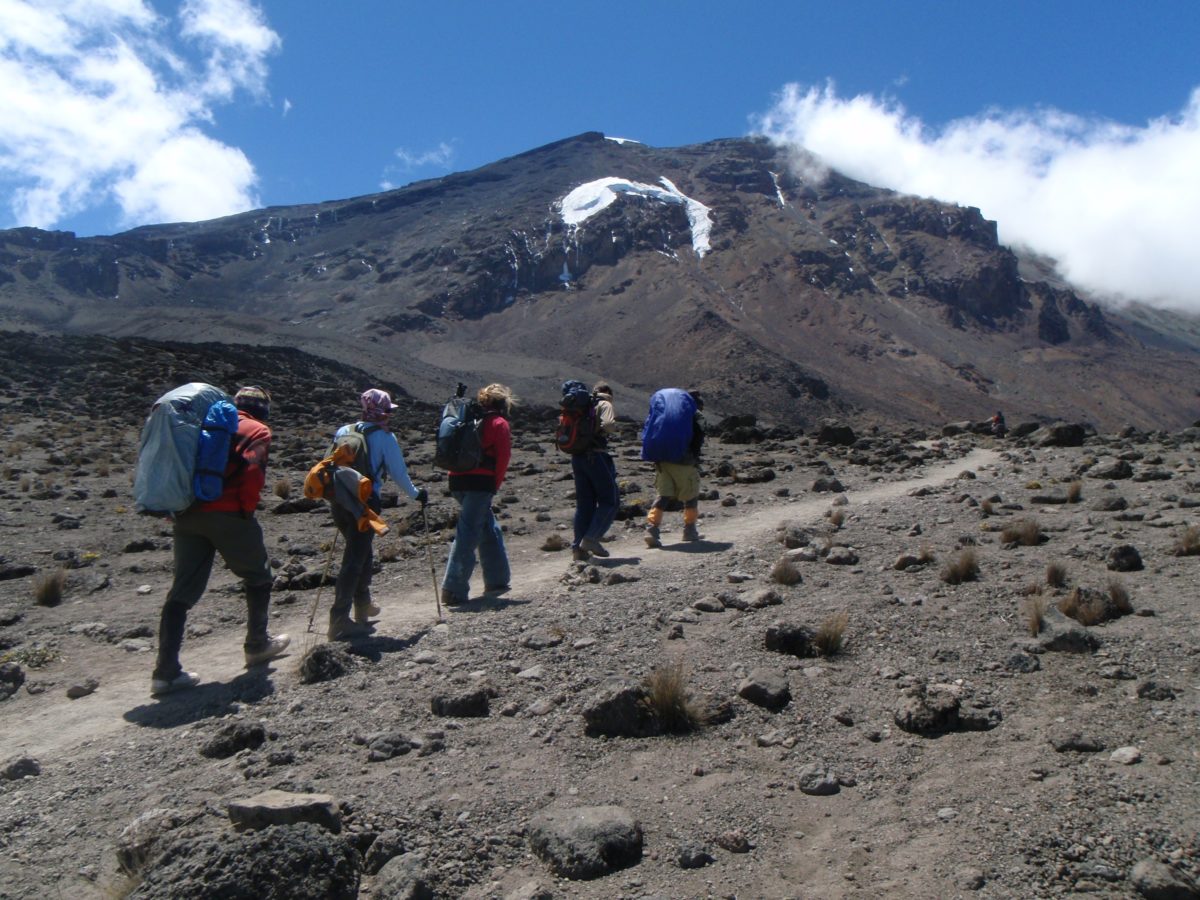
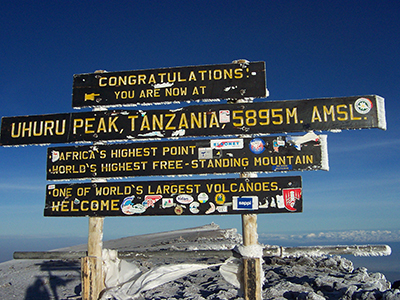
Blame the mountain itself. Kilimanjaro is walked, not climbed, which means a trekker can go from about 1,800 m at the gate to 5,895 m at Uhuru Peak in 5 or 6 days, on legs alone. No technical skill filters out who gets to try. Altitude does the filtering instead, and it does it on the summit night.
Three Types of Altitude Sickness
Altitude illness is not one condition but three, and they sit on a scale of severity. The first is common and manageable. The other two kill people, and both of them are why guides watch you at dinner.
- AMS, acute mountain sickness. The mild form. Headache is the cardinal symptom, with loss of appetite, dizziness, fatigue, or nausea alongside it. Typically appears above 2,500 m, usually 2 to 12 hours after arriving at a new altitude and often during or after the first night.
- HAPE, high altitude pulmonary edema. Fluid in the lungs. Typically above 3,000 m and more than 24 hours after arrival. The CDC notes it can be more rapidly fatal than the cerebral form.
- HACE, high altitude cerebral edema. Fluid on the brain, the end stage of AMS. Rare below 4,300 m. Without descent or treatment, coma is likely within 12 to 24 hours of the first stumbling.
All three overlap. HACE often follows the severe oxygen shortage that HAPE causes, which is why a guide who sees breathing trouble starts watching for confusion too. If you’re the one being watched, you won’t notice.
Common Symptoms
The hard part is not spotting symptoms. It’s deciding which ones mean keep going slowly and which mean turn around tonight. What decides it is neurological and respiratory, not how bad you feel.
- Normal for the altitude: headache that eases with rest and fluids, poor appetite, broken sleep, breathlessness on the uphill sections that settles when you stop.
- Stop ascending: headache that does not lift, vomiting, dizziness that persists at rest. This is AMS that is not resolving, and going higher makes it worse.
- Go down now: stumbling or unsteady walking, confusion, unusual drowsiness or behavior, breathlessness at rest, a cough that turns wet or bloody, a chest that feels congested at rest. The unsteady walk matters most of the three, because it is visible from outside at the point when the person having it can no longer judge themselves.
Prevention Tips
Almost everything that works is scheduling. The Wilderness Medical Society is specific: above 3,000 m, do not raise your sleeping altitude by more than 500 m a day, and take a rest day every 3 to 4 days. No commercial itinerary on Kilimanjaro meets that, and summit night alone gains over 1,000 m in a few hours. The realistic goal is to get closer to the guideline, because you won’t reach it.
One study on a 6 day Machame itinerary measured symptoms twice a day: 25% of trekkers had AMS on days 3 and 4, and 86% on summit day, 61% of them in the severe range. Risk isn’t spread evenly along the walk. It lands on the last night, which is exactly when you are highest, coldest, and furthest from help.
- Buy days, not gear. A cohort on a 6 day Rongai ascent reported AMS in 52.6% of trekkers and an 88% summit rate, against 77% AMS and 61% summit on 4 and 5 day Marangu itineraries measured separately. Different studies, different years, so read it as a direction rather than a promise.
- Pre-acclimatize if you can. Spending 6 to 7 days at 2,200 to 3,000 m beforehand lowers the risk, and even 2 days at 3,000 m helps before going higher. On Kilimanjaro specifically, this is the intervention that showed a measurable effect.
- Do not count on a single rest day. The Kilimanjaro study that measured it found one rest day at 3,700 m did not reduce AMS. One idle day inside a fast profile does not buy acclimatization.
- Drink enough, not more. Forced hydration has never been shown to prevent altitude illness and raises the risk of hyponatremia. Dehydration mimics AMS, which is where the myth comes from.
- Walk slower than feels natural. Pole pole is the phrase every guide uses, and it is not politeness. Effort at altitude deepens the oxygen debt you are already carrying, and the trekkers who arrive at camp spent are the ones who sleep badly and wake worse.
- Skip the alcohol for the first 48 hours and keep exertion mild over the same window.
- Do not read your age as protection. In the largest Kilimanjaro study, younger age predicted severe symptoms rather than preventing them.
Medication is a separate conversation and it belongs with your doctor. The evidence on Kilimanjaro is mixed, which is a reason to get advice rather than a reason to self-prescribe.
Treatment
Descent is the treatment. Everything else buys time until it happens.
- Mild to moderate AMS. Stop ascending and stay put until symptoms clear. No higher sleeping altitude with symptoms. If nothing improves within 24 hours, or anything worsens, go down.
- Severe AMS, or any suspicion of HACE. Descend immediately, at least 300 to 1,000 m, to the last camp where the person felt well. Treat doubt as HACE.
- HAPE. Descend at least 1,000 m or until symptoms resolve. Keep the patient’s exertion to a minimum.
- Oxygen. Supplemental oxygen relieves symptoms and is a bridge, not a cure. The handheld cans sold as emergency oxygen hold 5 liters at most, too little to change anything.
- Portable hyperbaric chamber. Simulates a descent of roughly 1,500 to 1,800 m and can be lifesaving when descent is delayed. It substitutes for altitude, not for the walk down.
Two practical points that matter more on this mountain than the theory. A sick trekker shouldn’t carry a load down, and the descent from Barafu or Kibo runs over loose scree, often at night, so someone unsteady on their feet needs hands on them.
Why the rule is not negotiable: of 21 climbers whose deaths were examined at the referral hospital in Moshi over 2 years, 76% died of HAPE and a further 14% of combined HAPE and HACE. That’s one hospital’s autopsy register, not a count of the mountain, and no reliable annual death rate for Kilimanjaro exists, despite the figures that circulate. What it does show is which condition kills, and that condition is treated by going down.
Read also
- Do You Need a Yellow Fever Vaccine for Tanzania?
- Is Zanzibar Safe? A Practical Guide for 2026
- Vaccinations for Tanzania: What You Need, and When
- Things to Know Before Visiting Tanzania
- What to Take on Safari in Tanzania
- Airports in Tanzania
Last verified August 12, 2026. Nothing here is medical advice. Whether you are fit to go to altitude, and what to carry or take, is a decision for you and your doctor.
Sources
- CDC Yellow Book: High-Altitude Travel and Altitude Illness, reviewed April 23, 2025
- Wilderness Medical Society: Clinical Practice Guidelines for the Prevention, Diagnosis, and Treatment of Acute Altitude Illness, 2024 Update
- UIAA Medical Commission: Emergency Field Management of AMS, HAPE and HACE
- Roach et al.: The 2018 Lake Louise Acute Mountain Sickness Score
- Jackson et al.: Incidence and predictors of acute mountain sickness among trekkers on Mount Kilimanjaro, 2010
- Croughs et al.: Acute mountain sickness in travellers who consulted a pre-travel clinic, Journal of Travel Medicine, 2022
- Meyer: Acute mountain sickness on the Machame route, 2012
- Lawrence and Reid: Acute mountain sickness and altitude illness on the Rongai route, 2016
- Davies et al.: Altitude sickness on the Marangu route, 2009
- Dekker et al.: Altitude-Related Disorders on Mount Kilimanjaro, Tanzania, Wilderness & Environmental Medicine, 2021