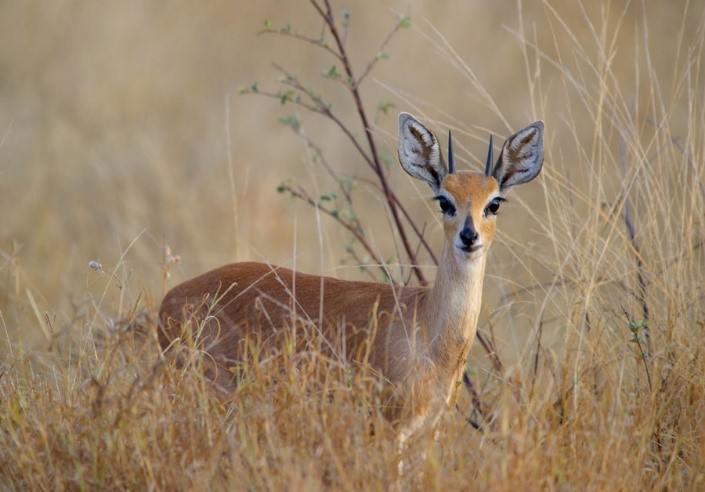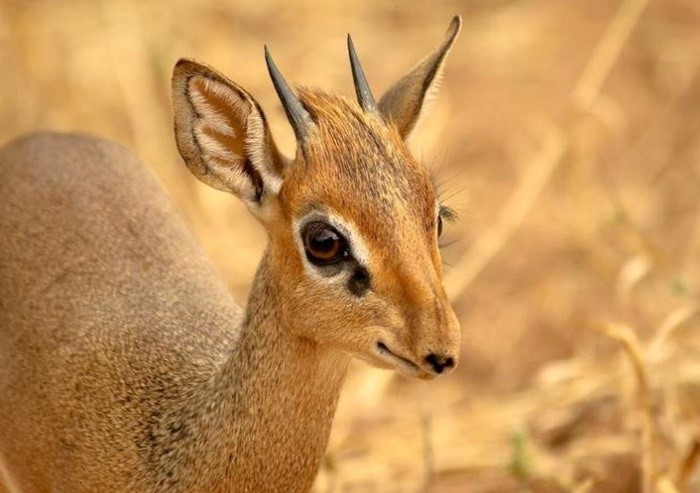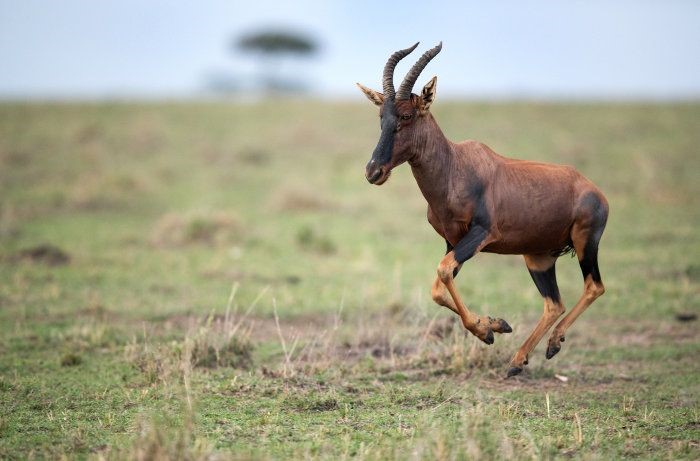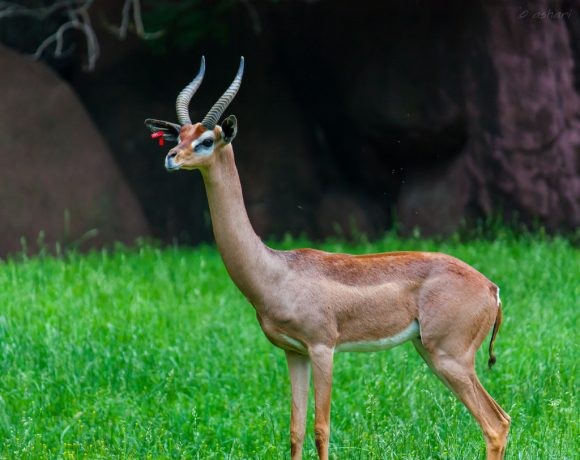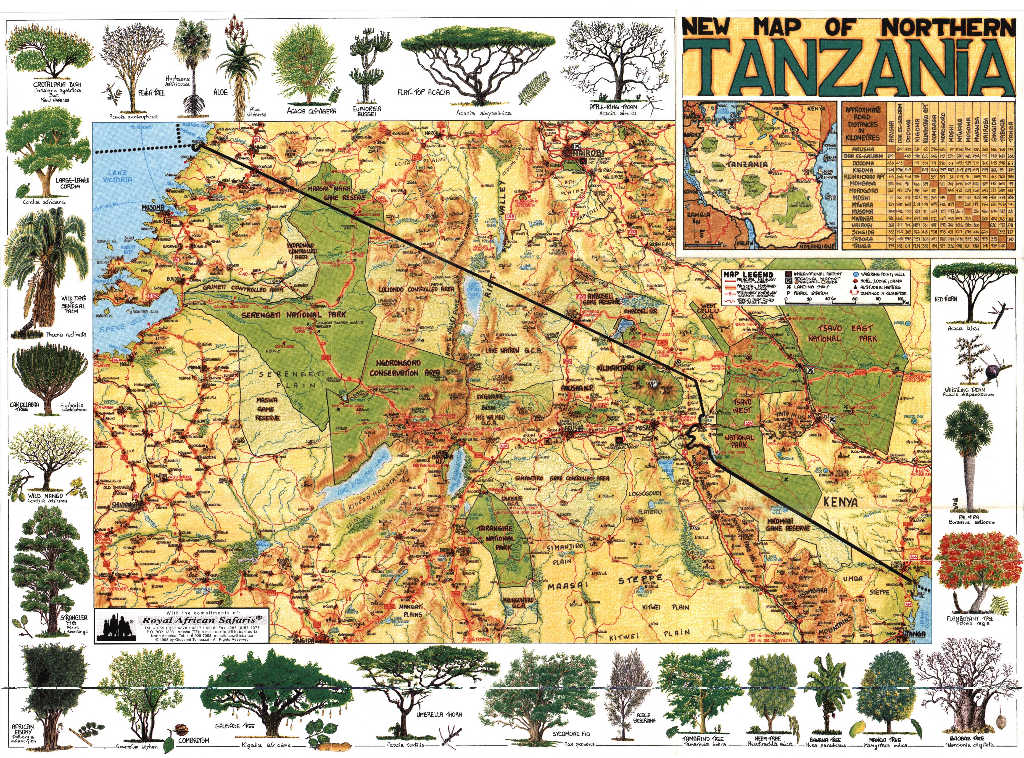
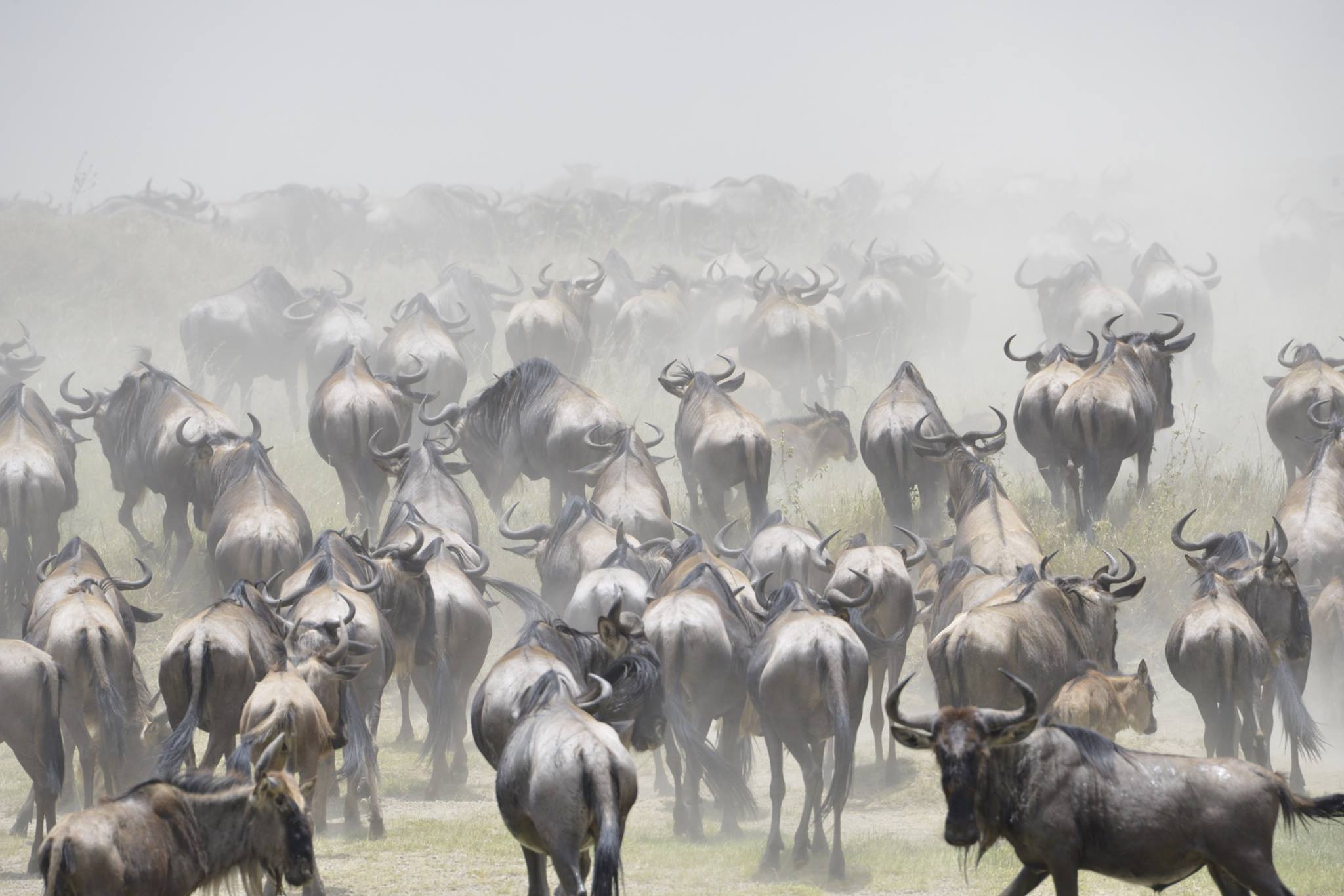
The Great Migration in Tanzania is the largest overland movement of wild animals on earth. Every year, roughly 1.5 to 2 million wildebeest, along with hundreds of thousands of zebras and gazelles, travel in a clockwise circuit across the Serengeti ecosystem, chasing rain and fresh grass. It’s recognized as one of the Seven Natural Wonders of Africa, and after 14 years of living in Tanzania and organizing safaris around this cycle, I can tell you that the numbers don’t do it justice.
The first time you see a column of wildebeest stretching to the horizon, everything you’ve read about it falls away.
This guide covers the full annual cycle: where the herds are each month, what drives their movement, and how to plan a safari around it. The migration doesn’t have a start date or a finish line. It’s continuous, and understanding that is the first step to planning well.
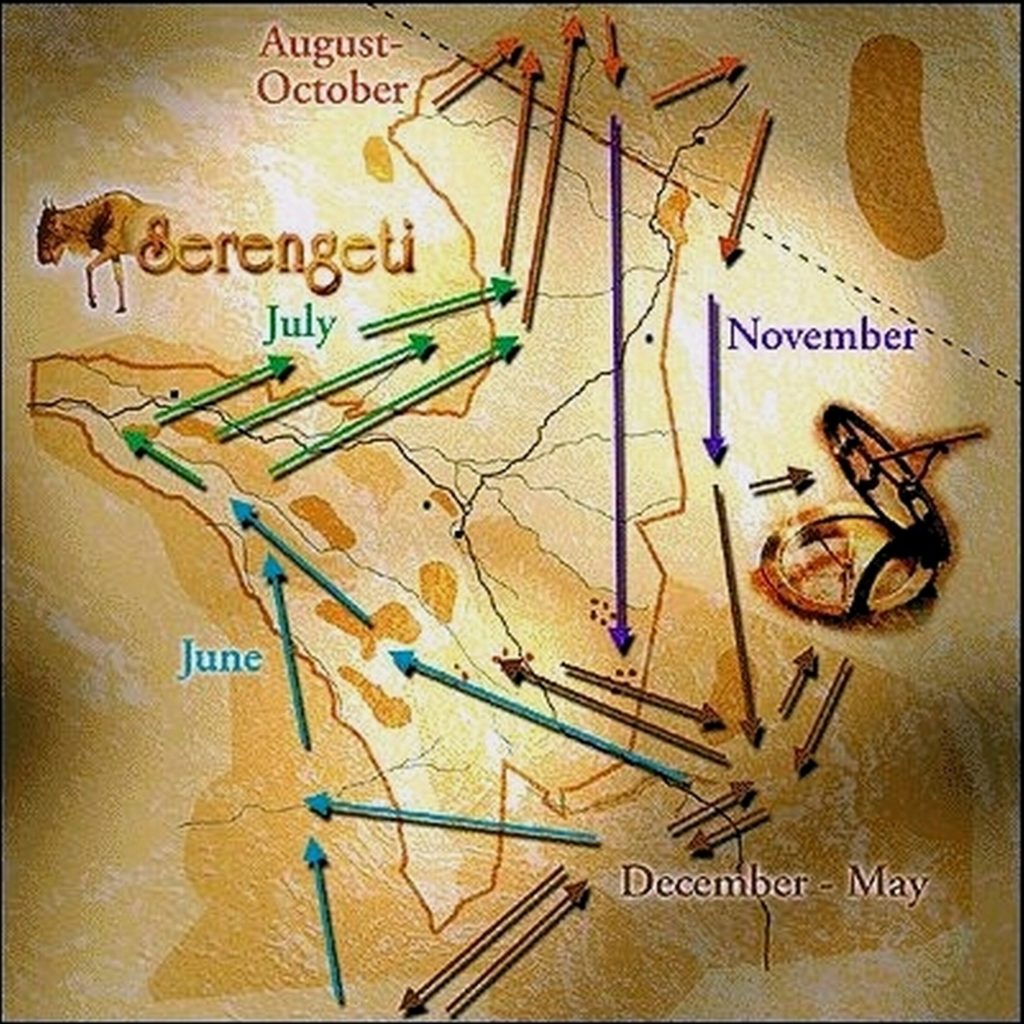
What Is the Great Migration?
The Great Migration is a continuous, roughly clockwise journey of millions of herbivores across the Serengeti-Mara ecosystem. The name “Serengeti” comes from the Maa language of the Maasai, often translated as “endless plains.”
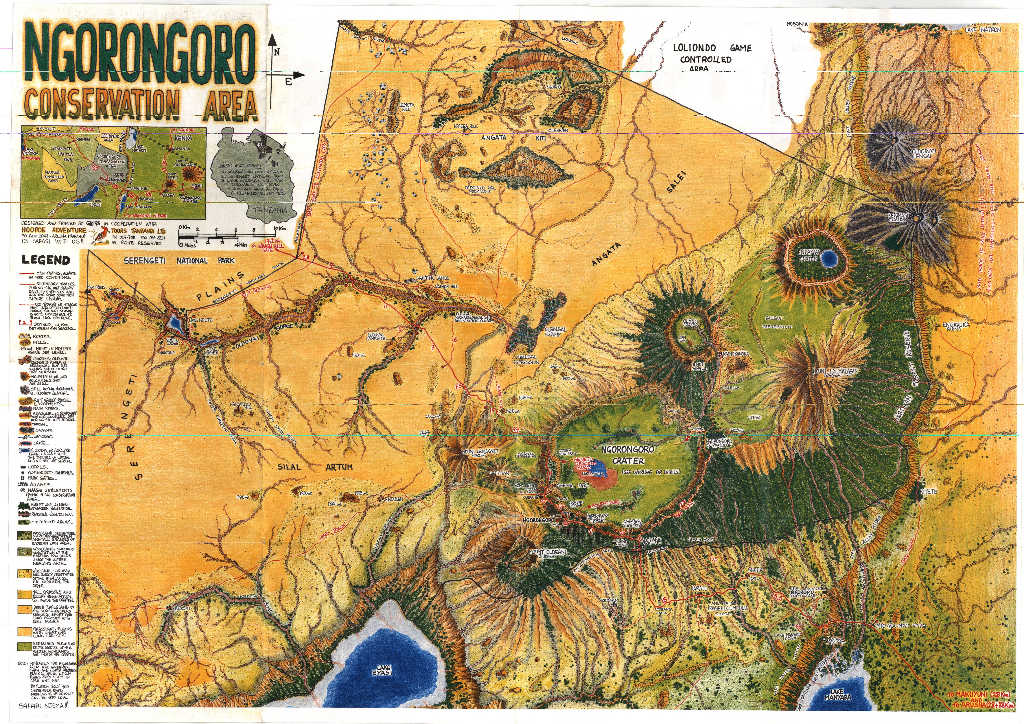
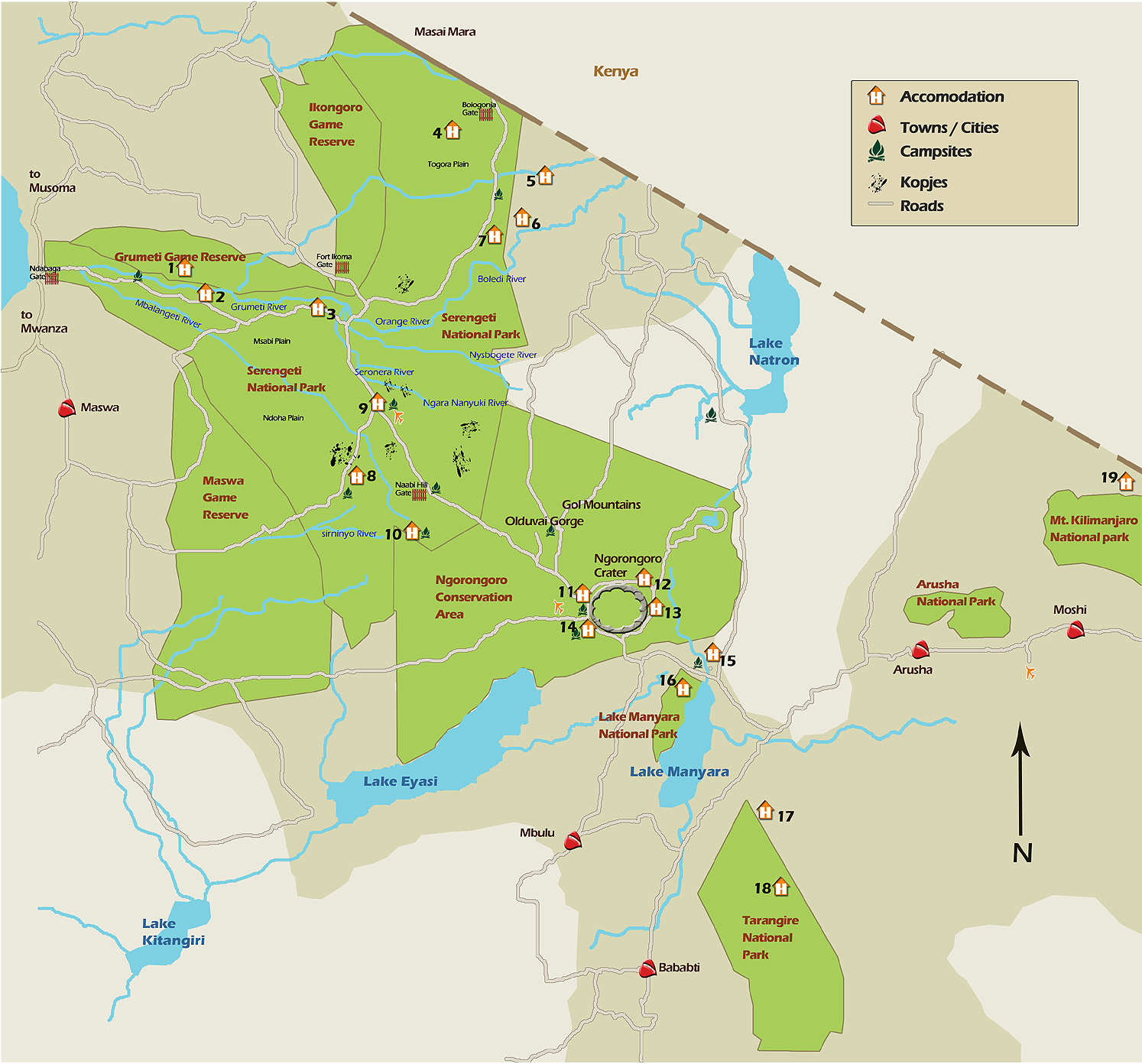
The ecosystem spans approximately 30,000 km² of protected land across Tanzania and Kenya, with the vast majority of the migration cycle taking place on the Tanzanian side, within Serengeti National Park, the Ndutu region, and the Ngorongoro Conservation Area.
The main north-south trek covers approximately 800 km (500 miles). The full annual circuit is estimated at around 1,000 km, though some sources cite figures as high as 3,000 km when accounting for all daily foraging movements throughout the year. The reality is that these animals never truly stop. They eat, they move, they eat again.
What drives the migration? Rainfall, and the nutritious grasses that follow it. When one area dries out, the herds push forward to greener ground. Some researchers believe wildebeest can detect rain up to 50 km away, possibly reacting to distant lightning and thunderstorms. There’s no scientific proof of this yet, but anyone who’s watched the herds suddenly change direction on a clear afternoon would find it easy to believe.
The key participants:
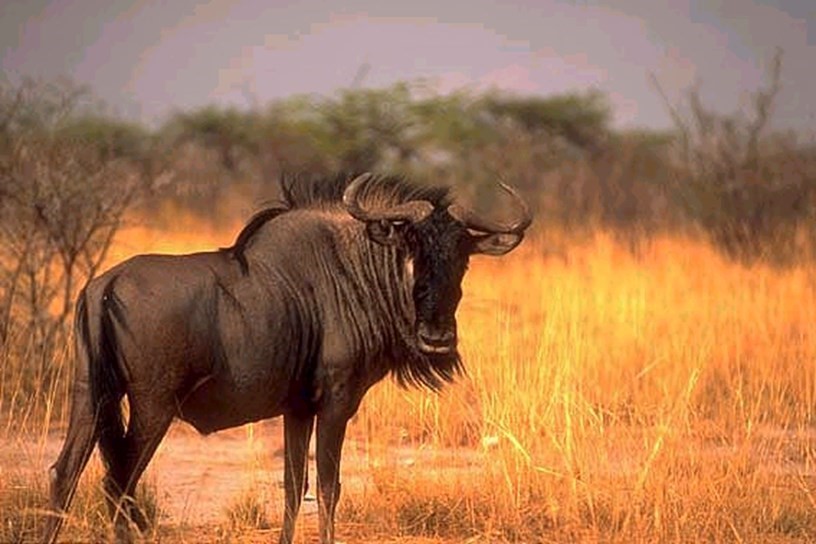
- ~1.5–1.7 million blue wildebeest: the main herd, and the animal most people associate with the migration.
- ~260,000 zebras: they typically move ahead of the wildebeest, grazing on taller grasses and clearing the way for the shorter-grass feeders behind them.
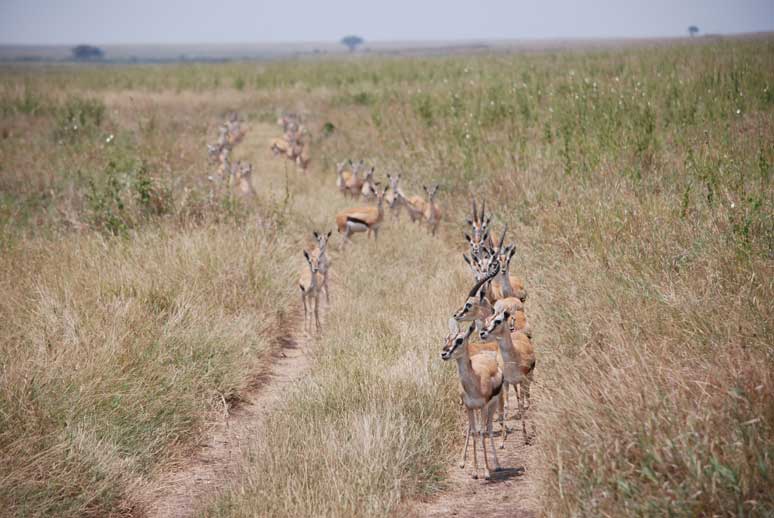
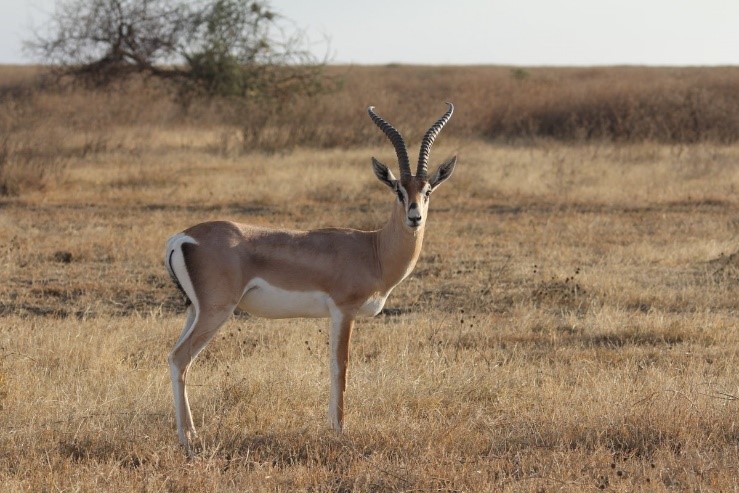
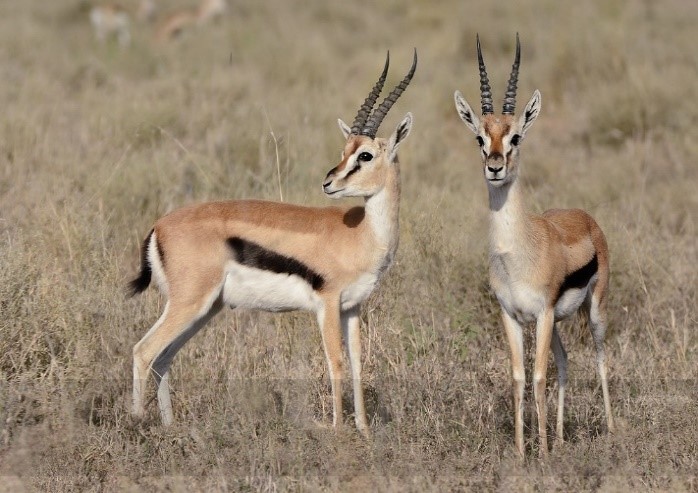
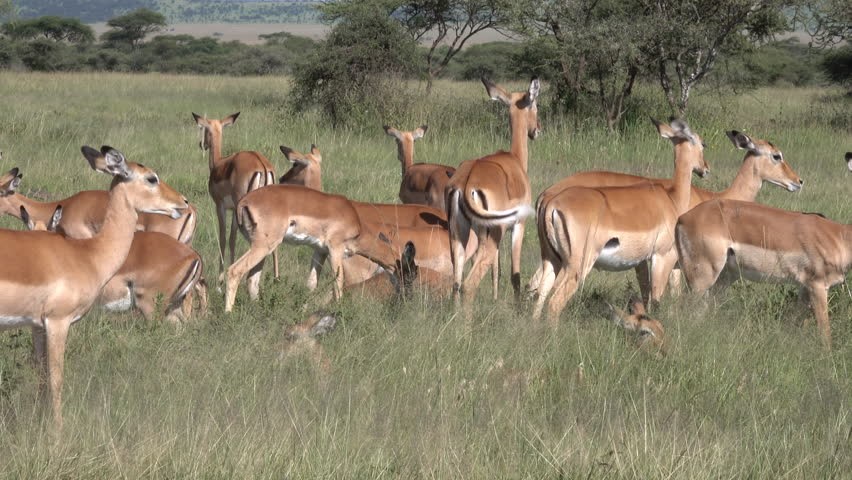
- ~470,000 gazelles (Thomson’s and Grant’s): they join the movement but don’t follow the full north-south circuit. Their pattern is primarily east-west.
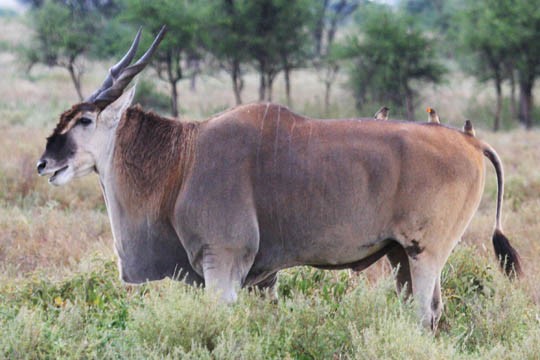
- Eland and other plains game in smaller numbers.
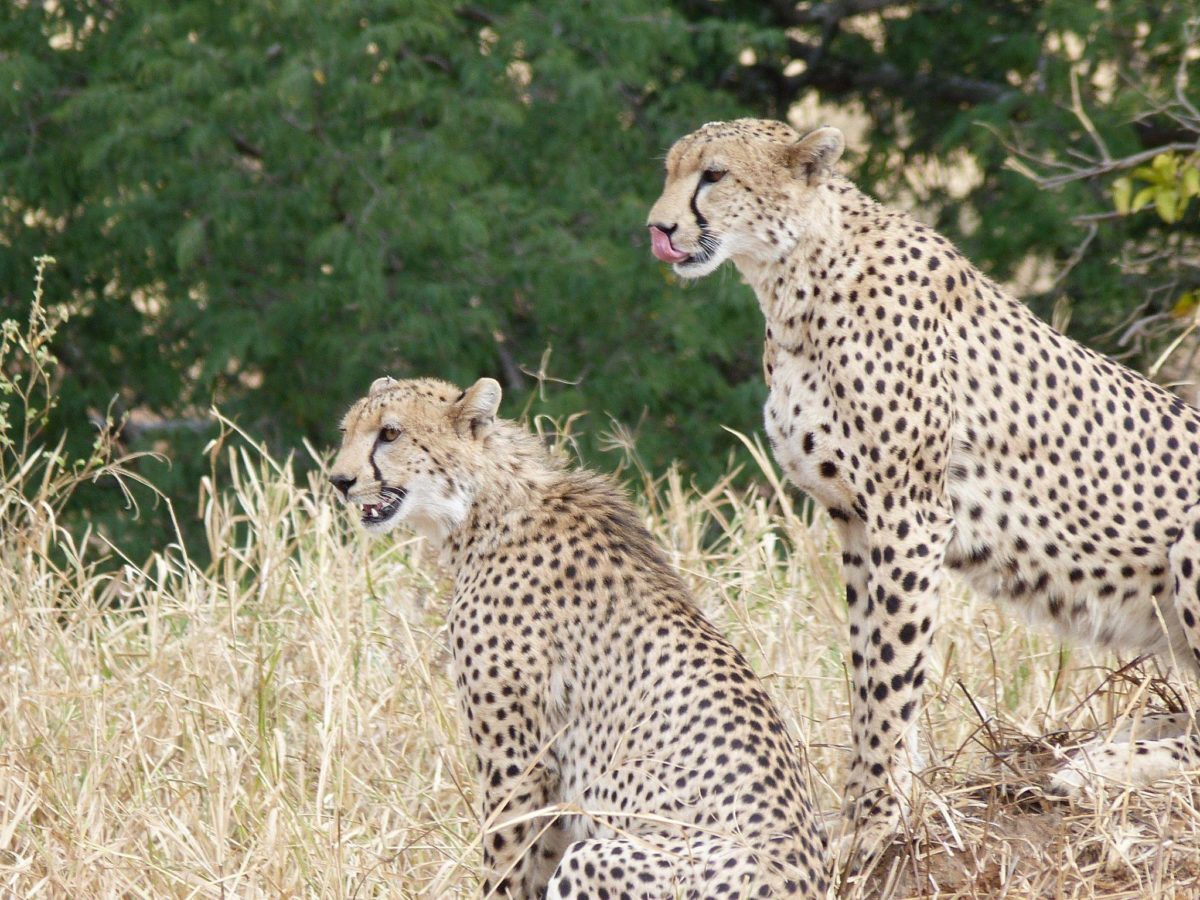
- Predators: the Serengeti hosts over 3,000 lions, approximately 1,000 leopards, 7,700 to 8,700 spotted hyenas, plus cheetahs and Nile crocodiles stationed at the river crossings.
The migration comes with a cost. An estimated 250,000 wildebeest die each year during the journey, from predation, drowning at river crossings, exhaustion, and disease.
That loss is part of the cycle. The nutrients return to the ecosystem, feeding the soil that grows the grass that feeds the next generation. And every calving season, roughly half a million new calves replenish the numbers.
When Is the Great Migration in Tanzania?
The short answer: year-round. The herds are always somewhere in the Serengeti-Mara ecosystem. There is no “off” period. The real question is which phase of the migration you want to witness.
The two most popular phases are:
- Calving season (December to March): the herds concentrate in the southern Serengeti and the Ndutu area. Hundreds of thousands of calves are born within a few weeks, attracting large numbers of predators.
- River crossings (July to October): the herds face the Grumeti River in the western corridor and then the Mara River in the northern Serengeti. This is the phase with the most dramatic, raw wildlife encounters.
The month-by-month breakdown below covers exactly where the herds are and what you can expect during each period.
The Migration Month by Month
The herds follow the rains, and the rains follow a roughly predictable seasonal pattern. The breakdown below reflects what typically happens, but keep in mind that every year is slightly different. Use this as a planning framework, not a guarantee.
January to March: Calving Season (Southern Serengeti and Ndutu)
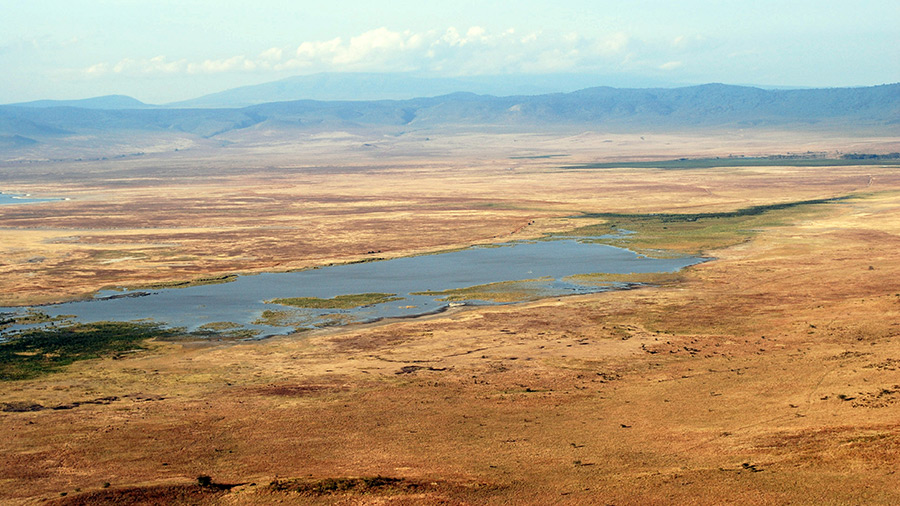
The herds are concentrated on the short-grass plains of the southern Serengeti and the Ndutu area, at the southeastern edge of the Ngorongoro Conservation Area. This is where the calving season happens, and it’s one of my favorite periods to be out on a game drive.
- Where: Southern Serengeti plains, Ndutu area, southeastern edge of the Ngorongoro Conservation Area.
- Calving peak in February: approximately 500,000 calves are born within a 2 to 3 week window, roughly 3,000 to 5,000 per day. Some sources cite figures as high as 8,000 per day. The exact number varies and likely depends on how concentrated the calving window is in any given year.
- Why here: the short grass gives mothers a clear line of sight to spot predators. Volcanic soils produce mineral-rich grasses that support lactation. It’s a strategic choice driven by hundreds of thousands of years of instinct.
- Predator activity: lions, cheetahs, and hyenas converge in high numbers. The concentration of prey and predator in one accessible area makes for exceptional game viewing.
- Landscape: green and lush after the short rains. This part of the Serengeti is easily accessible.
- Crowd level: moderate.
We organize a specific 6-day safari program around the calving season, covering Tarangire, the Ndutu area, and the Ngorongoro Crater.
April to May: The Long Trek North (Central Serengeti)
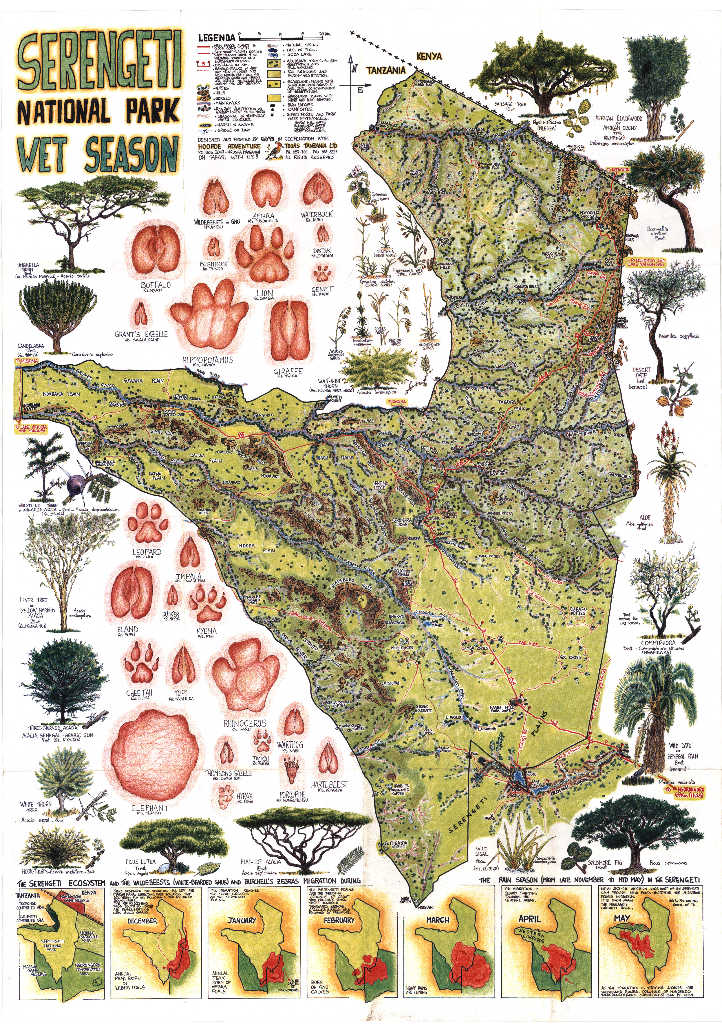
As the long rains arrive and the southern plains dry out, the herds gather their young and begin the long trek northwest. Long columns of animals pass through the central Serengeti, threading between the Moru Kopjes and the Seronera area.
- Where: Central Serengeti, Moru Kopjes, Seronera area. Seronera is the small settlement in central Serengeti where the official Visitors’ Center is located, a useful landmark for tracking the herds’ position.
- What’s happening: the herds move in long columns, sometimes stretching for kilometers. This is a transitional period between the calving grounds and the river crossings further north.
- Alternative routes: not all herds follow the same path. While many funnel through the central Serengeti toward the Western Corridor, a significant portion may move through the Loliondo area on the eastern side. I’ve seen years where the herds split into multiple groups heading in different directions.
- Landscape: tall green grass, lush conditions. One of the best periods for photography.
- Crowd level: low. Noticeably fewer vehicles on the tracks, and camp rates tend to be lower too.
- Key consideration: flexibility in your itinerary is especially important during this period. The migration is not the neat, single-path loop that maps suggest.
June to July: Grumeti River Crossings (Western Corridor)
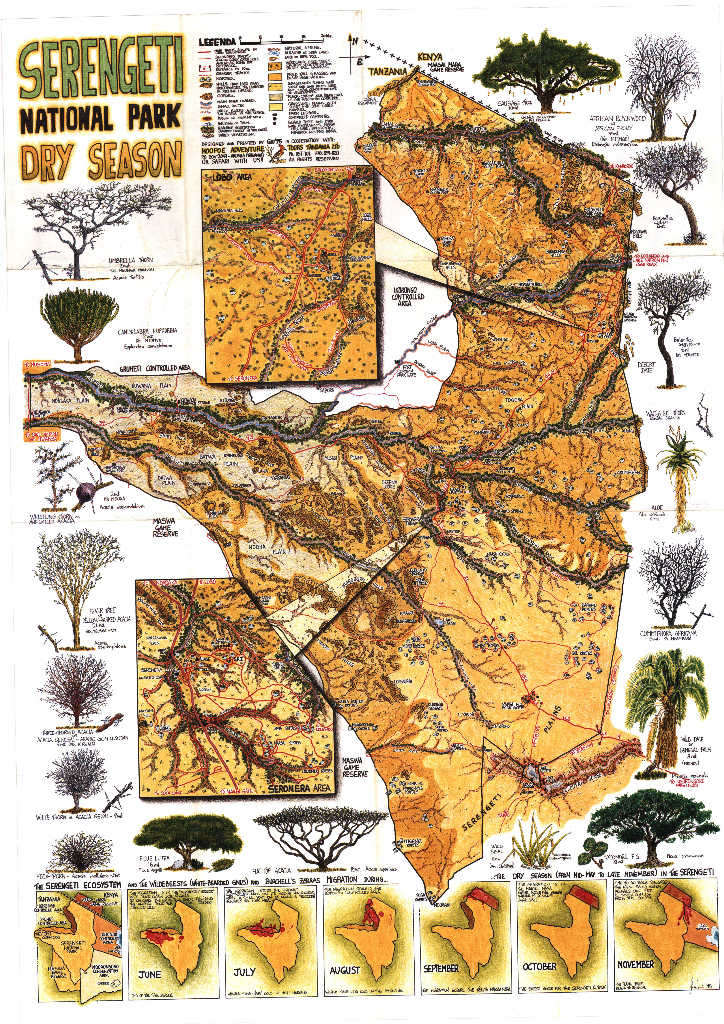
By June, the main body of the migration has reached the Western Corridor of the Serengeti. The first major geographical obstacle of the journey is the Grumeti River.
- Where: Western Corridor, Grumeti River area.
- What’s happening: the herds congregate on the southern bank, building numbers for days before the first animals commit to the water. Nile crocodiles, some of them very large, wait in the shallows.
- Compared to the Mara: the Grumeti crossings are less publicized than the Mara River events further north, but they’re dramatic in their own right. And you’ll share them with far fewer vehicles.
- Timing is fluid: some herds may already be pushing north toward the Serengeti’s northern reaches. A dry spell in the west can accelerate the movement. A late rain can delay it.
- Crowd level: low to moderate.
August to October: Mara River Crossings (Northern Serengeti)
This is the phase most people picture when they think of the Great Migration. The herds reach the northern Serengeti and face the Mara River, with its steep banks, strong streams, and crocodiles patrolling the deeper pools.
- Where: Northern Serengeti, particularly the areas around Kogatende and Lamai.
- What’s happening: the crossings are chaotic, fast, and completely unpredictable. Animals pour down the banks in surges, driven by collective momentum. Some days nothing happens. Other days, thousands cross within hours.
- You don’t need Kenya: a large portion of the herd stays on the Tanzanian side of the Mara River. The northern Serengeti offers excellent viewing without crossing the border.
- Crowd level: high. This is peak tourist season, and the best camps fill up quickly. Booking nearly a year in advance is not unusual for this period.
We organize a 7-day Mara River and Great Migration safari for this period, covering Tarangire, the central and northern Serengeti, and the Ngorongoro Crater.
November to December: The Return South (Eastern Serengeti)
When the short rains begin in late October or November, the herds sense the shift and start heading south. The cycle closes, and the Serengeti enters one of its quietest periods.
- Where: Eastern Serengeti, Lobo area, then through Seronera and down to the southern plains.
- What’s happening: the herds move steadily south, arriving at the short-grass plains by December. They’re getting ready to begin the calving season all over again.
- Crowd level: low. Very few tourists, very few vehicles.
- Why consider it: if you don’t need the spectacle of a river crossing and value space and solitude on your game drives, November is worth a serious look.
Where to See the Migration: Quick Reference
| Months | Serengeti Region | What’s Happening | Visitor Traffic |
|---|---|---|---|
| January–March | Southern / Ndutu | Calving season, high predator activity | Moderate |
| April–May | Central / Seronera / Moru Kopjes | Herds moving north, tall green grass | Low |
| June–July | Western Corridor / Grumeti River | Grumeti River crossings | Low to moderate |
| August–October | Northern / Mara River | Mara River crossings (peak drama) | High |
| November–December | Eastern / Lobo | Return south, quiet game viewing | Low |
Wildlife Beyond the Herds
The Serengeti is not a one-event park. Even if the main migration herds are in another region during your visit, the resident wildlife is substantial.
The park hosts roughly 70 large mammal species and over 500 bird species year-round. All of the Big Five are present: elephant, lion, leopard, Cape buffalo, and black rhino (the Moru Kopjes area is the best-known spot for rhino sightings). Giraffes, hippos, and resident antelope populations are everywhere.
The predator numbers tell the story clearly. The Serengeti supports over 3,000 lions, one of the highest concentrations in Africa. Approximately 1,000 leopards live in the ecosystem, with particularly good sighting opportunities along the Seronera River in the central Serengeti. The spotted hyena population sits between 7,700 and 8,700.
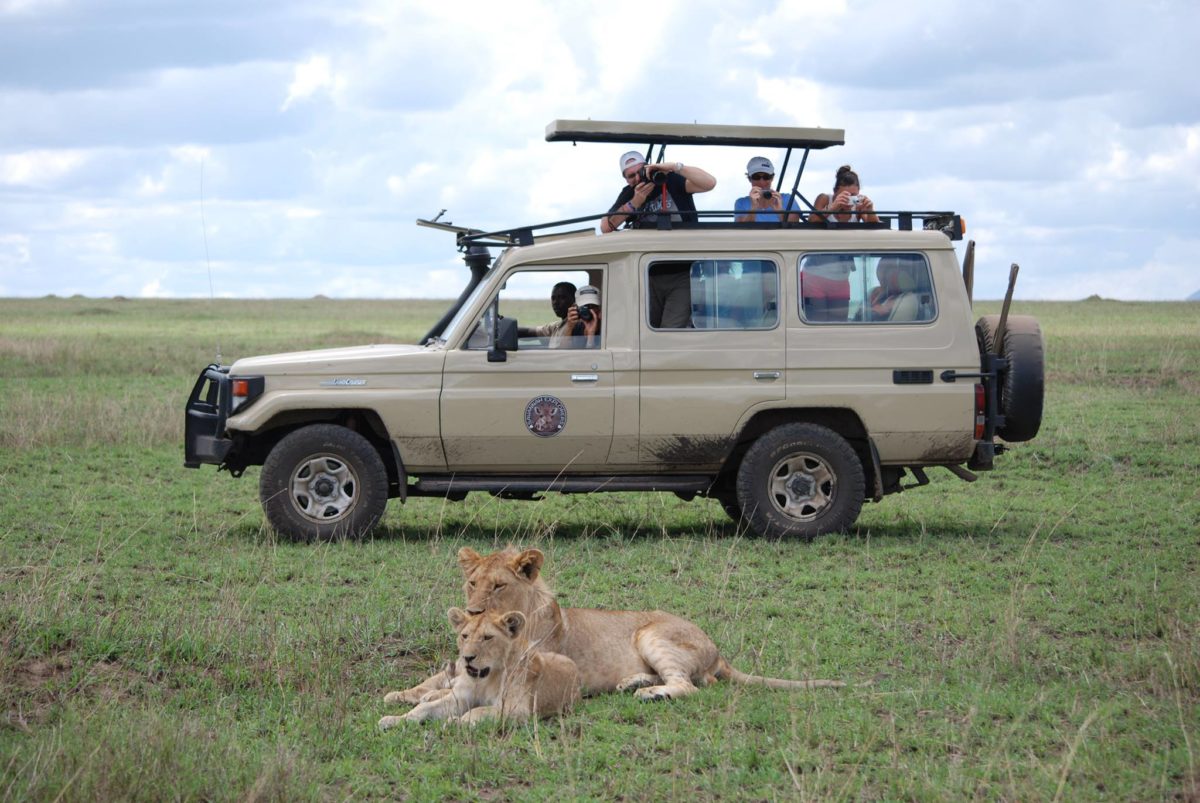
These animals don’t migrate. They hold territories year-round, which means your chances of seeing big cats on a game drive in the Serengeti are high regardless of the season.
If your dates don’t align with a specific migration event, you’ll still have a full safari. Our 9-day Big Five Safari covers the full Northern Circuit and doesn’t depend on migration timing.
Planning Your Migration Safari
A migration safari requires more planning than a standard game drive itinerary. Your timing, your choice of camp, and how many days you spend in the Serengeti all affect what you’ll see. Here’s what I recommend based on years of organizing these trips.
Accommodation: Mobile Camps vs. Permanent Lodges
Your choice of camp determines how close you’ll be to the herds. Mobile tented camps relocate two to four times a year, following the migration’s general path. They put you right where the action is. Permanent lodges offer more comfort and infrastructure but may require longer game drives to reach the migration front lines.
Both have their place. For calving season, the Ndutu area has excellent permanent and semi-permanent camps. For river crossings, a mobile camp near the Mara River gives you the shortest drive to the crossing points.
How Long to Stay
A minimum of 4 to 5 nights in the Serengeti gives you a reasonable chance of seeing the migration in action. If you’re covering multiple regions, say the southern plains for calving and then moving to the central Serengeti, plan for 7 to 10 nights total on safari.
More time means more flexibility. And flexibility, when you’re tracking a natural event driven by weather, is everything.
The Unpredictability Factor
The migration does not run on a calendar. Every timeline you read, including this one, is a general pattern based on what usually happens.
A sudden dry spell can push the herds earlier. An unexpected rain in the north can pull them forward. In November 2013, the wildebeest had already started trekking south when rain fell north of the Mara River, and the herds reversed direction entirely.
The herds also don’t move as one single group. Splinter herds take different routes. Some push through the Western Corridor while others cut through Loliondo on the eastern side.
Your guide’s daily communication with other guides and ranger stations across the park is what gets you to the right place. After 14 years of organizing safaris around this cycle, the one thing I’ve learned is that the travelers who enjoy the migration most are the ones who come with flexible expectations.
What to Pack
The Serengeti sits at altitude, so mornings on early game drives can be genuinely cold, especially June through August. By midday, it’s hot. Layers work best: a warm fleece or light jacket for dawn, lightweight breathable fabrics for the rest of the day.
Stick to neutral colors: khaki, olive, brown. Bright colors attract insects, and dark colors absorb heat.
Bring good binoculars. For photography, a telephoto lens of at least 400mm is useful for river crossings and predator interactions. Sunscreen, a wide-brimmed hat, and insect repellent round out the essentials.
How Much Does a Migration Safari Cost?
The cost of a migration safari depends on three things: what time of year you go, what level of accommodation you choose, and how many days you spend.
Peak river crossing season (August to October) commands premium rates across the board, from camp fees to park entries. The calving season (January to March) is moderately priced and delivers equally strong game viewing.
The transitional months, April through June and November, tend to offer lower rates, and the wildlife doesn’t disappear during those windows.
For a detailed breakdown of safari costs, see our safari pricing page.
We organize two safari programs specifically designed around the Great Migration:
- Ndutu and Serengeti Great Migration Safari (6 days, December to March): calving season in the southern Serengeti, with Tarangire and the Ngorongoro Crater.
- Mara River and Great Migration Safari (7 days, July to September): river crossings in the northern Serengeti, with Tarangire and the Ngorongoro Crater.
Frequently Asked Questions
These are the questions I get asked most often by travelers planning a migration safari.
Is the Great Migration only in Tanzania?
No. The Serengeti-Mara ecosystem straddles Tanzania and Kenya, and the herds cross into Kenya’s Masai Mara during part of the cycle. But the wildebeest spend the majority of the year on the Tanzanian side. The entire calving season, the Grumeti River crossings, and a significant portion of the Mara River crossings happen within Tanzania’s borders.
Can I see the migration year-round?
Yes. The migration is a continuous, circular movement. The herds are always somewhere in the ecosystem. What changes month to month is their location and the specific phase: calving, movement, or river crossings. There is no period where the migration “stops.”
What other parks can I combine with a migration safari?
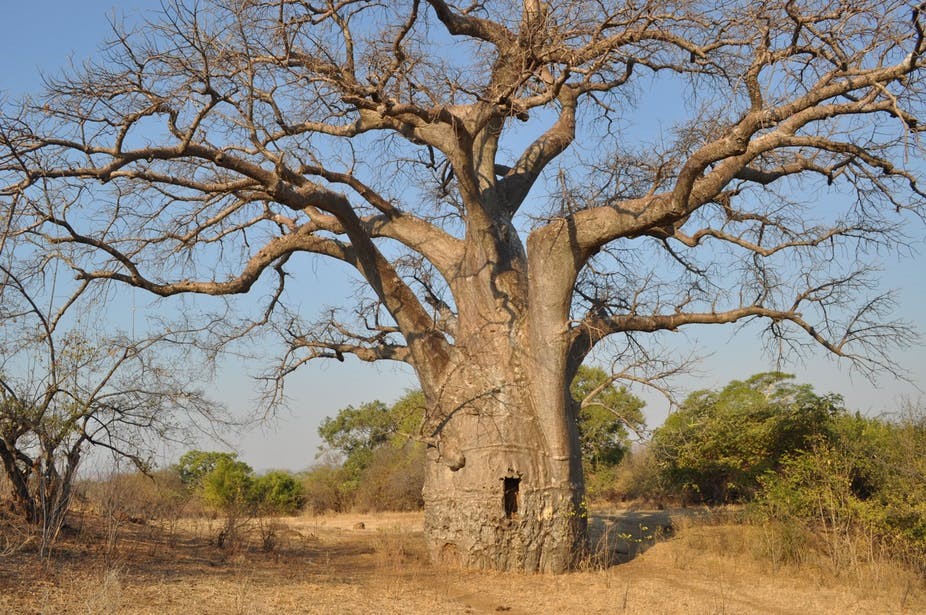
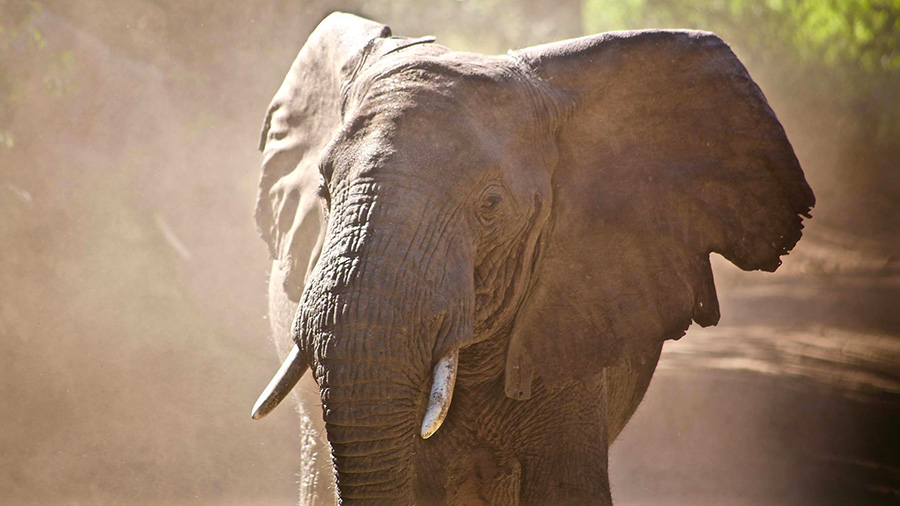
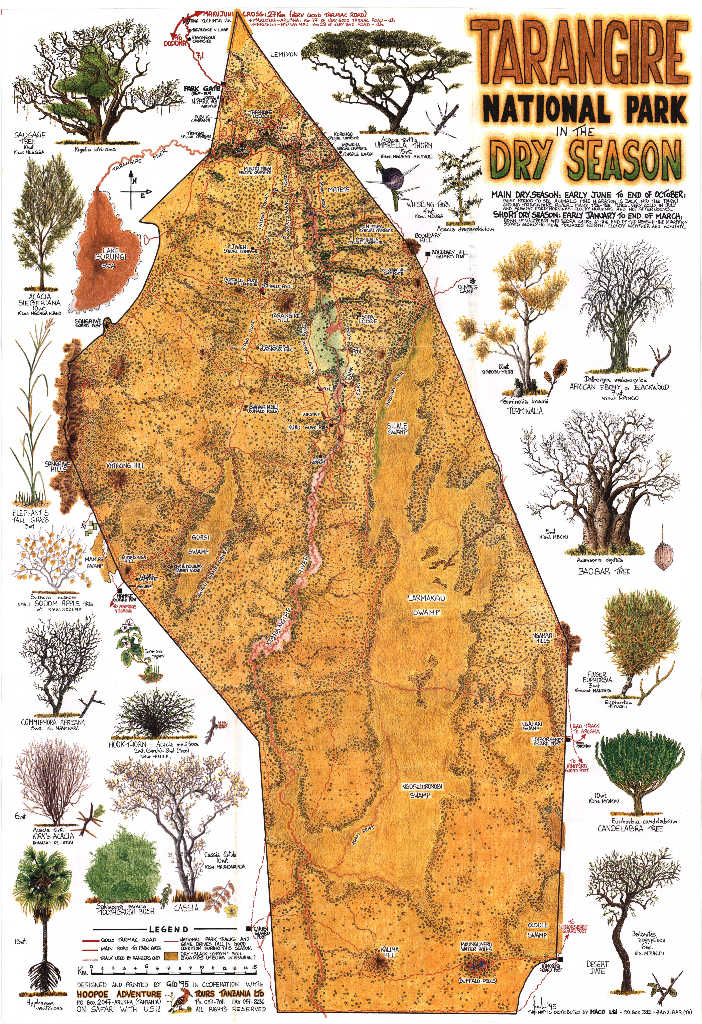
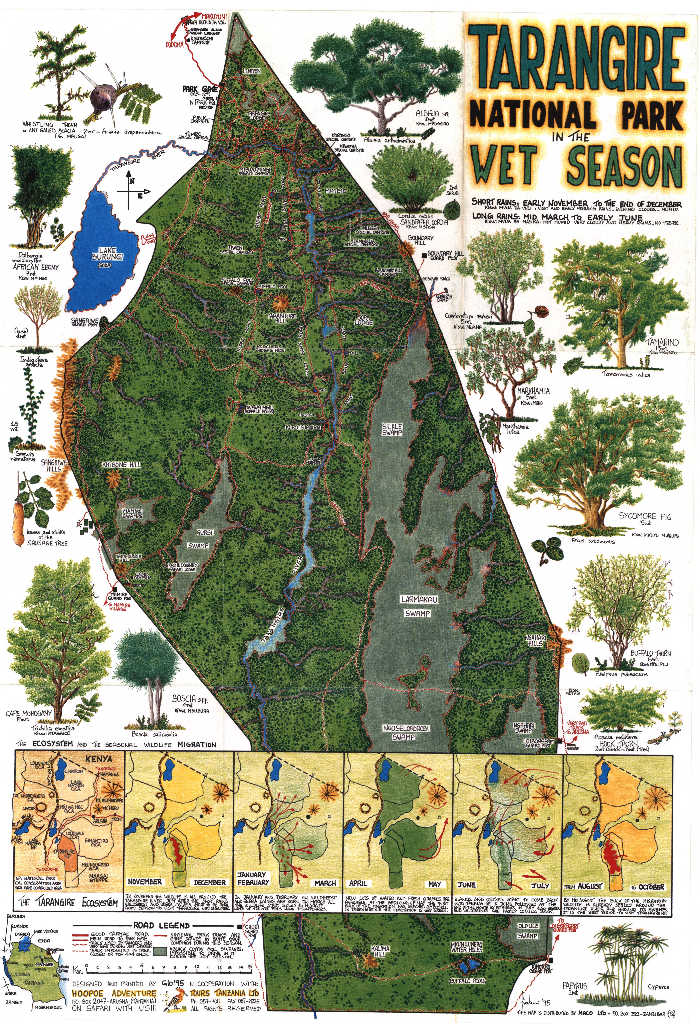
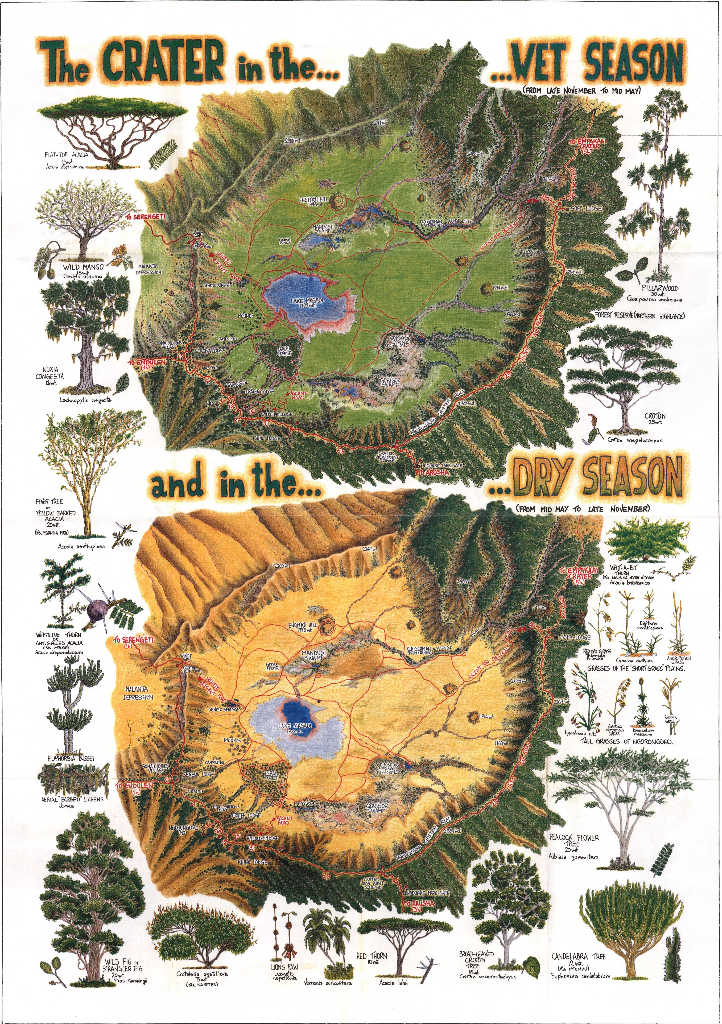
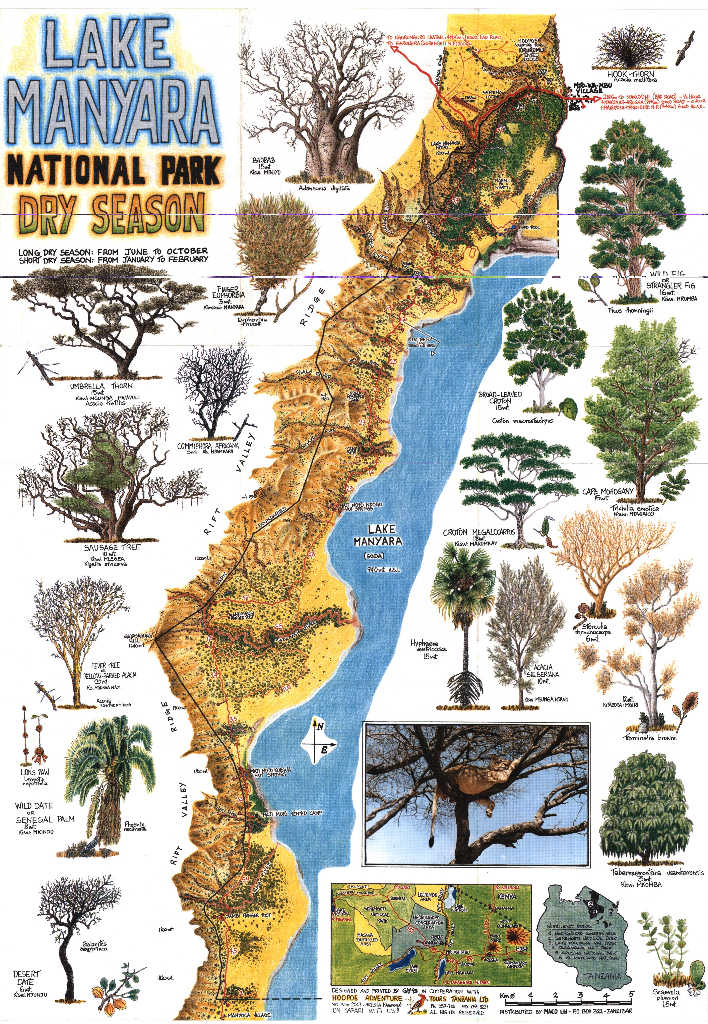
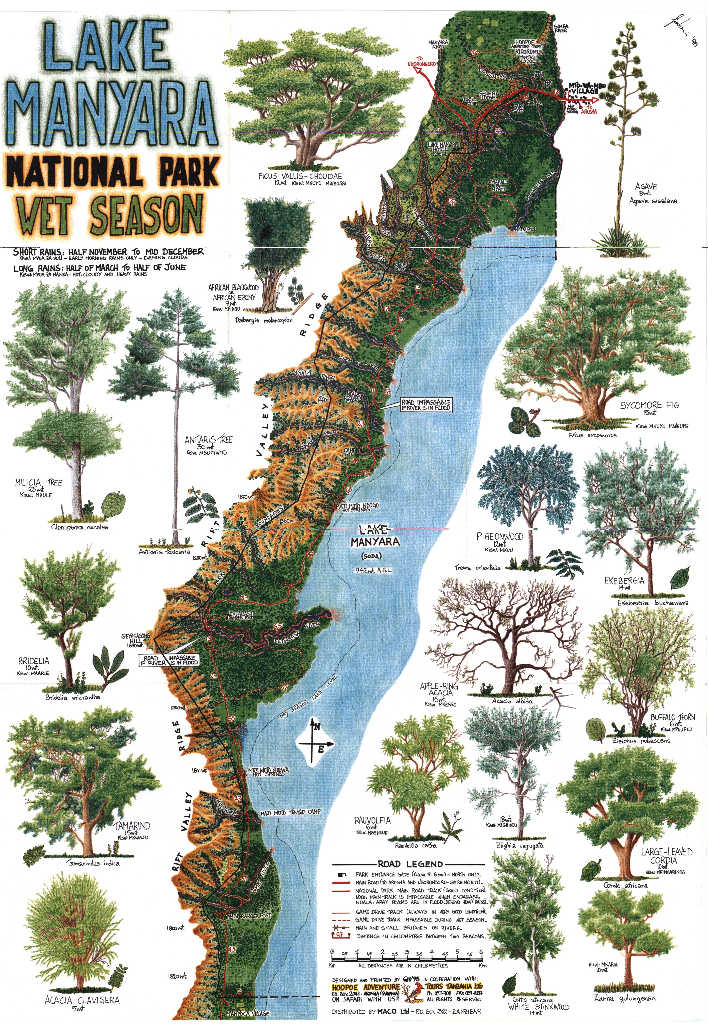
The Northern Circuit offers several parks that pair naturally with the Serengeti. Tarangire National Park is known for its large elephant herds and baobab trees. The Ngorongoro Crater is a collapsed caldera that supports all Big Five species in a contained area.
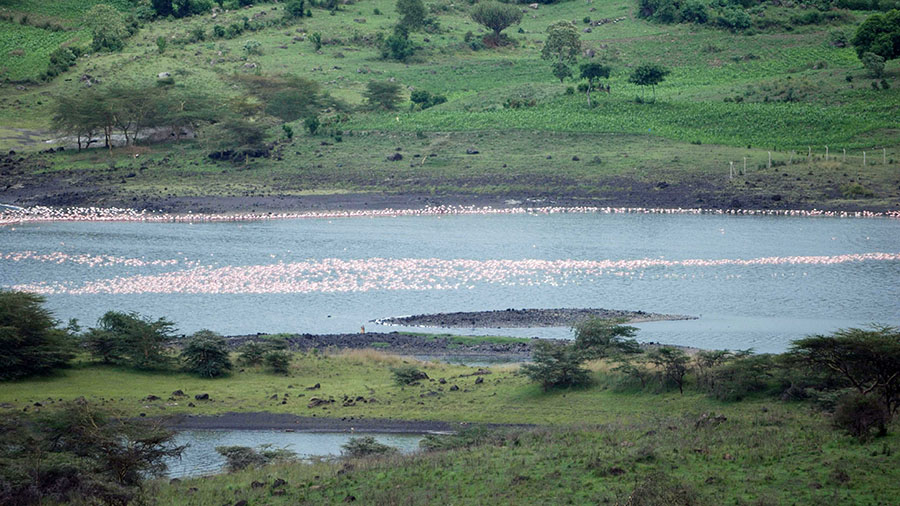
Lake Manyara is smaller but good for flamingos, tree-climbing lions, and birdwatching. Many travelers also add a beach extension to the Zanzibar archipelago after their safari. A short domestic flight connects the Serengeti to Zanzibar.
Do I need to go to Kenya to see the river crossings?
No. The Mara River flows through the northern Serengeti inside Tanzania. Many of the most dramatic crossings happen on the Tanzanian side of the border. You can witness the full spectacle without leaving the country.
Sources
- Wikipedia: Serengeti: ecosystem data, migration mortality figures, wildlife population numbers
- Serengeti.com: The Great Migration in Africa: migration cycle overview, calving season details