

Most people arrive in Tanzania expecting one thing and finding another. They picture heat, and the highlands are cold at dawn.
They picture a complicated, risky trip, and it turns out to be one of the easiest places to travel once a few practical things are sorted. After 14 years living in Arusha and organizing safaris, I have learned that a good trip here starts with getting the small stuff right before you fly.
So here is what actually matters before you visit Tanzania: your visa and passport, a few health basics, how money works, how you get around, tipping, the local rules that catch people out, and what happens the moment you land.
None of it is complicated.
It just helps to know it in advance.
Visas and entry
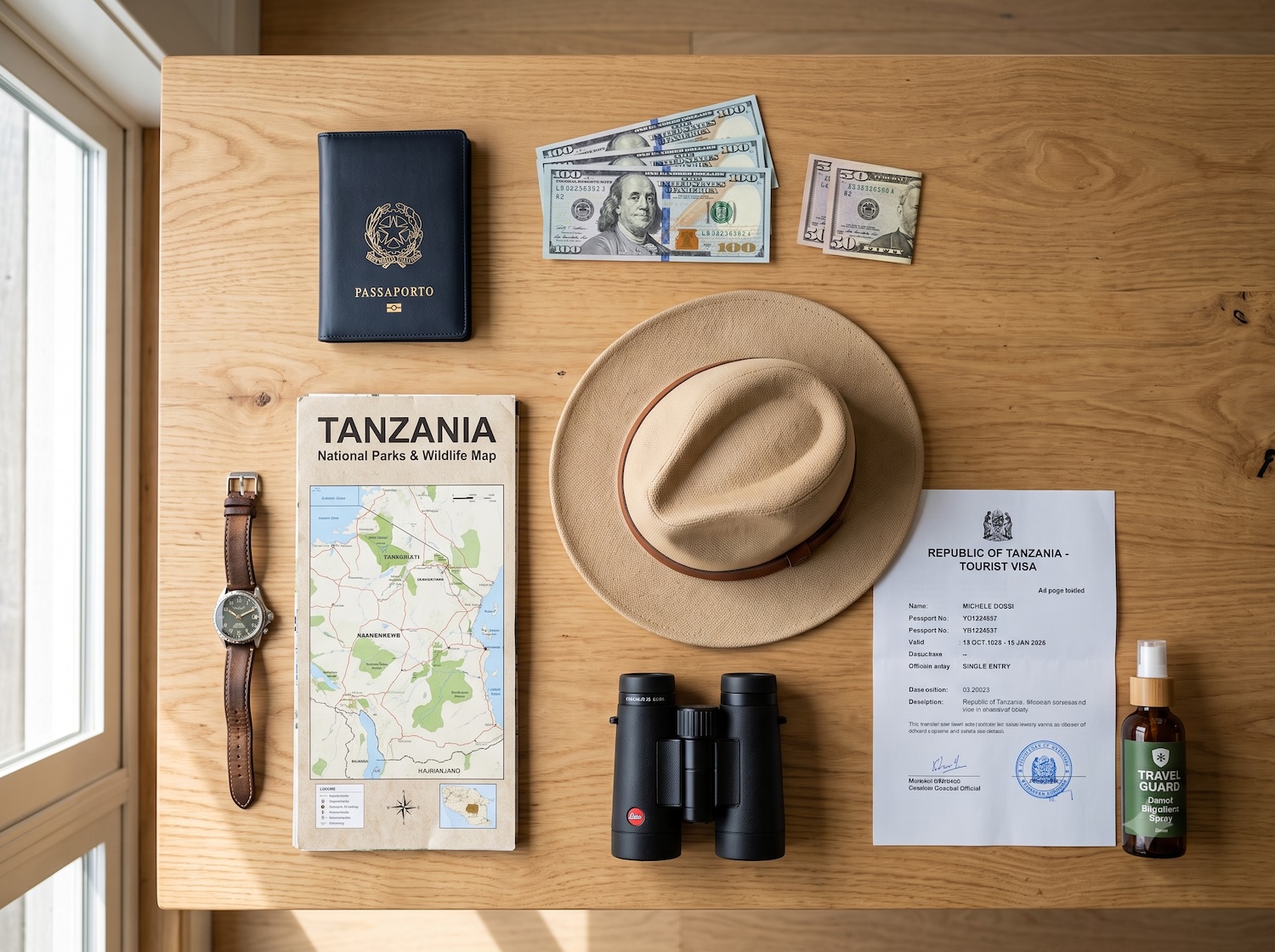
Almost every visitor needs a visa, and you should get it online before you travel. The tourist visa is straightforward, but the cost depends on your nationality, so check your own case before you assume the standard fee.
- Single-entry tourist visa: 50 USD for most nationalities.
- Multiple-entry visa: 100 USD. US citizens are required to get this one, even for a holiday, so Americans should budget 100 USD, not 50.
- Apply online in advance at the official government portal, visa.immigration.go.tz, ideally at least three weeks before departure to avoid queues on arrival.
- The online application needs a photo.
Your passport needs to be valid for at least 6 months beyond your entry date, with at least 2 blank pages. If you book with us, send a copy of your passport ahead of time: it lets us prepare your national park permits in advance.
Health before you travel
There are no mandatory vaccinations to enter Tanzania.
The one exception is yellow fever, which is required only if you are arriving from a country where the disease is endemic, including an airport transit there of 12 hours or more.
Read also “Do You Need a Yellow Fever Vaccine for Tanzania?“.
A tetanus booster is generally recommended for any international travel, and any other health decision is a personal one to make with your doctor.
Malaria is still present in most of Tanzania, including the safari parks, so bring a good repellent.
Most lodges and camps use insecticide sprays and provide mosquito nets, so the risk is low. I have written more about malaria on safari in Tanzania if you want the fuller picture, and I am not a doctor, so talk to yours about prevention before you go.
Money and payments
The local currency is the Tanzanian shilling, but US dollars are widely accepted and are the practical currency to carry for tips and incidentals. The one rule that catches people out is the age and condition of the notes.
- Bring US dollar bills issued in 2009 or later, clean and undamaged. Older or torn notes are refused.
- Larger bills (50 and 100 USD) get better exchange rates than small ones.
- Credit cards are not always accepted, and where they are, fees and poor exchange rates often apply. Carry cash.
- ATMs are available 24 hours at most banks. Bank branches open Monday to Friday, 09:00 to 15:00.
Getting around: domestic flights and roads
Safari travel in Tanzania means light aircraft between parks and unpaved roads inside them. Neither is a problem, but both shape what you pack and what to expect.
- Domestic flight baggage is usually 15 to 20 kg per person, plus 5 kg of hand luggage, in a soft bag. It varies with the airline and aircraft, so check your ticket. There is usually no online check-in; you check in at the airport.
- Roads inside the parks are unpaved, including the main route through the Ngorongoro Conservation Area to the Serengeti. Dust, some bumps, and the occasional flat tire are part of it.
- Internet is slow or absent in many remote areas. We use the best providers we can, but do not count on a European or American connection out in the bush.
Read also: What to Take on Safari in Tanzania, my full packing guide, from the soft bag to the complete checklist.
Tipping on safari
Tipping is not mandatory in Tanzania, but it is genuinely appreciated by the guides, drivers, and lodge staff who make a safari work. It is one of the questions I get asked most, so here is the simple version.
- Around 10 USD per person per day is a good guideline for a safari guide.
- Most lodges and tented camps have a tip box, where tips are pooled and shared equally among all the staff.
- Bring the tip money in cash, in the same clean US dollar bills mentioned above.
Local rules worth knowing
A few local laws and customs are not obvious to visitors, and one or two can actually get you fined or in trouble. None of them are hard to follow once you know them.
- Single-use plastic bags have been banned since June 2019. You can be fined for carrying them into the country, so take duty-free items out of their plastic bags before you land. Clear zip-lock bags for toiletries are fine.
- Never photograph uniformed personnel (police, military, officials) or government buildings. It is treated as illegal. Always ask before photographing people, and never offer money, especially to children, for a photo.
- Dress modestly away from the beach. Tanzania is mostly Muslim, so cover shoulders, midriff, and knees in towns and villages. Swimwear is fine on the beach, not in restaurants or common areas.
Insurance and medical cover
Every safari we run includes Medivac services, which send a plane or an ambulance to take you to leading hospitals in Arusha, Dar es Salaam, Nairobi, or South Africa if it is ever needed. We activate it directly from our Arusha office.
One condition matters: Medivac works only for guests who hold a travel insurance policy that covers emergency evacuation, or who guarantee payment by credit card, so you do need your own travel insurance in place.
There is also a separate entry requirement. Tanzania requires foreign visitors to hold a mandatory entry insurance policy, and one is enough: from NIC if you first enter on the mainland, from ZIC if you first land in Zanzibar. The NIC policy costs 44 USD per adult for up to 92 days and covers medical emergencies, evacuation, repatriation, and lost luggage. It does not replace your own travel insurance, and your own policy does not replace it. You can buy it online before you fly or on arrival, but without it you can be refused entry.
Read also “Is Zanzibar Safe? A Practical Guide for 2026“.
Arrival: what happens when you land
When you land, your guide or driver is waiting at the airport exit, holding a sign with your name and our logo.
If you cannot find your driver, you call our Arusha office and we sort it out, no forms and no waiting on hold.
It is a small thing, but after a long flight it is the moment most people remember as the point where the safari actually begins.
Hakuna matata.
One more thing before you fly
If you have not settled on how you get into the country, it helps to know which of Tanzania’s airports fits your trip before you book. I have covered which airport to fly into in a separate guide.
Sources
- Tanzania Immigration Department, visa fees, on tourist visa costs and categories.
- Zanzibar, mandatory visitor insurance, on the ZIC insurance requirement for the archipelago.
- National Insurance Corporation, Mandatory Inbound Travel Insurance portal, on the NIC policy required from October 1, 2026.

