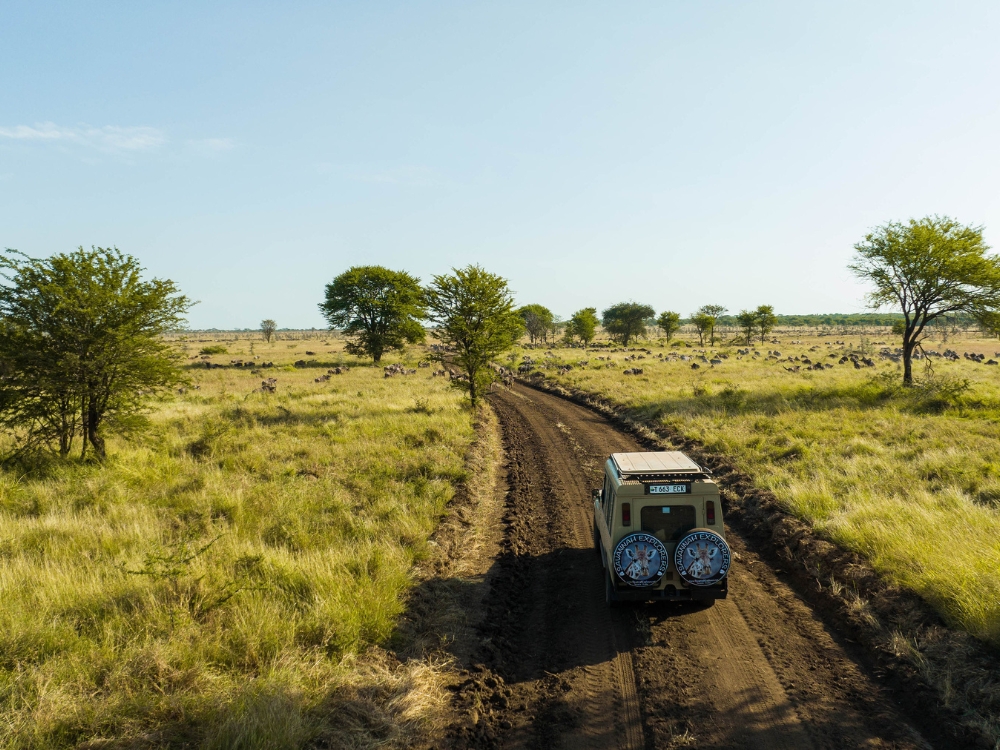
It depends on which half of the month you’re looking at. The first two weeks feel like an extension of February: dry, warm, and still deep in the calving season across the Serengeti.
The second half is a different story, as the masika (long rains) arrives and changes everything.
Temperatures stay between 16°C and 29°C in the northern parks, but rainfall jumps to around 130 mm in the Serengeti and 135 mm in Arusha, which is actually its warmest month of the year.
Meanwhile, the Zanzibar archipelago gets hotter and more humid, and on Kilimanjaro the last trekking window of the secondary season closes around mid-month.
Most travel agencies label March as “off season” and leave it at that. But after 14 years here in Arusha, I think of it as two different trips packed into one calendar month. Book the first half and you get late calving with February-level wildlife at a fraction of the cost.
Temperatures: 16–29°C (61–84°F) in the northern parks; 23–32°C (73–90°F) on the coast
Rainfall: Increasing through the month. First two weeks often dry, second half noticeably wetter. Afternoon thunderstorms become more frequent
Beaches (Zanzibar): Hot and humid (32°C+), sea at 29°C. First half still good for diving, second half less predictable
Packing: Fleece for cool mornings, lightweight clothes for the day, proper rain jacket, waterproof bag for camera gear
Safari Conditions in March
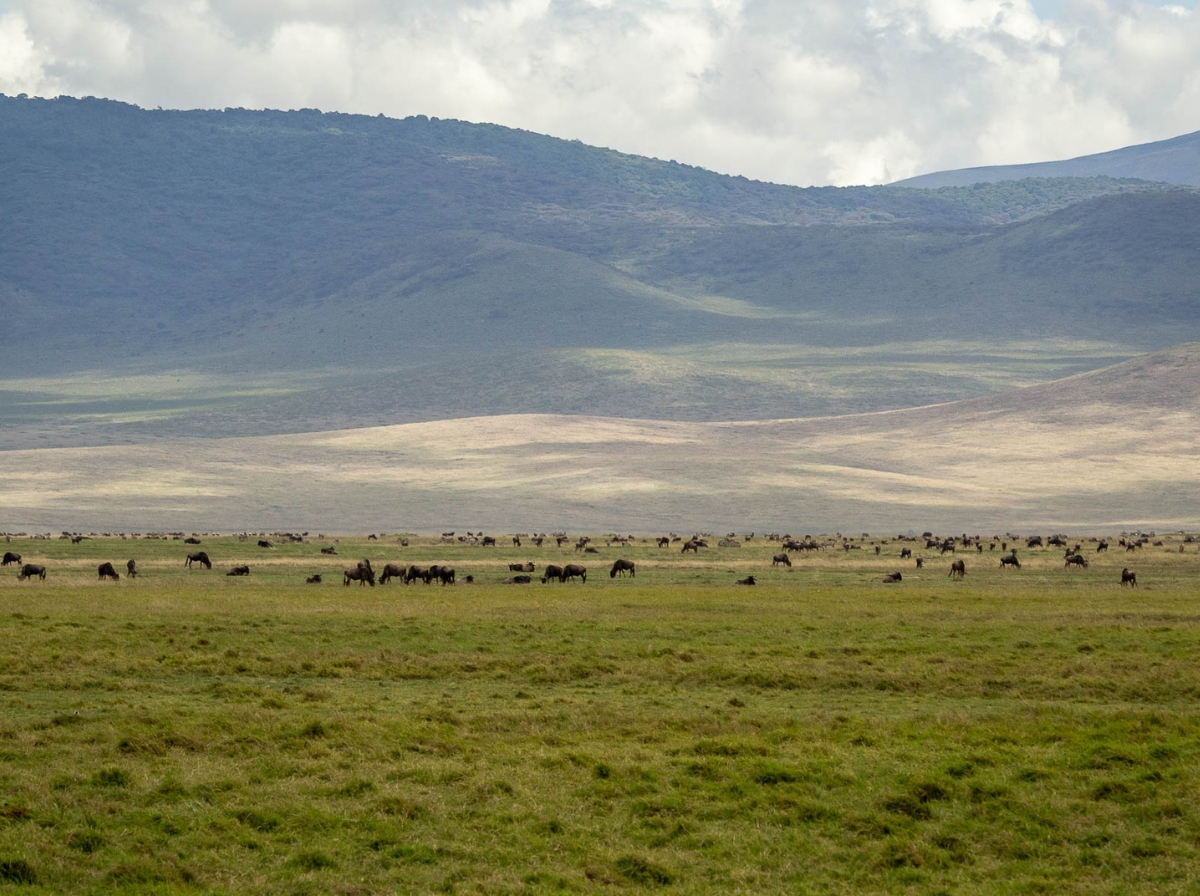
March is a split decision for a safari in Tanzania. Before the 15th, conditions are close to February: calving winds down on the Ndutu plains, predators are still active, and the skies cooperate. The herds begin drifting toward the Moru Kopjes and Seronera in Central Serengeti.
After mid-month, the masika settles in and the rhythm shifts. Showers get longer, some side roads turn muddy, and you’ll want proper rain gear.
But here’s the thing: the wildlife doesn’t care about the rain.
I’ve had some of the best lion sightings of my career during March storms, with zero other vehicles around.
Regional Weather Breakdown
Zanzibar archipelago: Increasingly humid. First half still sunny enough for snorkeling, but by late March rain becomes frequent and sea visibility drops
Northern Safari Circuit (Serengeti, Ngorongoro, Tarangire, Lake Manyara): The masika kicks in during the second half. Mornings still cool (14–16°C), afternoons warm (29°C). Ngorongoro rim stays cold, bring warm layers
Southern & Western Parks: Peak of their single rainy season. Some camps close (Nyerere/Selous, Ruaha). Focus on the Northern Circuit
Kilimanjaro: First two weeks still viable. From mid-March, heavy rain on the southern slopes makes trails muddy and slippery. Better to wait for June
Travel Highlights & Considerations
Great Migration in transition: The last calves are born in early March, and the herds start breaking into long columns heading northwest from Ndutu toward Seronera. Less predictable than the calving peak, but also far less crowded
Low season pricing kicks in: Camp rates start dropping mid-month, with reductions of 20–30% compared to peak season. For budget-conscious travelers, early March is arguably the best value window of the year
Green season photography: Grasslands turn deep green, skies fill with dramatic clouds, and the post-rain light is exceptional. A completely different Serengeti from the golden dry-season images most people picture
Quiet parks: You can spend a morning in Tarangire or Lake Manyara and barely see another vehicle
What Most Travelers Don’t Know About March
March has a couple of openings that the peak-season crowds never experience.
Early March = hidden value: The first two weeks deliver February-level wildlife at low-season prices. We regularly recommend this window to couples and families who want the calving experience without the February crowds or costs
The Serengeti in bloom: The rains trigger wildflowers across the plains: yellow Sodom apple, scarlet fireball lilies, and aster daisies. This is the lushest the park gets all year
How March Compares to February and April
February is the peak of the kiangazi and the calving spectacle. March starts similarly but tips into the masika around mid-month, and with it the calving ends and the herds begin moving.
April brings the full force of the rains (155 mm+ in the Serengeti), with some southern camps closed and Kilimanjaro off limits. If you’re choosing between the three, March is the compromise: some of February’s conditions in the first half, none of April’s extremes, and lower prices across the board.
The weather in Tanzania in February is warm to hot across the northern parks, with temperatures between 16°C and 29°C and slightly more rain than January. February is the hottest month of the year in most of the country and the peak of the kiangazi, the dry pause between the two rainy seasons.
It’s also the peak of the wildebeest calving season in the Serengeti, with thousands of calves born every day on the Ndutu plains.
After 14 years in Arusha, I consider February one of the most rewarding months for a safari. The wildlife spectacle is at its most intense, and the parks are still far from the July to September crowds. For a broader view of Tanzania’s climate across all months, see our Tanzania Climate guide.
Key Weather & Travel Details for February
Temperatures: 16–29°C (61–84°F) in the northern parks; 23–32°C (73–90°F) on the coast. February is typically the hottest month, especially at lower altitudes
Rainfall: Slightly more than January. Around 65 mm in Arusha, 100 mm in the Serengeti, spread over 12–14 days. Still mostly brief afternoon showers
Beaches (Zanzibar): Very hot and humid (32°C+). Sea at 29°C, the warmest of the year. Good diving and snorkeling visibility continues
Packing: Same as January: fleece for morning game drives (14–16°C at dawn), light breathable clothes for daytime heat, sunscreen, light rain jacket
Safari Conditions in February
February is one of the best months for a safari in Tanzania. The calving season is at its peak in the Southern Serengeti, and the concentration of prey and predators on the Ndutu plains makes for exceptional game drives.
The grass is still short from months of grazing by millions of animals, so visibility across the open plains is excellent. Green landscapes after the vuli provide a photogenic backdrop that the dry season can’t match. Rain falls mostly as brief afternoon showers and rarely disrupts a full day in the field.
Regional Weather Breakdown
Zanzibar archipelago: Hottest and most humid month. Temperatures reach 32°C+, sea at 29°C. Diving and snorkeling visibility still good under the kaskazi (NE monsoon). Good for beach travelers who enjoy tropical heat
Northern Safari Circuit (Serengeti, Ngorongoro, Tarangire, Lake Manyara): Still in the kiangazi. Warm days (up to 29°C), cool mornings (14–16°C). The Serengeti sees ~100 mm over 14 days, slightly wetter than January but still manageable. Ngorongoro rim: mornings below 10°C, warm layers essential
Southern & Western Parks: Mid-rainy season (single season Nov–Apr). Hot (30°C+), increasingly humid. Northern Circuit remains the better choice
Kilimanjaro: Last reliable trekking window before the masika arrives in March. Conditions still relatively dry, base temperatures warm (25–30°C). By late February, moisture increases on the southern slopes
Travel Highlights & Considerations
Wildebeest calving at its peak: This is the main reason to visit in February. Roughly 500,000 calves are born within a 2 to 3 week window, concentrated on the Ndutu plains and the short-grass areas of the southern Serengeti. The density of newborns draws lions, cheetahs, hyenas, and jackals in numbers you won’t see at any other time of year
Great Migration: The herds are still concentrated between Naabi Hill and Lake Ndutu, near the Ngorongoro Conservation Area. By late February, some groups begin shifting west toward Seronera as the first masika rains approach. The Ndutu Great Migration Safari is designed specifically for this period
Fewer crowds than peak season: February is busier than January (the calving draws more visitors), but still far quieter than July to September. Booking the Ndutu area camps in advance is recommended, especially for mid-February
Birdwatching: European and northern African migratory species still present, many in breeding plumage. Resident species also active. Lake Manyara and Tarangire remain productive
Tropical cyclones: Same low risk as January. The SW Indian Ocean cyclone season runs Nov–Apr (extended to mid-May for some island nations), but documented landfalls on Tanzania occurred in April and one in early May 2024. Northern parks unaffected
What Most Travelers Don’t Know About February
February has a couple of things going on that most safari planning guides skip over.
Whale sharks at Mafia Island: Last full month of peak season (Nov–Feb). Roughly 200 resident whale sharks feeding close to the surface. By March, sightings become less reliable
Everything is calving: Not just wildebeest. February triggers birthing across the ecosystem: zebra foals, gazelle fawns, warthog piglets, baby baboons, wobbly giraffe calves. Predators with their own cubs take advantage. The entire food chain is on display
How February Compares to January and March
January and February share the same season (kiangazi) and the same location for the herds (Southern Serengeti/Ndutu), but the calving is just beginning in January while February is the peak. Rain is slightly higher in February (~100 mm vs ~80 mm in the Serengeti), and temperatures are a touch warmer.
March is the turning point: the masika (long rains) arrive in the second half of the month, rain increases sharply, and the herds start moving northwest toward Central Serengeti. If you want the calving at its most intense with still-dry conditions, February is the sweet spot.
February is the month where the Serengeti ecosystem runs at full intensity. If your priority is wildlife action, this is as good as it gets.
The weather in Tanzania in January is warm and mostly dry across the northern safari parks, with temperatures ranging from 16°C to 29°C and only light, intermittent rainfall. January marks the start of the “kiangazi”, the brief pause between the two rainy seasons.
It’s also the beginning of the wildebeest calving season in the Serengeti, the Zanzibar archipelago is hot and ideal for diving, and Kilimanjaro offers a good trekking window.
After 14 years of living in Arusha, I can say January is one of the most underrated months to visit Tanzania. Here’s what you need to know to plan your trip. For a broader view of Tanzania’s climate across all months and regions, see our Tanzania Climate guide.
Key Weather & Travel Details for January
Here is a quick snapshot of what to expect across the country this month.
Temperatures: 16–29°C (61–84°F) in the northern parks; 23–32°C (73–90°F) on the coast. Hot during the day, cool mornings at altitude.
Rainfall: Light and intermittent in the north. Around 65 mm in Arusha, 80 mm in the Serengeti, spread over 12–14 days. Rain typically falls as brief afternoon showers.
Beaches (Zanzibar): Hot and humid (30°C+). Coral reef visibility is good. Peak diving and snorkeling season.
Packing: Fleece and windbreaker for morning game drives (14°C at dawn), light clothes for daytime (28°C by noon), sunscreen always. Light rain jacket just in case.
Safari Conditions in January
January is an excellent month for a safari in Tanzania. The “vuli” (short rains) have just ended, the Northern Circuit parks are in a dry pause, and the Southern Serengeti is entering calving season. Predators are already converging on the Ndutu plains.
The grass is short from months of grazing, giving you clear sightlines across the open landscape. Rain is light and falls mostly as brief afternoon showers. Roads are in good condition and game drives run without interruption.
Regional Weather Breakdown
Conditions vary by region in January. Here is how the main areas compare.
Zanzibar archipelago: Hot (30°C+), humid, sea at 29°C. Visibility improves after the “vuli”: peak season for snorkeling and diving. Occasional short afternoon showers.
Northern Safari Circuit (Serengeti, Ngorongoro, Tarangire, Lake Manyara): In the “kiangazi”, the dry pause between the “vuli” and the “masika”. Warm days (up to 29°C), cool mornings (14–16°C). Light rain, ~80 mm over 14 days, mostly late afternoon. Ngorongoro rim: mornings below 10°C, bring layers.
Southern & Western Parks: Mid-rainy season (single season Nov–Apr). Hot (30°C+), humid. Northern Circuit is the stronger choice for January.
Kilimanjaro: Good trekking month. Relatively dry, clearer skies than during the “masika”. Base temperatures 25–30°C. Secondary trekking window (Dec–early Mar).
Travel Highlights & Considerations
Beyond the weather, several things make January stand out for travelers.
Wildebeest calving: The main event. Two million wildebeest and zebras concentrated in Southern Serengeti and Ndutu. Calving starts late January, peaks in February. Lions, cheetahs, hyenas, and jackals converge on the open plains. I’ve organized safaris during calving season for years, and it remains one of those experiences where even the guides stop what they’re doing to watch.
Great Migration: Yes, you can see it in January. The herds are on the short-grass plains between Naabi Hill and Lake Ndutu, near the Ngorongoro Conservation Area. Volcanic soil produces nutrient-dense grass for pregnant females. By late January the first calves arrive, drawing every predator onto the open plains. Visibility is excellent.
Fewer crowds, better value: January falls outside peak season (July to September). Parks are quieter, lodges have more availability, pricing is lower.
Birdwatching: Migratory species from Europe and northern Africa join the residents, many in bright breeding plumage. Tarangire and Lake Manyara (400+ species) are particularly productive.
Tropical cyclones: January is within the SW Indian Ocean cyclone season (Nov–Apr), but Tanzania’s risk is very low. Most documented landfalls occurred in April (1872, 1952, 2019), with one rare May event in 2024. Northern parks are unaffected and disruptions on Zanzibar are extremely uncommon.
What Most Travelers Don’t Know About January
January has a few things going on that rarely make it into the standard safari brochure.
Whale sharks at Mafia Island: About 160 km south of Zanzibar, Mafia Island hosts roughly 200 resident whale sharks. January falls in the peak snorkeling season (Nov–Feb), when plankton blooms draw them close to the surface. Water is warm (28–29°C), visibility is good.
The Ndutu plains in bloom: After the “vuli”, the short-grass plains around Ndutu start producing the first wildflowers of the season. It’s not the peak bloom (that comes with the “masika” in March and April), but the scattering of color across the volcanic soil creates a Serengeti that looks nothing like the dry, golden plains most people picture.
How January Compares to December and February
December is the tail end of the “vuli” (short rains), with occasional heavier showers and the herds just arriving in the Southern Serengeti from the north. By January, the rains have eased, the herds are settled on the Ndutu plains, and the calving is about to begin.
February takes everything January offers and turns it up: the calving hits its peak (up to 500,000 calves in 2 to 3 weeks), predator activity is at its highest, and temperatures are slightly warmer. If January is the opening act, February is the main event.
January works for a certain type of traveler: someone who wants to see the migration, doesn’t mind occasional afternoon rain, and prefers fewer crowds. The weather cooperates, the wildlife delivers, and you don’t have to fight for a spot at the waterhole.
Sources
The data in this guide draws on the following independent and institutional sources.
Tanzania sits just south of the equator, but calling it “tropical” doesn’t tell you much.
After 14 years of living in Arusha, I can tell you that the climate here has very little in common with what most people imagine when they think of equatorial Africa.
The country spans from sea level to 5,895 meters at the summit of Kilimanjaro, and that altitude range is what really shapes the weather.
On any given morning in July, you could be shivering at 8°C on the Ngorongoro Crater rim while the coast of Zanzibar sits at a comfortable 28°C.
Understanding Tanzania’s climate matters for one practical reason: it affects what you’ll experience on the ground, whether that’s a safari, a trek, or a week on the beach.
This guide breaks down the key data: temperatures, rainfall, seasons, and regional differences, so you can plan with actual numbers, not vague descriptions.
Key Climate Data
Tanzania’s climate is primarily tropical but heavily modified by altitude.
Most of the country’s interior sits on a plateau at 900–1,500 m, with mountain ranges climbing to 2,100–3,000 m and Kilimanjaro topping out at 5,895 m.
That elevation gradient creates dramatically different conditions across relatively short distances.
Average Temperatures
Annual averages vary enormously depending on where you are:
Zone
Altitude
Avg Annual Temp
Typical Range
Coast & Islands (Zanzibar, Dar)
Sea level
26°C (78°F)
23–32°C
Central Plateau (Dodoma)
900–1,200 m
23°C (73°F)
18–30°C
Northern Safari Circuit (Serengeti)
1,100–1,500 m
22°C (71°F)
14–29°C
Highlands (Arusha, Ngorongoro)
1,350–2,300 m
18–20°C
8–28°C
Mountain Zones (Kilimanjaro)
4,000–5,895 m
Below 0°C
-29°C to 10°C
The takeaway: altitude matters more than latitude.
The Serengeti and Zanzibar are at roughly the same latitude, but you’ll want a fleece jacket for early morning game drives in the Serengeti and a swimsuit for Zanzibar.
I’ve seen travelers land in Arusha in July wearing shorts and sandals, expecting tropical heat, and regretting it by the next morning’s 6 AM game drive.
Rainfall
Tanzania receives most of its rain in two distinct wet seasons in the North and one longer wet season in the South.
Only about half the country gets more than 750 mm of rain per year. The distribution is uneven. Even within the Serengeti, rainfall ranges from under 800 mm in the semi-arid South-East near Olduvai Gorge to about 1,400 mm in the North near the Mara River.
Northern Tanzania (where most safaris take place) follows a bimodal rainfall pattern: two rainy seasons separated by two dry seasons.
The South and West follow a unimodal pattern with a single, longer rainy season.
One thing the data doesn’t show: even during the rainy seasons, it rarely rains all day, and the temperature is pleasant.
Mornings are usually clear. The typical pattern is sunshine until early afternoon, then a heavy downpour for an hour or two, then it clears again. Game drives in the morning are often unaffected.
Temperatures Month by Month
Tanzania doesn’t experience traditional four-season temperature swings like North America or Europe. Instead, temperature patterns follow the four climate seasons. Here’s what to expect in the main safari and travel areas.
Long Dry Season (June–October)
The cooler, driest time of year. Mornings are cold at altitude, genuinely cold, not just “a bit fresh.” Afternoons warm up under clear skies.
June: 15–27°C (Serengeti), 14–22°C (Arusha). Dry season begins. Crisp mornings.
July: 14–26°C (Serengeti), 13–23°C (Arusha). Coldest month. Ngorongoro rim drops below 10°C at night.
August: 15–27°C (Serengeti), 14–24°C (Arusha). Still cool, slightly warming. Very dry.
September: 15–28°C (Serengeti), 14–26°C (Arusha). Warming steadily. Driest month in many areas.
December: 16–28°C (Serengeti), 16–27°C (Arusha). Warm and intermittently wet. Green season begins.
Short Dry Season / “kiangazi” (January–February)
A break between the two rainy seasons, most noticeable in northern Tanzania. These are the hottest months of the year, particularly at lower altitudes and on the coast.
February: 16–29°C (Serengeti), 16–28°C (Arusha). Typically the hottest month overall. Sultry at lower elevations.
Long Rains / “masika” (March–May)
The heaviest rainfall of the year. April is the wettest month almost everywhere. Humidity climbs, particularly at lower altitudes. But temperatures actually drop slightly during the rains compared to February.
March: 16–29°C (Serengeti), 17–28°C (Arusha). Rain increases through the month. Second half noticeably wetter.
April: 16–28°C (Serengeti), 17–25°C (Arusha). Wettest month. Arusha receives up to 340 mm. Heavy afternoon storms.
Tanzania’s climate varies as much by region as by season. Here’s what to expect in the main travel zones.
Coastal Regions & Zanzibar Archipelago
The coast is hot and humid year-round. Unlike the highlands, temperatures don’t change dramatically between seasons.
Temperature: 23–32°C year-round, with February the hottest month
Sea temperature: 25.5°C (August, coolest) to 29.5°C (February–March, warmest)
Winds: Southeast trade winds (“kusi“) from June through October, the most pleasant season: dry, slightly cooler, consistent breezes. Northeast monsoon (“kaskazi“) from December through March, bringing hotter, more humid conditions
Best months:June–October and January–February
Wettest period: Long rains in March–May, with April the heaviest
Central Plateau (Dodoma)
Not on most safari itineraries, but useful context: Tanzania’s interior is far drier than most people expect.
Rainfall: Only about 607 mm per year, the driest region in the country. Droughts are common
Temperature: 18–30°C, with more dramatic day-night swings than the coast
Rainy season: A single season from November through April (unimodal pattern)
Highlands (Serengeti, Ngorongoro)
This is where most safaris take place, and where the climate surprises people the most. The Northern Circuit also includes Tarangire and Lake Manyara, which share similar highland conditions at slightly lower elevations.
Serengeti (1,100–2,000 m):
Daytime: 20–29°C, comfortable in a t-shirt by mid-morning
Nights: 14–16°C, cool, especially during the dry season
Rainfall: Varies dramatically by zone. Under 800 mm in the semi-arid South-East (near Olduvai Gorge), up to 1,400 mm in the North (near the Mara River)
Ngorongoro (crater rim at 2,300 m):
Mornings: 8–10°C in June/July, cold enough for a proper jacket
Crater floor (1,700 m): Warmer than the rim, but the descent takes time
Rain: Possible even in the dry season as isolated thunderstorms at altitude
I’ve watched travelers underestimate Ngorongoro and spend the first hour of the drive wishing they’d packed differently. If you take one piece of clothing advice from this article: bring a warm layer for morning game drives.
Mountain Zones (Kilimanjaro)
Kilimanjaro is its own climate system. From the park gate at around 1,800 m to the summit at 5,895 m, you cross five distinct ecological zones:
Bushland (800–1,800 m): Warm and humid
Rainforest (1,800–2,800 m): Wet and misty, heaviest rainfall on South/South-East slopes
Moorland (2,800–4,000 m): Cool, open heathland
Alpine Desert (4,000–5,000 m): Extremely dry, extreme day-night temperature swings
Arctic/Summit (5,000–5,895 m): Permanently below freezing, temperatures can reach -29°C
Temperature on Kilimanjaro isn’t determined by the season. It’s determined by your elevation. You can start a day at 28°C at the base and finish in -15°C at high camp.
Best trekking months:June through October (primary window) and January through early March (secondary, milder but slightly less reliable). Avoid March through May: muddy trails, poor visibility, dangerous conditions.
Best Time to Visit
The “best” time depends entirely on what you’re planning to do. I go into much more detail in dedicated guides for each activity, but here’s a brief overview.
Wildlife Safaris
Different times of year offer different safari experiences:
The dry season (June–October) offers the best overall game viewing. Vegetation is shorter, animals concentrate around water sources, and roads are in good condition. July through September is peak season, which means more visitors and higher prices, but the wildlife viewing justifies both.
January and February are excellent for the Southern Serengeti, where the wildebeest calving season draws predators and provides some of the most dramatic wildlife action of the year. Fewer tourists than peak season, and prices are lower.
The long rains (March–May) are the quietest months. Game viewing is more challenging: tall grass, dispersed animals, some muddy roads. But the Serengeti stays open and accessible, birdwatching is superb, and prices are at their lowest.
The Great Migration runs year-round across different parts of the Serengeti ecosystem, so there’s always something happening regardless of when you visit.
Worth noting: January and February are the peak months for the Southern Serengeti, but the rest of the park is far less crowded, giving you wildlife sightings without a line of vehicles. As for the long rains, if you don’t mind occasional showers, you’ll be rewarded with lush green landscapes and total peace and quiet.
Zanzibar
June through October and January through February are the best months. Dry, warm, and ideal for both beach and water activities. Diving and snorkeling visibility peaks in January and February.
The long rains from March through May make beach time less reliable. Heavy downpours are frequent, especially in April.
Kilimanjaro Trekking
June through October is the primary trekking season: drier trails, cooler temperatures, and better summit visibility. January through early March is a solid secondary window, slightly warmer at the base, with clear conditions at altitude before the long rains set in.
Avoid March through May for Kilimanjaro. Muddy trails, poor visibility, and slippery conditions make it unsafe and unpleasant.
Tropical Cyclones
Tanzania’s coast falls within the South-West Indian Ocean cyclone season (November to April), but landfalls are rare. Only six direct landfalls have been recorded in over 150 years, most recently Cyclone Hidaya on Mafia Island in May 2024. The northern safari parks are inland and at altitude, so they are not affected by cyclone activity. Coastal travel in April and early May carries a very low but non-zero risk of indirect effects such as stronger winds and heavier rain.
Tanzania Climate Month by Month
Each month in Tanzania brings different conditions, different wildlife patterns, and different opportunities. I’ve written a detailed guide for every month of the year, covering specific temperatures, rainfall data, safari conditions, and practical advice for planning your trip.