
July is, for many travelers, the month to visit Tanzania. That’s not marketing; it’s what the weather, the wildlife, and 14 years of organizing safaris from Arusha have taught me.
The weather in Tanzania in July is dry, cool, and stable: temperatures between 14°C and 26°C in the northern parks, just 15 mm of rain in the Serengeti, and virtually none in Arusha.
More importantly, this is when the Great Migration reaches the Mara River in the Northern Serengeti. The crossings are one of the most dramatic wildlife events on the planet, and July is when they begin.
The Zanzibar archipelago is at its driest and most comfortable, Kilimanjaro is in prime trekking condition, and every park in the country delivers. The trade-off? Prices are at their highest, and you need to book months in advance. For the full climate picture, see our Tanzania Climate guide.
Key Weather & Travel Details for July
- Temperatures: 14–26°C (57–79°F) in the northern parks; 18–29°C (64–84°F) on the coast. The coldest month inland. Early mornings in an open safari vehicle feel genuinely cold
- Rainfall: The driest month. Around 15 mm in the Serengeti over 6 days, 15 mm in Arusha over 5 days. Rain is essentially absent
- Beaches (Zanzibar): Perfect. Dry, warm, low humidity. Sea at 25–26°C. The kusi (SE trade winds) makes the east coast ideal for kitesurfing, while the north stays calm for swimming and diving
- Packing: Warm layers for mornings: fleece, windbreaker, long pants, closed shoes. A dust scarf is useful as the landscape dries out. Sunscreen and binoculars essential
Safari Conditions in July
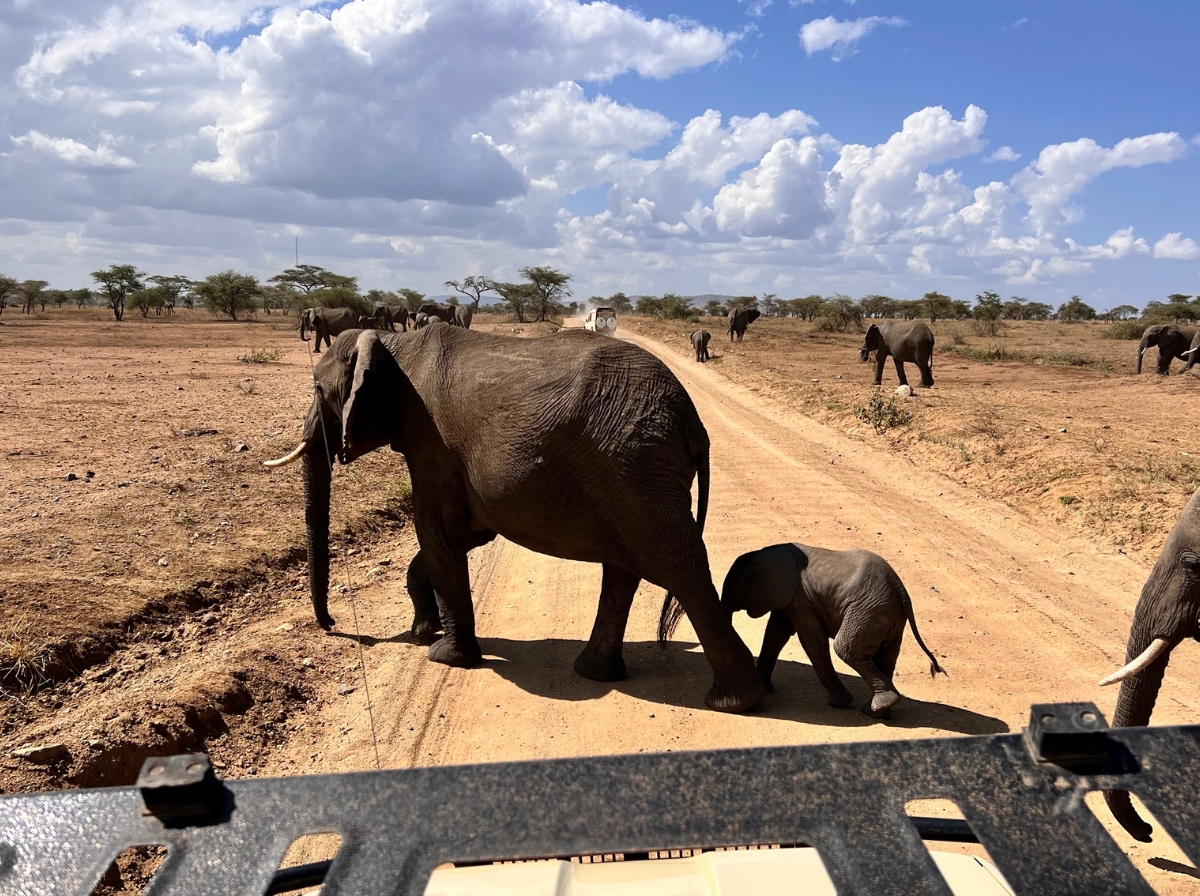
July is peak safari season in Tanzania. The grass is short, water sources are shrinking, and everything from elephants to lion prides clusters around the remaining rivers and waterholes. For a guide, it’s the easiest month to deliver great sightings.
But the real reason July stands out is the Mara River. In the Northern Serengeti, the herds reach the banks and the first major crossings begin: wildebeest gather, hesitate, then pour across while Nile crocodiles attack from below. I’ve been organizing safaris around this moment for over a decade, and it never loses its intensity.
The Mara River Great Migration Safari is built around exactly this window.
Regional Weather Breakdown
- Zanzibar archipelago: One of the driest, most comfortable months. Dry, comfortable, the kusi keeps humidity low. Sea at 25–26°C. Northern beaches (Nungwi, Kendwa) are calmer, while the east coast is windier and great for water sports
- Northern Safari Circuit (Serengeti, Ngorongoro, Tarangire, Lake Manyara): Clear skies, cool mornings (14°C), pleasant afternoons (26°C). Ngorongoro rim drops below 10°C at night. In Tarangire, elephant herds are growing and can reach 200–300 individuals around the river
- Southern & Western Parks: Fully open, dry, excellent. Nyerere (Selous) and Ruaha offer a quieter alternative to the crowded Northern Circuit
- Kilimanjaro: Prime trekking month alongside June. Drier, cooler, safer conditions. The most popular month for summit attempts, so routes are busier
Travel Highlights & Considerations
- Great Migration at the Mara River: The headline event. The herds begin crossing the Mara River in the Northern Serengeti. Timing is unpredictable day to day, but July typically sees the first major crossings
- Peak prices and crowds: Lodge rates at their maximum, Northern Circuit at its busiest. Book 6–12 months ahead. If budget matters, June offers similar conditions at lower rates
- Tarangire at its peak: Massive elephant herds along the Tarangire River. Often underrated, but in July the wildlife density rivals anything on the Northern Circuit
- Chimpanzees at Gombe: Gombe Stream National Park becomes easier for chimp trekking from July as the forest dries out
What Most Travelers Don’t Know About July
July is the most popular month, but a couple of things still surprise first-time visitors.
- The cold catches people off guard: At 14°C on a moving safari vehicle at 6:30 AM, with wind chill, it feels closer to 5°C. I see it every season: guests packed for Africa, shivering through the first game drive. A proper fleece and windbreaker are not optional
- The Southern Circuit is wide open: While everyone heads to the Serengeti and Ngorongoro, parks like Ruaha and Nyerere (Selous) offer outstanding July game viewing with a fraction of the visitors. If solitude matters to you, head south
How July Compares to June and August
June is the opening act: Grumeti crossings, slightly lower prices, fewer visitors. July is the main event: Mara River crossings begin, conditions peak, and the Serengeti is at its most active. But it’s also the busiest and most expensive.
August continues what July starts, with more Mara crossings and similar weather. The difference is subtle: July tends to have slightly fewer visitors than August, when European summer holidays are in full swing.

