
Most travelers skip Tanzania in May because it’s still labeled as rainy season.
What they miss is that the masika (long rains) is already winding down, especially in the northern parks.
The Serengeti drops to around 90 mm of rain over 18 days, well below April’s 155 mm peak, and each week is drier than the last. Temperatures settle between 16°C and 27°C, noticeably cooler than the hot months that came before.
On the Zanzibar archipelago, heavy showers still come through but become less frequent. Kilimanjaro is improving but not quite ready yet, especially in the first half.
After 14 years in Arusha, I see May as the month where the Serengeti starts waking up again. The herds are on the move, the wildebeest rut begins, and you’re still paying low-season rates while conditions get better by the day. For the full climate picture, see our Tanzania Climate guide.
Key Weather & Travel Details for May
- Temperatures: 16–27°C (61–81°F) in the northern parks; 21–30°C (70–86°F) on the coast. Cooler and more comfortable than March or April
- Rainfall: Decreasing through the month. Early May still has regular showers, late May starts feeling like dry season
- Beaches (Zanzibar): Still occasional showers, but improving. Late May is noticeably drier
- Packing: Light rain gear still useful in early May. Warm layers for cool evenings at altitude
Safari Conditions in May
May is when a safari in Tanzania starts transitioning from the green season into something more predictable. The rain doesn’t stop overnight, but it loses its intensity, and by the second half of the month the mornings are often clear and bright.
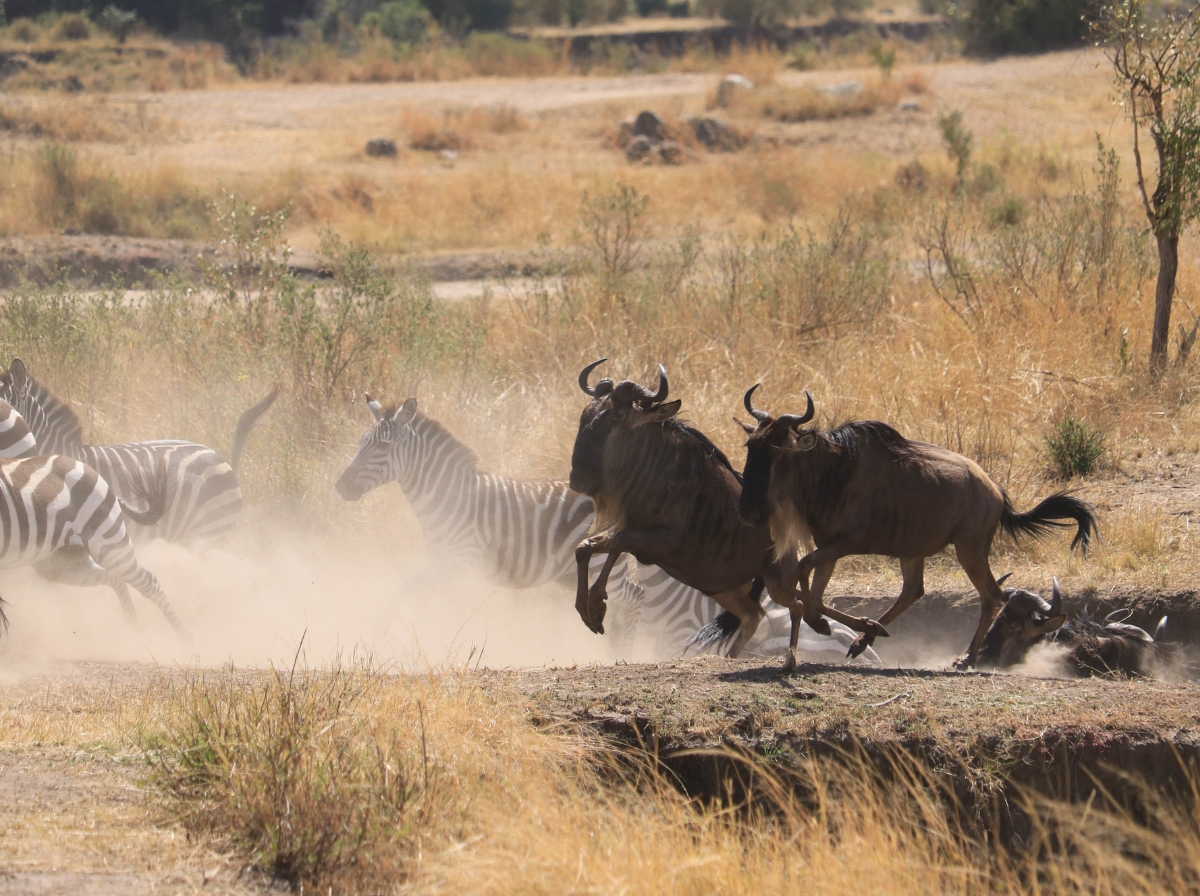
What makes May special is what’s happening with the herds. The wildebeest rut (mating season) begins, which means aggressive bull fights, constant noise, and a level of energy across the plains that’s completely different from the quiet calving months.
The herds are pushing northwest through the Serengeti toward the Western Corridor and the Grumeti River. I find this one of the most underappreciated phases of the migration: fewer spectators, plenty of action.
Regional Weather Breakdown
- Zanzibar archipelago: The masika is fading. Humidity remains high but showers become shorter and less frequent. Late May works for beach travelers who don’t mind the odd rainy afternoon
- Northern Safari Circuit (Serengeti, Ngorongoro, Tarangire, Lake Manyara): Rain easing, especially from mid-month. Cool mornings (16°C), mild afternoons (27°C). Ngorongoro rim still cold and occasionally misty
- Southern & Western Parks: End of their single rainy season. Some camps begin reopening late May, though roads may still be rough
- Kilimanjaro: Early May still too wet for comfortable trekking. Late May improves, but June is the safer choice for a summit attempt
Travel Highlights & Considerations
- Great Migration heads northwest: The herds move toward the Western Corridor and the Grumeti River, forming massive columns. The wildebeest rut adds drama: males compete aggressively for females, and the sound of thousands of animals calling carries across the plains
- Still low season pricing: Lodge rates remain well below peak season, and availability is excellent. May offers some of the strongest value of the year, with improving conditions that April can’t match
- Green landscapes, quiet parks: The Serengeti is still lush, and visitor numbers remain very low. Tarangire and Lake Manyara are similarly peaceful
- Tropical cyclones: The SW Indian Ocean cyclone season officially ends April 30, though late-season activity is possible. Cyclone Hidaya made landfall on Mafia Island in early May 2024, a rare but real event. The risk remains very low, and the northern safari parks are not affected
What Most Travelers Don’t Know About May
May has a couple of things going for it that most planning guides overlook.
- The wildebeest rut is electric: If you’ve only seen the migration in calving or river-crossing footage, the rut will surprise you. Males chase, fight, and bellow nonstop. I’ve watched guests put their cameras down just to take in the sheer noise and chaos of it
- Late May is a preview of dry season: By the last week, the rain is nearly gone, skies clear up, and the temperature drops into a comfortable range. You get dry-season conditions at green-season prices
How May Compares to April and June
April is the wettest month, with heavy daily rain, some closed camps, and Kilimanjaro off limits. May improves on every front: less rain, reopening camps, better roads, and the herds in active movement toward the Western Corridor.
June marks the official start of the dry season and peak safari conditions. But it also brings higher prices and more visitors. If you want the sweet spot between value and weather, the second half of May delivers both.

