
The weather in Tanzania in April is shaped by the masika, the long rains that make this the wettest month of the year. The Serengeti receives around 155 mm over 22 days, Arusha climbs to 340 mm, and temperatures settle between 16°C and 28°C in the northern parks.
You’ll feel the rain everywhere, though. The Zanzibar archipelago hits peak humidity, Kilimanjaro trails are best avoided, and several camps in the southern parks shut down for the season. On paper, April looks like a month to skip.
But here’s what most people don’t realize.
After 14 years organizing safaris from Arusha, I’ve seen that April attracts travelers happy to trade sunshine for empty parks, dramatic skies, and the lowest prices of the year.
The wildlife doesn’t disappear just because it’s raining, and the Serengeti transforms into something most visitors never get to see.
For the full climate picture, see our Tanzania Climate guide.
Key Weather & Travel Details for April
- Temperatures: 16–28°C (61–82°F) in the northern parks; 22–31°C (72–88°F) on the coast. Noticeably cooler than the previous two months, especially at altitude
- Rainfall: The heaviest of the year. Afternoon thunderstorms are frequent and can be intense, though mornings are often clear
- Beaches (Zanzibar): Heavy rain and high humidity make this a poor month for beach or diving
- Packing: Serious rain gear: waterproof jacket, waterproof boots, dry bags for camera equipment. Warm layers for wet evenings at altitude, insect repellent for the wetter conditions
Safari Conditions in April
April is the most challenging month for a safari in Tanzania, but it’s far from impossible.
The northern parks (Serengeti, Ngorongoro, Tarangire, Lake Manyara) remain open year-round and game drives run daily.
What changes is the rhythm: heavy afternoon thunderstorms, tall grass that makes spotting smaller animals harder, and some secondary roads that become tricky.
Still, the wildlife is very much there, and you’ll likely have every sighting to yourself. I’ve had guests in April who spent an entire morning watching a cheetah hunt without a single other vehicle in sight.
Regional Weather Breakdown
- Zanzibar archipelago: Peak of the masika: very heavy rain, humidity above 80%, mostly overcast even at 31°C. Better to wait
- Northern Safari Circuit (Serengeti, Ngorongoro, Tarangire, Lake Manyara): The masika is in full force, but main roads hold up. Cool mornings (16°C), warm afternoons (28°C). Ngorongoro rim can be foggy and genuinely cold
- Southern & Western Parks: Heaviest stretch of their single rainy season (Nov–Apr). Some camps close (Nyerere/Selous, Katavi), roads can become impassable. Focus on the Northern Circuit
- Kilimanjaro: Heavy rain turns trails muddy with reduced visibility. The dry season from June is a much better bet
Travel Highlights & Considerations
- Lowest prices of the year: Lodge and camp rates drop 30–50% compared to peak season (Jul–Sep). For flexible travelers, this is when Tanzania becomes genuinely accessible on a tighter budget
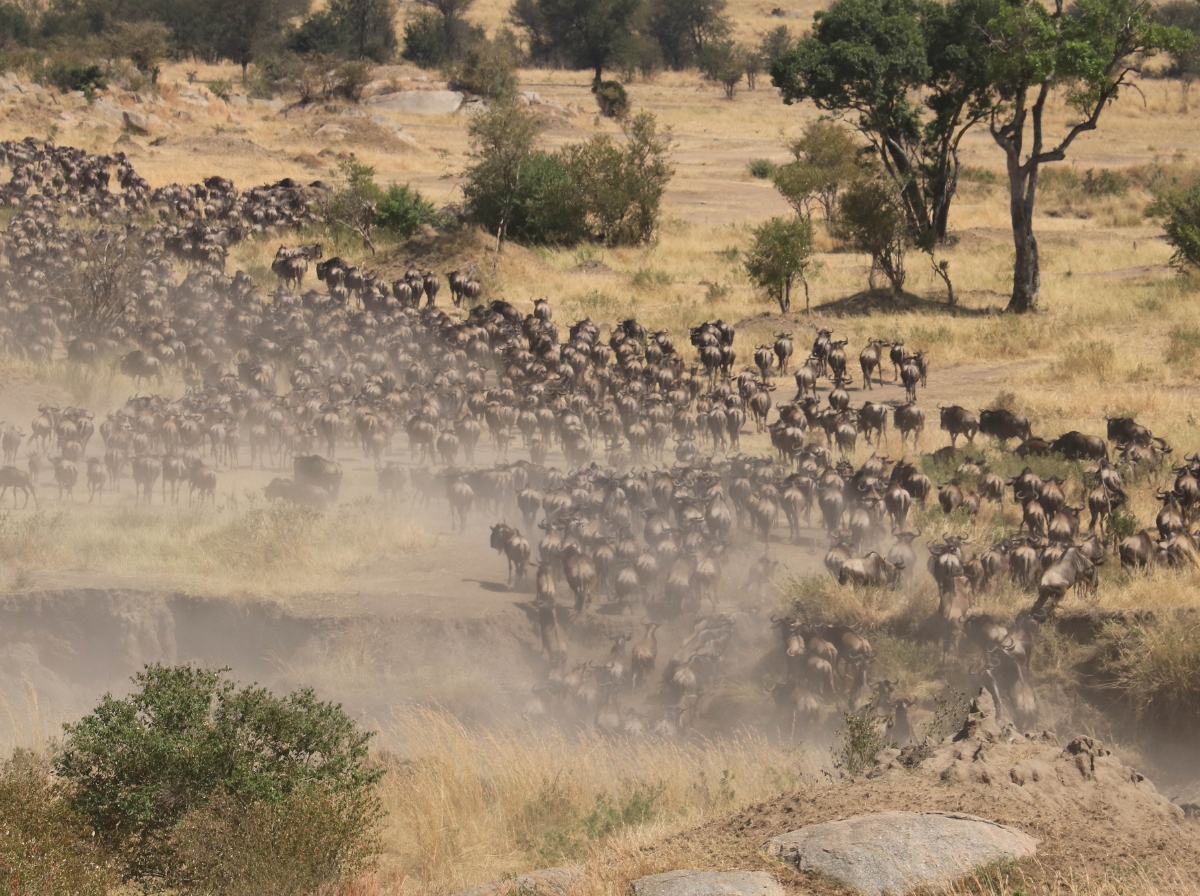
- Great Migration: The herds are moving through the Central Serengeti in long columns, passing the Moru Kopjes and Seronera area. Quieter than calving or river crossings, but tens of thousands of animals marching through green plains with storm clouds behind them is a sight that speaks for itself
- Empty parks: You’ll share the Serengeti with almost no one. It’s just you, your guide, and whatever walks out of the grass
- Birdwatching at its peak: Migratory species in bright breeding plumage, residents nesting. If you’re a birder, Lake Manyara and Tarangire in April are hard to beat
- Tropical cyclones: April has the most documented cyclone landfalls on the Tanzanian coast (1872, 1952, 2019), though Cyclone Hidaya reached Mafia Island in early May 2024. The risk remains very low, and northern parks are not affected
What Most Travelers Don’t Know About April
April has a couple of strengths that rarely make it into the standard planning guides.
- The Serengeti at its greenest: Rain, volcanic soil, and millions of grazing animals turn the plains an electric green. When afternoon light breaks through after a storm, the photography conditions are extraordinary. I’ve seen professional photographers fly in specifically for April because of that light
- Ngorongoro Crater stays productive: Even at the height of the masika, the crater floor sits sheltered by its own rim, so visibility is often better than on the surrounding highlands. The resident lions, elephants, flamingos, and black rhino don’t go anywhere
How April Compares to March and May
March is the transition month: its first half is still reasonably dry, while the second tips into the masika. By April, the rains are fully established and the landscape has completely transformed.
May marks the tail end of the masika: rain eases in the second half, and the herds push northwest toward the Western Corridor. If April feels too wet, early May offers similar green landscapes with improving conditions at equally low prices.
April is not for everyone, but for the right traveler it offers something no other month can: Tanzania at its quietest, greenest, and most affordable.

