
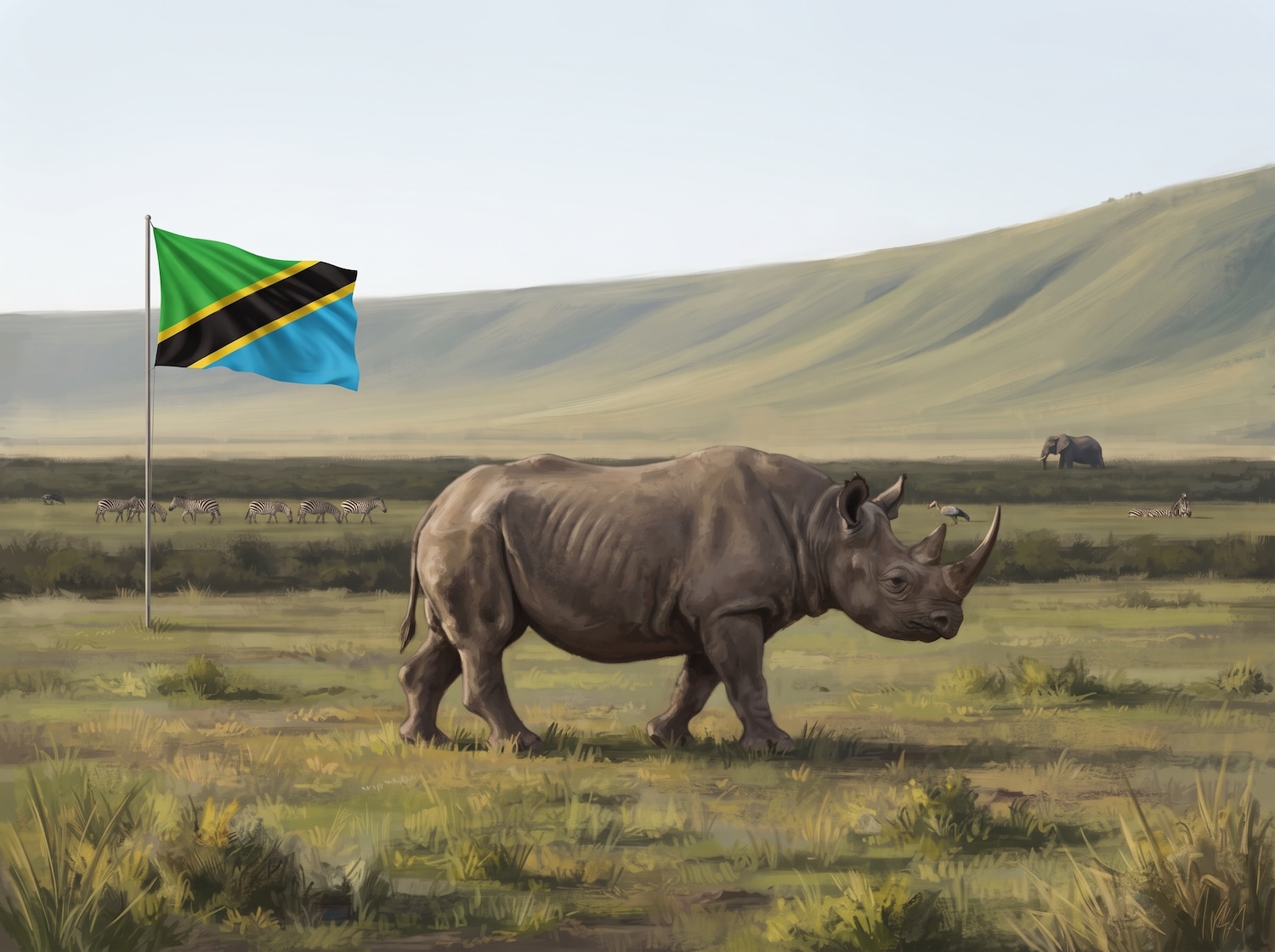
The Tanzania flag has four colors, and the government’s official meaning for each one is two or three words long. Black stands for the people and green for the land. Blue is the sea off the coast, and gold is the mineral wealth in the ground. That is the whole list.
What surprised me is what the law leaves out. The National Emblems Act describes the flag in a single sentence and never says what any of it stands for. Those four meanings are official, but they come from the government’s own description of its national symbols, not from the statute.
I’ve lived in Arusha for 14 years, and the bendera, the Swahili word for flag, is on every school gate and district office I drive past. Guests ask me about it more often than you’d think, usually because they’ve spotted a second one in Zanzibar and want to know whose it is.
Key details and specifications
Two sources fix the numbers below: the First Schedule of the National Emblems Act, which sets the design, and a government booklet on the national symbols, issued by the Prime Minister’s Office, which sets the proportions and the meanings.
| Adopted | In use from mid-1964, backdated by law to April 26, 1964, the day Tanganyika and Zanzibar united |
| Meaning | Black: the people. Green: the land. Blue: the adjoining sea. Gold: mineral wealth |
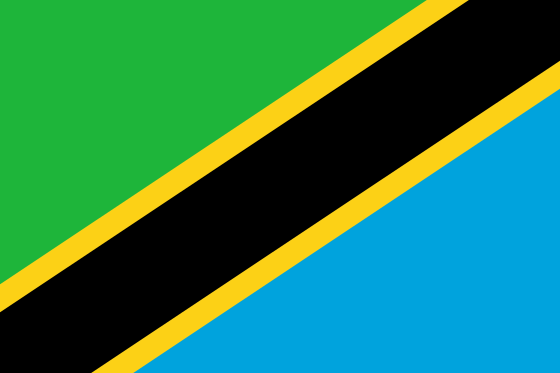
| Design | Rectangular, divided diagonally from the upper right corner to the lower left. Green above, blue below, a black band edged by two narrower gold bands |
| Ratio | 2:3, height to length |
| Band widths | Black band 13/48 of the fly, each gold band 1/16 |
| Law | National Emblems Act, Chapter 10, Revised Edition 2023, which consolidates the National Flag and Coat of Arms Act No. 15 of 1971 |
That adoption date needs a word, because you will read a different one. Most sources give June 30, 1964, and none of them cites a document for it. Britannica puts the merging of the two older designs in early July that year, which fits.
But the statute backdates the flag to April 26, the day of the union. Both dates are real, and they answer different questions: when the flag first went up, and from when the law says it counts.
Color meanings
Three of the four colors were already flying before the union, on the flags of the two states that merged.
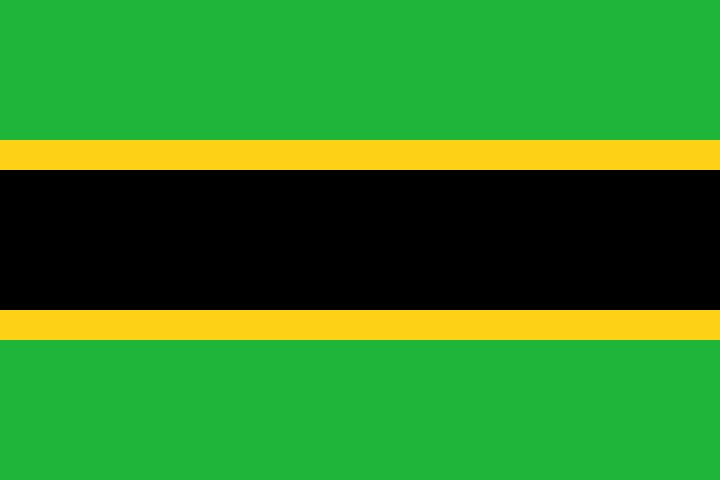
- Black: the people. It comes from the green-black-green flag of the Tanganyika African National Union, the party that led the independence campaign, and that band carried straight over.
- Green: the land, officially nothing more. Britannica reads it as the country’s agricultural wealth, which is how most descriptions put it, but that reading is not the official one.
- Blue: the adjoining sea, meaning the Indian Ocean and not the lakes. You will often see blue explained as Tanzania’s rivers and the Great Lakes, and that is not what the official list says.
- Gold: mineral wealth. Added to the Tanganyika flag at independence on December 9, 1961, as two narrow bands. The Act writes the color as “golden”. Everywhere else, Tanzania’s own documents included, it is yellow.
No official meaning attaches to the diagonal itself. Britannica says the colors were set that way to make the new flag distinct from the two horizontal ones it replaced, which is a design decision, not a symbol.
Zanzibar flag
Across the Zanzibar archipelago you will see a second flag, and it has a law of its own. Zanzibar Flag Act No. 12 of 2004 created it.
The House of Representatives passed the act on October 11, 2004, and President Amani Abeid Karume signed it a month later. The flag itself first flew in January 2005. You will usually see 2005 given as its date, which is the year it went up, not the year it became law.
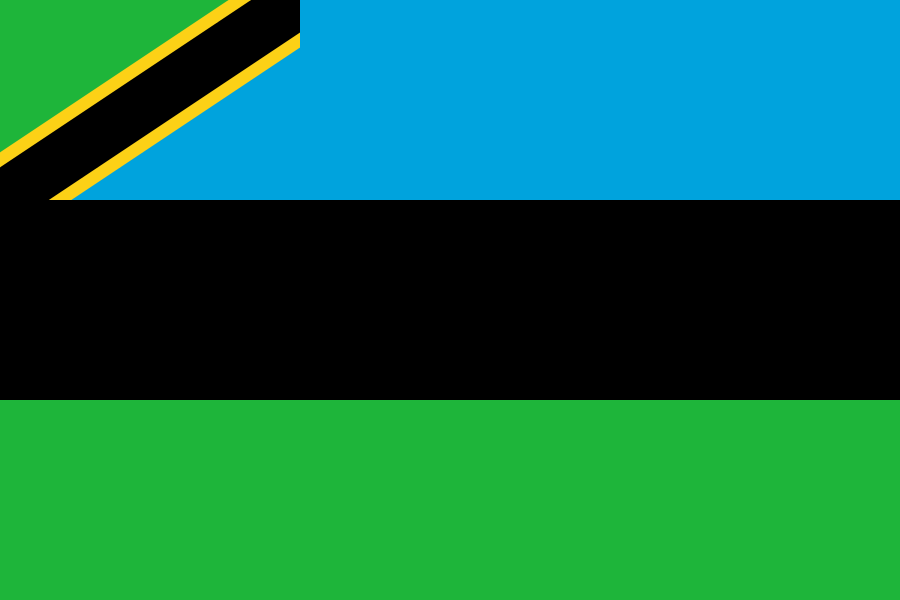
- Three horizontal bands: light blue at the top, black in the middle, green at the bottom.
- Tanzania’s national flag: in the top left corner.
- Meanings in the statute: unlike the national flag, the symbolism is written into the law. Light blue is the sea and sky around the islands, black is their original people, and green is their land.
- A design older than the law: Afro-Shirazi Party colors ran blue, black and green in 1964 for the sea, the people and the land, with a narrow white stripe at the hoist for peace. Zanzibar’s 2004 version drops the white and adds the sky.
On Unguja and Pemba I’ve seen both flags on the same building, one above the other. Head to the mainland and you will only ever see the Tanzanian one.

